
Catalogue Search | MBRL


Are you sure you want to remove the book from the shelf?

{{itemTitle}}
5
result(s) for
"Hern, Matt, author"
Sort by:


What a city is for : remaking the politics of displacement
An investigation into gentrification and displacement, focusing on the case of Portland, Oregon's systematic dispersal of black residents from its Albina neighborhood.Portland, Oregon, is one of the most beautiful, livable cities in the United States.
eBook

Global Warming and the Sweetness of Life
Seeking new definitions of ecology in the tar sands of northern Alberta and searching for the sweetness of life in the face of planetary crises.
eBook
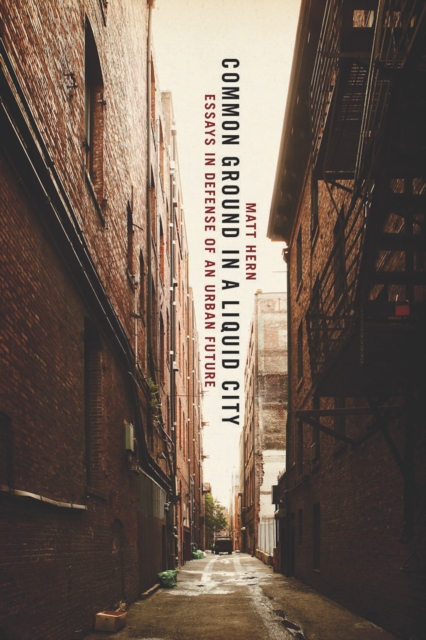
Common Ground in a Liquid City
If we want to preserve what's still left of the natural world, we need to stop using so much of it. And, says veteran environmental activist Matt Hern, cities are the best chance we have left for a truly ecological future... but what does it take to make a truly sustainable city? Common Ground in a Liquid City is a fun and engaging look at the future of urban life. Hern takes us on a journey through over a dozen urban centers, from Vancouver to Istanbul, Las Vegas, and beyond, exploring the history and current composition of cities around the globe and highlighting the elements of each that make it livable. Each of Hern's ten chapters focuses on a central theme of city life: diversity, street life, crime, population density, water and natural life, gentrification, and globalism. What emerges in the end is an appealing portrait of what the urban future might look like—environmentally friendly, locally focused, and governed from below. Matt Hern is an inveterate city dweller and an environmental and education activist. The editor of Everywhere All the Time: A New Deschooling Reader and the author of Deschooling Our Lives and Field Day, he founded Vancouver's Car-Free Day and is the director of the Purple Thistle Center for alternative education. These days, he lives in Vancouver with his partner and daughters and lectures widely around the globe.
eBook
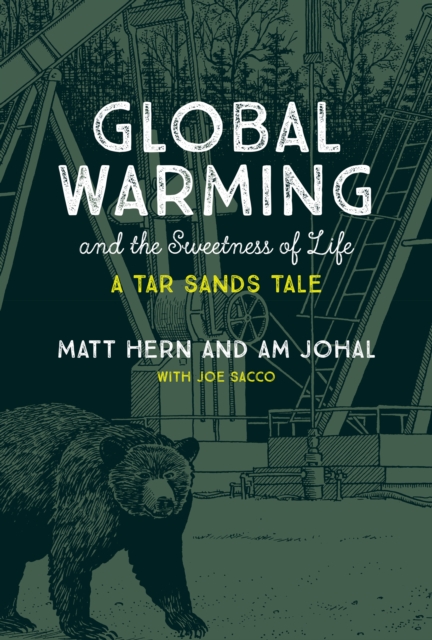
Global warming and the sweetness of life: a tar stands tale
Seeking new definitions of ecology in the tar sands of northern Alberta and searching for the sweetness of life in the face of planetary crises.Confounded by global warming and in search of an affirmative politics that links ecology with social change, Matt Hern and Am Johal set off on a series of road trips to the tar sands of northern Alberta-perhaps the world's largest industrial site, dedicated to the dirty work of extracting oil from Alberta's vast reserves. Traveling from culturally liberal, self-consciously \"green\" Vancouver, and aware that our well-meaning performances of recycling and climate-justice marching are accompanied by constant driving, flying, heating, and fossil-fuel consumption, Hern and Johal want to talk to people whose lives and fortunes depend on or are imperiled by extraction. They are seeking new definitions of ecology built on a renovated politics of land. Traveling with them is their friend Joe Sacco-infamous journalist and cartoonist, teller of complex stories from Gaza to Paris-who contributes illustrations and insights and a chapter-length comic about the contradictions of life in an oil town. The epic scale of the ecological horror is captured through an series of stunning color photos by award-winning aerial photographer Louis Helbig.Seamlessly combining travelogue, sophisticated political analysis, and ecological theory, speaking both to local residents and to leading scholars, the authors propose a new understanding of ecology that links the domination of the other-than-human world to the domination of humans by humans. They argue that any definition of ecology has to start with decolonization and that confronting global warming requires a politics that speaks to a different way of being in the world-a reconstituted understanding of the sweetness of life.Published with the help of funding from Furthermore: a program of the J. M. Kaplan fund
eBook