
Catalogue Search | MBRL


Are you sure you want to remove the book from the shelf?

{{itemTitle}}
264
result(s) for
"Hester R.E"
Sort by:
Risk Assessment and Risk Management
This 9th volume of Issues in Environmental Science and Technology provides a detailed and wide-ranging review of the many aspects of risk assessment and risk management, which have excited so much debate and controversy in recent times. Written by acknowledged experts in the field, the articles examine a range of practical applications of risk assessment methods and risk management procedures. Subjects as diverse as BSE, the use of risk assessment in government, the use of computer modelling as an aid to risk assessment in the case of accidental contamination of rivers, estuaries and many others are included.
eBook

Volatile Organic Compounds in the Atmosphere
This 4th volume of Issues in Environmental Science and Technology covers a number of issues concerning VOCs, including stratospheric ozone depletion due to CFCs and the properties of alternative substances, the role of VOCs in the photochemical formation of lower atmosphere (tropospheric) ozone and the problem of the direct toxicity of VOCs such as benzene and formaldehyde. Reviewing current knowledge of VOCs, this Issue draws upon the expertise of experts and major national and international research programmes. It looks closely at the sources and concentrations of VOCs indoors, where humans are most likely to be exposed to them and describes techniques used for the calculation of emissions inventories and strategies for control.
eBook
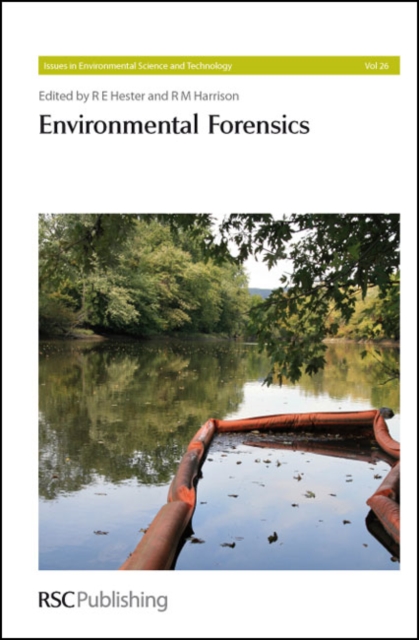
Environmental forensics
This exciting book offers an overview of environmental forensics and related topics. It contains authoritative articles by a number of the leading practitioners across the globe in the field and covers some of the main techniques and areas to which environmental forensics are being applied. The content is comprehensive and describes a number of the key areas within environmental forensics.
eBook
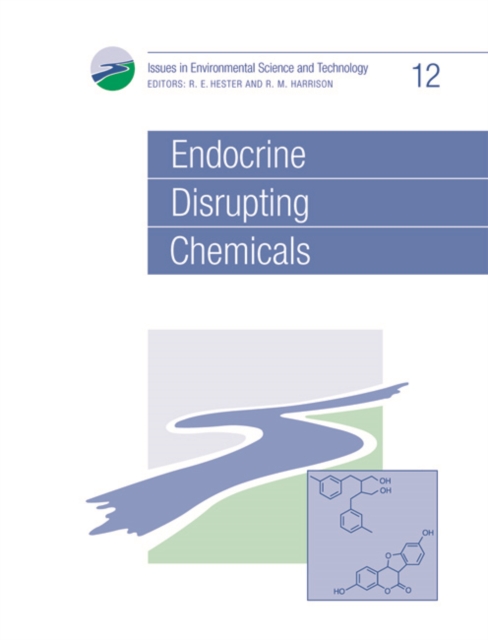
Endocrine Disrupting Chemicals
Long-term environmental effects of chemical exposure have long been of concern and, more recently, chemicals which cause changes to the sexual development of exposed organisms have been identified. It is thought that low-level exposure to a range of chemicals may be affecting endocrine function, leading to a reduction in fertility and an increase in reproductive cancers. This 12th volume of Issues in Environmental Science and Technology reviews the scientific evidence and attempts to put the subject into context. Along with an overview of the issue, there is discussion of the specialised aspects in relation to wildlife; environmental oestrogens and male reproduction; and naturally occurring oestrogenic substances.
eBook
Waste treatment and disposal
This book examines the environmental impact of sewage and industrial effluent treatment on inland and coastal waters, in the atmosphere and on land. It also looks into current practice in the design, engineering, operation and control of landfill sites, and the effect of changes in regulatory policy. A wide range of waste management practices result in atmospheric discharges and this 3rd volume of Issues in Environmental Science and Technology reviews the localized impacts and mitigation of the discharge and the regulatory framework within which waste management has to operate.
eBook
Waste Incineration and the Environment
Waste incineration is finding increasing favour as a waste disposal method, this 2nd volume of Issues in Environmental Science and Technology considers the topic of waste disposal and the place of incineration as an option. It reviews the emissions and environmental impacts of incineration and available control technologies, specific research upon emissions of trace metals and organic micropollutants, and the methodologies for environmental impact assessment.
eBook

Air Pollution and Health
This 10th volume in the Issues in Environmental Science and Technology series provides a comprehensive review of air pollution and health that complements the 9th volume covering air quality management. Dealing with the common gaseous and particulate air pollutants, including chemical carcinogens, this volume reviews the epidemiological and exposure chamber study research and considers mechanistic studies in the case of particulate matter.
eBook

Nuclear power and the environment
The environmental implications of generating electric power from nuclear fission have been a matter of concern since the construction of the earliest nuclear reactors and power stations in the 1950s. After two or more decades of construction of nuclear power stations, this ceased in many countries, largely as a result of concerns for the environment and human health. However, the pressing need to reduce greenhouse gas emissions is leading many countries to plan extensive new programmes of construction of nuclear power stations which serves to re-emphasise concerns over environmental impacts. Volume 32 of the Issues in Environmental Science and Technology series is concerned with reviewing the political and social context for nuclear power generation, the nuclear fuel cycles and their implications for the environment. Known issues of nuclear accidents, the legacy of contaminated land and low level waste, and the decommissioning of nuclear sites are considered together with a more forward look at the deep geological disposal of high level waste and the pathways of radioactive substances in the environment and their implications for human and non-human organisms. This topical work will be of interest to scientists and policy makers working within this field or related areas as well as advanced students.
eBook
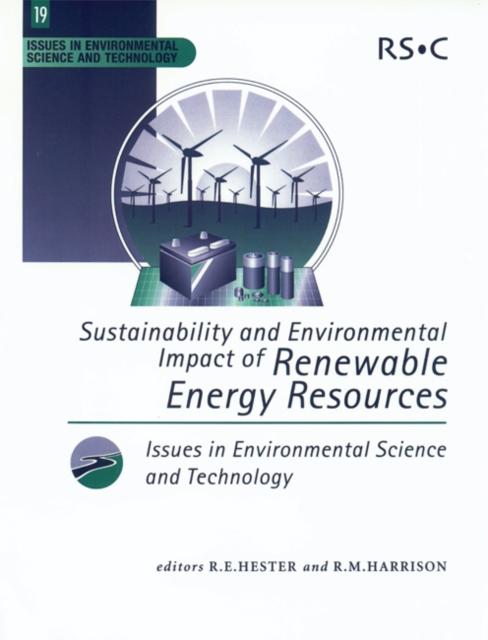
Sustainability and Environmental Impact of Renewable Energy Sources
The world's dependence on fossil fuels is widely acknowledged to be a major cause of rising levels of carbon dioxide in the atmosphere. Thus there is an urgent need to develop energy sources with lower environmental impact, with attention focusing on renewable energy sources. Concise, authoritative, up-to-date and readable, this book reviews various energy technologies, as well as taking a critical look at the political, social and economic aspects. Throughout, the emphasis is on renewable energy sources (wind, wave, solar, biomass, etc), but a discussion of fossil fuels and nuclear power is also presented. This timely book, written by recognised experts, will be welcomed by those in the energy industries as well as by policy-makers, consultants and engineers. Students and lecturers will also find the material invaluable.
eBook
Chemistry in the marine environment
With the oceans covering more than 70% of the earth's surface it is not surprising that oceanic/atmospheric interactions exert a major influence on the global climate. There is great variety within the expanses of the ocean, including large temperature differences, which has led to biodiversity within the marine environment. This 13th volume of Issues in Environmental Science and Technology offers a multidisciplinary review of this important topic, including the opportunities and challenges in developing new pharmaceuticals from the sea and an examination of contamination and pollution issues.
eBook