
Catalogue Search | MBRL


Are you sure you want to remove the book from the shelf?

{{itemTitle}}
3
result(s) for
"Hiatt, Alfred, editor"
Sort by:

Cartography between Christian Europe and the Arabic-Islamic world, 1100-1500 : divergent traditions
\"Medieval Christian European and Arabic-Islamic cultures are both notable for the wealth and diversity of their geographical literature, yet to date there has been relatively little attempt to compare medieval Christian and Islamic mapping traditions in a detailed manner. Cartography between Christian Europe and the Arabic-Islamic World offers a timely assessment of the level of interaction between the two traditions across a range of map genres, including world and regional maps, maps of the seven climes, and celestial cartography. Through a mixture of synthesis and case study, the volume makes the case for significant but limited cultural transfer. Contributors are: Elly Dekker; Jean-Charles Ducène; Alfred Hiatt; Yossef Rapoport; Stefan Schröder; Emmanuelle Vagnon\"-- Provided by publisher.
BOOK

Cartography between Christian Europe and the Arabic-Islamic world, 1100-1500 : divergent traditions
Cartography between Christian Europe and the Arabic-Islamic World offers a timely assessment of interaction between medieval Christian European and Arabic-Islamic geographical thought, making the case for significant but limited cultural transfer across a range of map genres.
eBook
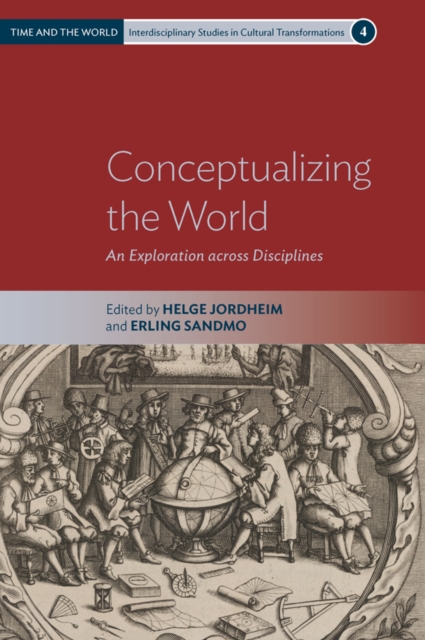
Conceptualizing the World
What is-and what was-\"the world\"? Though often treated as interchangeable with the ongoing and inexorable progress of globalization, concepts of \"world,\" \"globe,\" or \"earth\" instead suggest something limited and absolute. This innovative and interdisciplinary volume concerns itself with this central paradox: that the complex, heterogeneous, and purportedly transhistorical dynamics of globalization have given rise to the idea and reality of a finite-and thus vulnerable-world. Through studies of illuminating historical moments that range from antiquity to the era of Google Earth, each contribution helps to trace the emergence of the world in multitudinous representations, practices, and human experiences.
eBook