
Catalogue Search | MBRL


Are you sure you want to remove the book from the shelf?

{{itemTitle}}
10
result(s) for
"Hilborn, Ulrike"
Sort by:

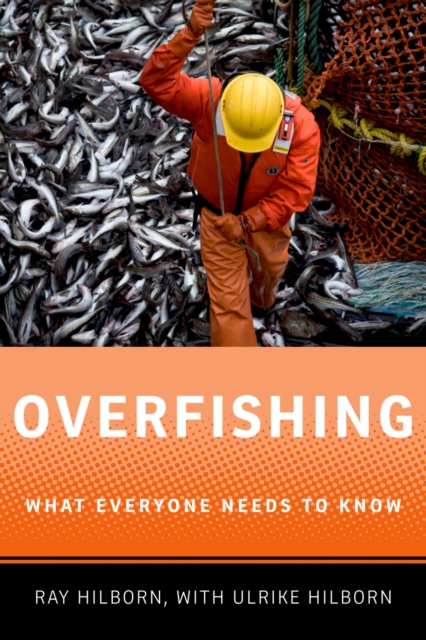
Overfishing
Overfishing: What Everyone Needs to Know® will provide a balanced explanation of the broad issues associated with overfishing. Guiding readers through the scientific, political, economic, and ethical issues associated with harvesting fish from the ocean, it will provide answers to questions about which fisheries are sustainably managed and which are not.
eBook

Ocean recovery : a sustainable future for global fisheries?
\"Dozens of certification and labeling schemes have emerged to advise consumers on what seafood is sustainable. In recent years, an opposing narrative has emerged emphasizing the success of fisheries management in many places, the increasing abundance of fish stocks in those places, and the prescription for sustainable fisheries. However, there has been no comprehensive survey of what really constitutes sustainability in fisheries, fish stock status, success and failures of management, and consideration of the impacts of fishing on marine ecosystems. This book will explore very different perspectives on sustainability, and bring together the data from a large number of studies to show where fish stocks are increasing, where they are declining, the consequences of alternative fisheries management regimes, and what is known about a range of fisheries issues such as the impacts of trawling on marine ecosystems.\" -- Provided by publisher.
Book

Overfishing : what everyone needs to know / Ray Hilborn with Ulrike Hilborn
Over the past twenty years considerable public attention has been focused on the decline of marine fisheries, the sustainability of world fish production, and the impacts of fishing on marine ecosystems. Many have voiced their concerns about marine conservation, as well as the sustainable and ethical consumption of fish. But are fisheries in danger of collapse? Will we soon need to find ways to replace this food system? Should we be worried that we could be fishing certain species to extinction? Can commercial fishing be carried out in a sustainable way? While overblown prognoses concerning the dire state of fisheries are plentiful, clear scientific explanations of the basic issues surrounding overfishing are less so, and there remains great confusion about the actual amount of overfishing and its ecological impact. This book provides an explanation of the broad issues associated with overfishing. Guiding readers through the scientific, political, economic, and ethical issues associated with harvesting fish from the ocean, it also provides answers to questions about which fisheries are sustainably managed and which are not. The authors address topics including historical overfishing, high seas fisheries, recreational fisheries, illegal fishing, climate and fisheries, trawling, economic and biological overfishing, and marine protected areas. In order to illustrate the effects of each of these issues, they incorporate case studies of different species of fish. Overall, the authors present a hopeful view of the future of fisheries. Most of the world's fisheries are not overfished, and many once overfished stocks are now rebuilding. In fact, we can learn from the management failures and successes to ensure that fisheries are sustainable and contribute to national wealth and food security. This book presents the \"big picture\" of the state of oceans and the solutions to ending overfishing.
eBook


A sustainable fish story
Those decisions are based on a misunderstanding of what constitutes a sustainable fishery. The fact is that we can harvest a certain fraction of a fish population that has been overfished, if we allow for the natural processes of birth and growth to replace what we take from the ocean and to rebuild the stock. Instead of calling on consumers to abstain from all overfished species, we should direct our attention at fisheries that consistently take more fish than can be naturally replaced. Bluefin tuna is a classic example of a species that has been consistently harvested too hard and should be avoided by consumers. But at the same time, the United States has made remarkable progress in rebuilding overfished stocks. Wild populations of 27 species have been rebuilt to \"healthy\" levels in the last 11 years, according to the National Oceanic and Atmospheric Administration. Earlier this month, the agency announced that six formerly overfished stocks had been rebuilt, including Bering Sea snow crab, Atlantic Coast summer flounder and Gulf of Maine haddock.
Newspaper Article

Eat Your Hake and Have It, Too
WHOLE FOODS recently stopped selling fish that are on the \"red lists\" of seafood to avoid, issued by the Monterey Bay Aquarium and the Blue Ocean Institute. Other major food retailers are considering similar measures, under the...
Newspaper Article
Eat Your Hake and Have It, Too
Free-range chickens were labeled, but there were no labels telling us if pesticide and fertilizer runoff from growing the corn used to feed the beef caused dead zones in the Gulf of Mexico, or if the soybeans came from land clear-cut out of the Brazilian rain forest.
Newspaper Article