
Catalogue Search | MBRL


Are you sure you want to remove the book from the shelf?

{{itemTitle}}
71
result(s) for
"Hirai, Atsuko"
Sort by:

Government by mourning : death and political integration in Japan, 1603-1912
\"Hirai reveals how the decrees on mourning played an important integrative part in the Tokugawa period through not only its comprehensive implementation, especially among major political figures, but also its codification of the religious beliefs and customs that the Japanese people had cherished for innumerable generations\"--Provided by publisher.
Book

Multiple oral squamous epithelial lesions: are they genetically related?
The development of second primary tumors (SPTs) in patients with head and neck squamous cell carcinoma (HNSCC) has become an increasingly important factor in clinical treatment decisions. Currently, clinical and histologic parameters are used to determine whether or not SPT is present. Recent studies suggest that many SPTs in the upper aerodigestive tract have a common clonal origin, challenging the longstanding multiclonal origin concept. To determine genetic relationships among multiple oral cancerous and precancerous lesions (MOCP), we analysed 100 lesions from 26 Japanese patients. Lesion development was synchronous and metachronous. We looked for patterns of microsatellite alterations (MA) using seven markers at chromosomes 3p14, 9p21, and 17p13, where MA occurs early in oral carcinogenesis. Loss of heterozygosity (LOH) was found in 52.6% (41/78), 62.5% (60/96), and 59.3% (32/54) of informative MOCP at 3p14, 9p21, and 17p13, respectively. Microsatellite instability (MI) was observed in 11, 26 and 13% of the samples at 3p14, 9p21, and 17p13 markers, respectively. Patterns of MA were concordant in only nine (14%) of 63 lesions from four (18%) of 22 patients who initially presented with noninvasive lesions. However, two of four patients with invasive cancer as indexed lesion showed 16 (43%) clonally related MOCP among 37 lesions (P=0.003). The results suggest that the majority of MOCP arise from clonally independent cells affected by field cancerization. However, the probability of mucosal spread of clonal malignant or premalignant cells may increase along with malignant progression.
Journal Article
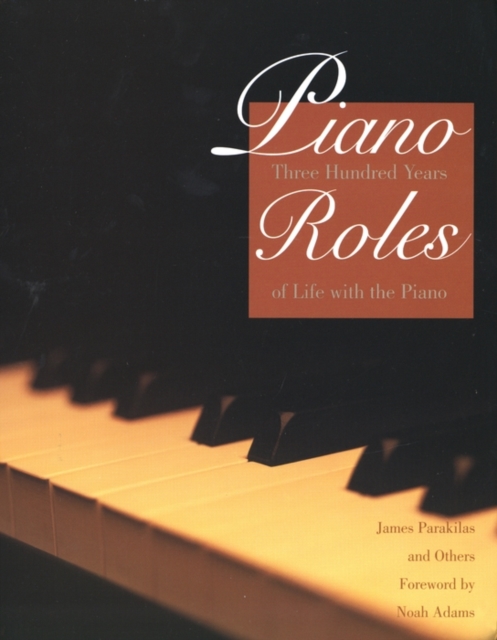
Piano roles: a new history of the piano
The piano puts whole worlds of musical sound at the fingertips of one player, evoking the singing of a solo voice, the textural richness of an orchestra, and the rhythmic impetus of a dance band. It has been background or center stage in concertgoing, parlor singing, choir rehearsals, theatrical tryouts, and many other activities, forging a common bond among people of very different social spheres. This delightfully written and copiously illustrated book examines the place of the piano in classical and popular musical cultures and the pianos changing cultural roles over the past three centuries.Eminent authorities discuss the impetus for the invention of the piano; the innovations in its design, manufacturing, and marketing that promoted its growing significance in concert life and domestic life; and the importance of the piano lesson in the upbringing of the youngespecially of girls. They explore the relationship between the piano on the public stage and the piano in the parlor; the spread of the piano to all parts of the world; and the images formed around the piano in literature, art, and movies. And they eloquently describe what the piano has meant to different eras, as it evolved from the plaything of European aristocrats to companion of people of all classes and cultures.
eBook
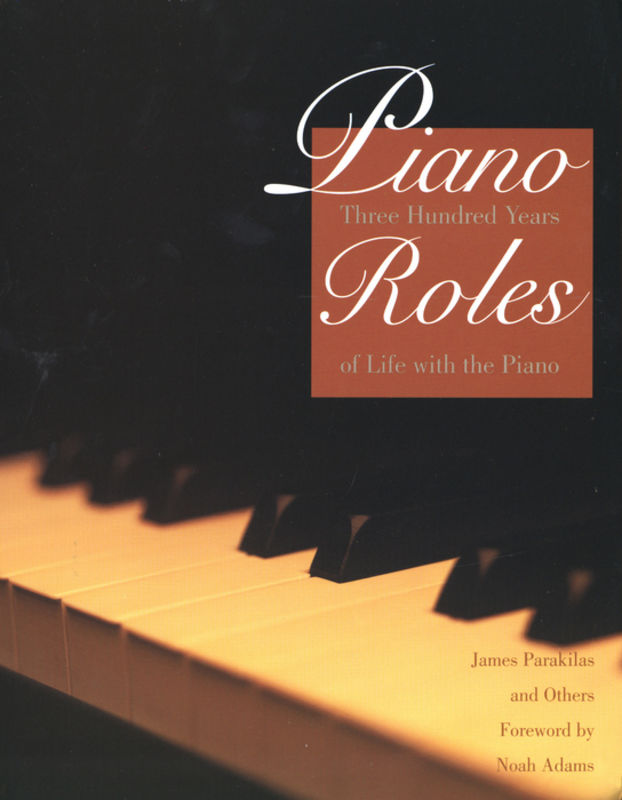
Piano Roles
The piano puts whole worlds of musical sound at the fingertips of one player, evoking the singing of a solo voice, the textural richness of an orchestra, and the rhythmic impetus of a dance band. It has been background or center stage in concertgoing, parlor singing, choir rehearsals, theatrical tryouts, and many other activities, forging a common bond among people of very different social spheres. This delightfully written and copiously illustrated book examines the place of the piano in classical and popular musical cultures and the piano's changing cultural roles over the past three centuries.Eminent authorities discuss the impetus for the invention of the piano; the innovations in its design, manufacturing, and marketing that promoted its growing significance in concert life and domestic life; and the importance of the piano lesson in the upbringing of the young-especially of girls. They explore the relationship between the piano on the public stage and the piano in the parlor; the spread of the piano to all parts of the world; and the images formed around the piano in literature, art, and movies. And they eloquently describe what the piano has meant to different eras, as it evolved from the plaything of European aristocrats to companion of people of all classes and cultures.
eBook


