
Catalogue Search | MBRL


Are you sure you want to remove the book from the shelf?

{{itemTitle}}
2,736
result(s) for
"Hirsch, R"
Sort by:


Lung cancer: current therapies and new targeted treatments
Lung cancer is the most frequent cause of cancer-related deaths worldwide. Every year, 1·8 million people are diagnosed with lung cancer, and 1·6 million people die as a result of the disease. 5-year survival rates vary from 4–17% depending on stage and regional differences. In this Seminar, we discuss existing treatment for patients with lung cancer and the promise of precision medicine, with special emphasis on new targeted therapies. Some subgroups, eg—patients with poor performance status and elderly patients—are not specifically addressed, because these groups require special treatment considerations and no frameworks have been established in terms of new targeted therapies. We discuss prevention and early detection of lung cancer with an emphasis on lung cancer screening. Although we acknowledge the importance of smoking prevention and cessation, this is a large topic beyond the scope of this Seminar.
Journal Article


New and emerging targeted treatments in advanced non-small-cell lung cancer
Targeted therapies are substantially changing the management of lung cancers. These treatments include drugs that target driver mutations, those that target presumed important molecules in cancer cell proliferation and survival, and those that inhibit immune checkpoint molecules. This area of research progresses day by day, with novel target discoveries, novel drug development, and use of novel combination treatments. Researchers and clinicians have also extensively investigated the predictive biomarkers and the molecular mechanisms underlying inherent or acquired resistance to these targeted therapies. We review recent progress in the development of targeted treatments for patients with advanced non-small-cell lung cancer, especially focusing on data from published clinical trials.
Journal Article
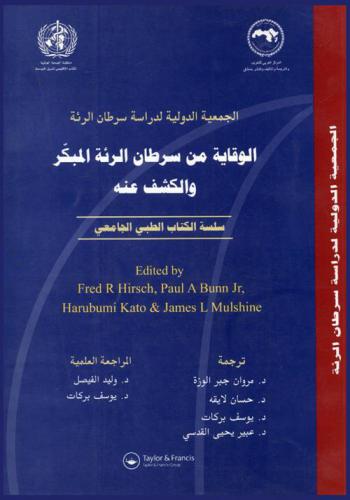
الوقاية من سرطان الرئة المبكر وكشفه
يتحدث هذا الكتاب عن : سرطان الرئة هو السبب الرئيسي للموت المسبب بالسرطان في كافة أنحاء العالم، وذلك لأن إنذاره ما يزال سيئا رغم جهود البحث المكثفة. ومع تأخر التشخيص خصوصا، يكون سرطان الرئة قد انتشر فعلا إلى العقد اللمفاوية الناحية أو أبعد، وتصعب وقتها معالجته الناجحة كثيرا. ولهذا يؤمن العديد من الباحثين بأن أفضل فرصة لتحسين نتائج سرطان الرئة هي العودة إلى تركيز الجهود على كشف سرطان الرئة المبكر أو الوقاية منه. واتساقا مع رسالة الجمعية الدولية لسرطان الرئة (LASLC)، يجمع هذا الكتاب باحثين دوليين بارزين لمناقشة العمل في مجال من القضايا المتضمنة في الوقاية من سرطان الرئة وكشفه المبكر. ليس المرمى هو إنتاج أداة تعليمية لاختصاصيي الأورام المحترفين فحسب، بل أيضا لتشجيع أعظم مشاركة من المجتمع العلمي في إيتاء خدمات الوقاية من سرطان الرئة. هذا بالإضافة إلى تشجيع الفاعليات الخاصة بأبحاث الوقاية.
Book

Lymphocyte‐activation gene‐3, an important immune checkpoint in cancer
Immunotherapy has recently become widely used in lung cancer. Many oncologists are focused on cytotoxic T lymphocyte antigen‐4 (CTLA‐4), programmed cell death ligand‐1 (PD‐L1) and programmed cell death‐1 (PD‐1). Immunotherapy targeting the PD‐1/PD‐L1 checkpoints has shown promising efficacy in non‐small cell lung cancer (NSCLC), but questions remain to be answered. Among them is whether the simultaneous inhibition of other checkpoints could improve outcomes. Lymphocyte‐activation gene‐3 (LAG‐3) is another vital checkpoint that may have a synergistic interaction with PD‐1/PD‐L1. Here we review the LAG‐3 function in cancer, clinical trials with agents targeting LAG‐3 and the correlation of LAG‐3 with other checkpoints. Immunotherapy in cancer is a hot topic and many oncologists want to learn about the relevant biomarkers with the current focus on CTLA 4 and PD 1/PD L1. However, also of interests are the varieties of alternative immune checkpoints including Lag 3/MHC II. In this paper, we review LAG 3 structure, function, the synergistic effects with CTLA 4 and PD 1/PD L1, as well as discussing LAG 3 clinical trials which are ongoing.
Journal Article

Are root exudates more important than other sources of rhizodeposits in structuring rhizosphere bacterial communities
This review evaluates the importance of root exudates in determining rhizosphere bacterial community structure. We present evidence that indicates that: (1) the direct influence of root exudates on rhizosphere bacterial communities is limited to small spatiotemporal windows related to root apices; (2) upon rapid assimilation by microorganisms, root exudates are modified, independent of plant influences, before rerelease into the rhizosphere by the microorganisms themselves - thus, at short distances from root apices, rhizosphere carbon pools are unlikely to be dominated by root exudates; and (3) many of the major compounds found in root exudates are ubiquitous in the rhizosphere as they are found in other pools of rhizodeposits and in microbial exudates. Following this argument, we suggest that the importance of root exudates in structuring rhizosphere bacterial communities needs to be considered in the context of the wider contribution of other rhizosphere carbon pools. Finally, we discuss the implications of rhizosphere bacterial distribution trends for the development of effective strategies to manage beneficial plant-microorganism interactions.
Journal Article

Programmed Death Ligand-1 Immunohistochemistry: Friend or Foe?
The approval of anti-programmed death receptor (PD)-1 therapies for non–small cell lung cancer has directed the spotlight on programmed death ligand-1 (PD-L1) immunohistochemistry as the latest predictive biomarker potentially required in this disease. Several other drugs in this class will likely be approved in the future and each has been developed with a unique anti–PD-L1 immunohistochemistry test. The prospect of 5 drugs competing in the same treatment area, each possibly requiring PD-L1 immunohistochemistry testing, presents a challenge for pathologists unlike any previously faced. The key issue is whether laboratories will attempt to deliver the trial-validated assays for one or more of these treatments, or introduce instead one or more laboratory developed tests, or attempt to provide a single PD-L1 immunohistochemistry assay for all possible anti–PD-1 and anti–PD-L1 treatments that may be used. This paper discusses some of the issues, challenges, hazards, and possible solutions that have recently emerged in this most complex interface between cancer therapeutics and laboratory biomarker testing.
Journal Article

Necitumumab plus gemcitabine and cisplatin versus gemcitabine and cisplatin alone as first-line therapy in patients with stage IV squamous non-small-cell lung cancer (SQUIRE): an open-label, randomised, controlled phase 3 trial
Necitumumab is a second-generation, recombinant, human immunoglobulin G1 EGFR antibody. In this study, we aimed to compare treatment with necitumumab plus gemcitabine and cisplatin versus gemcitabine and cisplatin alone in patients with previously untreated stage IV squamous non-small-cell lung cancer.
We did this open-label, randomised phase 3 study at 184 investigative sites in 26 countries. Patients aged 18 years or older with histologically or cytologically confirmed stage IV squamous non-small-cell lung cancer, with an Eastern Cooperative Oncology Group (ECOG) performance status of 0–2 and adequate organ function and who had not received previous chemotherapy for their disease were eligible for inclusion. Enrolled patients were randomly assigned centrally 1:1 to a maximum of six 3-week cycles of gemcitabine and cisplastin chemotherapy with or without necitumumab according to a block randomisation scheme (block size of four) by a telephone-based interactive voice response system or interactive web response system. Chemotherapy was gemcitabine 1250 mg/m2 administered intravenously over 30 min on days 1 and 8 of a 3-week cycle and cisplatin 75 mg/m2 administered intravenously over 120 min on day 1 of a 3-week cycle. Necitumumab 800 mg, administered intravenously over a minimum of 50 min on days 1 and 8, was continued after the end of chemotherapy until disease progression or intolerable toxic side-effects occurred. Randomisation was stratified by ECOG performance status and geographical region. Neither physicians nor patients were masked to group assignment because of the expected occurrence of acne-like rash—a class effect of EGFR antibodies—that would have unmasked most patients and investigators to treatment. The primary endpoint was overall survival, analysed by intention to treat. We report the final clinical analysis. This study is registered with ClinicalTrials.gov, number NCT00981058.
Between Jan 7, 2010, and Feb 22, 2012, we enrolled 1093 patients and randomly assigned them to receive necitumumab plus gemcitabine and cisplatin (n=545) or gemcitabine and cisplatin (n=548). Overall survival was significantly longer in the necitumumab plus gemcitabine and cisplatin group than in the gemcitabine and cisplatin alone group (median 11·5 months [95% CI 10·4–12·6]) vs 9·9 months [8·9–11·1]; stratified hazard ratio 0·84 [95% CI 0·74–0·96; p=0·01]). In the necitumumab plus gemcitabine and cisplatin group, the number of patients with at least one grade 3 or worse adverse event was higher (388 [72%] of 538 patients) than in the gemcitabine and cisplatin group (333 [62%] of 541), as was the incidence of serious adverse events (257 [48%] of 538 patients vs 203 [38%] of 541). More patients in the necitumumab plus gemcitabine and cisplatin group had grade 3–4 hypomagnesaemia (47 [9%] of 538 patients in the necitumumab plus gemcitabine and cisplatin group vs six [1%] of 541 in the gemcitabine and cisplatin group) and grade 3 rash (20 [4%] vs one [<1%]). Including events related to disease progression, adverse events with an outcome of death were reported for 66 (12%) of 538 patients in the necitumumab plus gemcitabine and cisplatin group and 57 (11%) of 541 patients in the gemcitabine and cisplatin group; these were deemed to be related to study drugs in 15 (3%) and ten (2%) patients, respectively. Overall, we found that the safety profile of necitumumab plus gemcitabine and cisplatin was acceptable and in line with expectations.
Our findings show that the addition of necitumumab to gemcitabine and cisplatin chemotherapy improves overall survival in patients with advanced squamous non-small-cell lung cancer and represents a new first-line treatment option for this disease.
Eli Lilly and Company.
Journal Article

Metagenomic approaches reveal differences in genetic diversity and relative abundance of nitrifying bacteria and archaea in contrasting soils
The abundance and phylogenetic diversity of functional genes involved in nitrification were assessed in Rothamsted field plots under contrasting management regimes—permanent bare fallow, grassland, and arable (wheat) cultivation maintained for more than 50 years. Metagenome and metatranscriptome analysis indicated nitrite oxidizing bacteria (NOB) were more abundant than ammonia oxidizing archaea (AOA) and bacteria (AOB) in all soils. The most abundant AOA and AOB in the metagenomes were, respectively,
Nitrososphaera
and
Ca.
Nitrososcosmicus (family Nitrososphaeraceae) and
Nitrosospira
and
Nitrosomonas
(family Nitrosomonadaceae). The most abundant NOB were Nitrospira including the comammox species
Nitrospira inopinata, Ca.
N. nitrificans and
Ca
. N. nitrosa. Anammox bacteria were also detected
.
Nitrospira and the AOA Nitrososphaeraceae showed most transcriptional activity in arable soil. Similar numbers of sequences were assigned to the
amoA
genes of AOA and AOB, highest in the arable soil metagenome and metatranscriptome; AOB
amoA
reads included those from comammox Nitrospira clades A and B, in addition to Nitrosomonadaceae. Nitrification potential assessed in soil from the experimental sites (microcosms amended or not with DCD at concentrations inhibitory to AOB but not AOA), was highest in arable samples and lower in all assays containing DCD, indicating AOB were responsible for oxidizing ammonium fertilizer added to these soils.
Journal Article