
Catalogue Search | MBRL


Are you sure you want to remove the book from the shelf?

{{itemTitle}}
10
result(s) for
"Hirshfeld, Allen C"
Sort by:

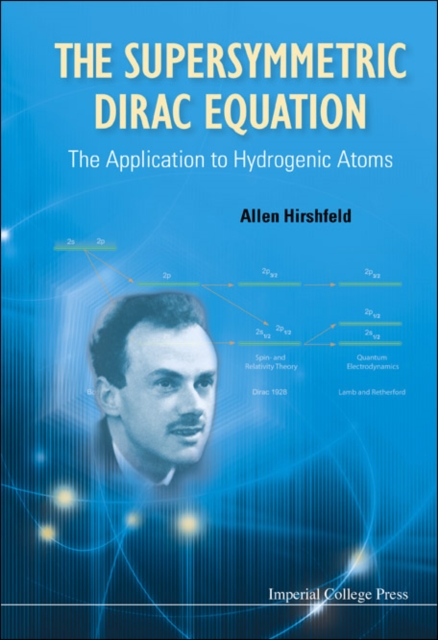
The supersymmetric Dirac equation
The solution of the Dirac equation for an electron in a Coulomb field is systematically treated here by utilizing new insights provided by supersymmetry. It is shown that each of the concepts has its analogue in the non-relativistic case. Indeed, the non-relativistic case is developed first, in order to introduce the new concepts in a familiar context. The symmetry of the non-relativistic model is already present in the classical limit, so the classical Kepler problem is first discussed in order to bring out the role played by the Laplace vector, one of the central concepts of the whole book. Analysis of the concept of eccentricity of the orbits turns out to be essential to understanding the relation of the classical and quantum mechanical models.
eBook
Star products and perturbative quantum field theory
We discuss the application of the deformation quantization approach to perturbative quantum field theory. We show that the various forms of Wick's theorem are a direct consequence of the structure of the star products. We derive the scattering function for a free scalar field in interaction with a spacetime-dependent source. We show that the translation to operator formalism reproduces the known relations which lead to the derivation of the Feynman rules.
Paper
Deformation quantization in the teaching of quantum mechanics
We discuss the deformation quantization approach for the teaching of quantum mechanics. This approach has certain conceptual advantages which make its consideration worthwhile. In particular, it sheds new light on the relation between classical and quantum mechanics. We demionstrate how it can be used to solve specific problems and clarify its relation to conventional quantization and path integral techniques. We also discuss its recent applications in relativistic quantum field theory.
Paper
The partition function of the linear Poisson-sigma model on arbitrary surfaces
We perform the calculation of the partition function of the Poisson-sigma model on the world sheet with the topology of a two-dimensional disc. Considering the special case of a linear Poisson structure we recover the partition function of the Yang-Mills theory. Using a glueing procedure we are able to calculate the partition function for arbitrary base manifolds.
Paper
Path integral quantization of the Poisson-Sigma model
We apply the antifield quantization method of Batalin and Vilkovisky to the calculation of the path integral for the Poisson-Sigma model in a general gauge. For a linear Poisson structure the model reduces to a nonabelian gauge theory, and we obtain the formula for the partition function of two-dimensional Yang-Mills theory for closed two-dimensional manifolds.
Paper
Star Products and Geometric Algebra
The formalism of geometric algebra can be described as deformed super analysis. The deformation is done with a fermionic star product, that arises from deformation quantization of pseudoclassical mechanics. If one then extends the deformation to the bosonic coefficient part of superanalysis one obtains quantum mechanics for systems with spin. This approach clarifies on the one hand the relation between Grassmann and Clifford structures in geometric algebra and on the other hand the relation between classical mechanics and quantum mechanics. Moreover it gives a formalism that allows to handle classical and quantum mechanics in a consistent manner.
Paper
Poisson-Sigma Models
We investigate the Poisson-Sigma model on the classical and quantum level. In the classical analysis we show how this model includes various known two-dimensional field theories. Then we perform the calculation of the path integral in a general gauge, and demonstrate that the derived partition function reduces to the familiar form in the case of 2d Yang-Mills theory.
Paper
Cliffordization, Spin and Fermionic Star Products
Deformation quantization is a powerful tool for quantizing theories with bosonic and fermionic degrees of freedom. The star products involved generate the mathematical structures which have recently been used in attempts to analyze the algebraic properties of quantum field theory. In the context of quantum mechanics they provide a canonical quantization procedure for systems with either bosonic of fermionic degrees of freedom. We illustrate this procedure for a number a physical examples, including bosonic, fermionic and supersymmetric oscillators. We show how non-relativistic and relativistic particles with spin can be naturally described in this framework.
Paper
Derivation of the total twist from Chern-Simons theory
The total twist number, which represents the first non-trivial Vassiliev knot invariant, is derived from the second order expression of the Wilson loop expectation value in the Chern-Simons theory. Using the well-known fact that the analytical expression is an invariant, a non-recursive formulation of the total twist based on the evaluation of knot diagrams is constructed by an appropriate deformation of the knot line in the three-dimensional Euclidian space. The relation to the original definition of the total twist is elucidated.
Paper