
Catalogue Search | MBRL


Are you sure you want to remove the book from the shelf?

{{itemTitle}}
6
result(s) for
"Hjort, Mette, editor"
Sort by:

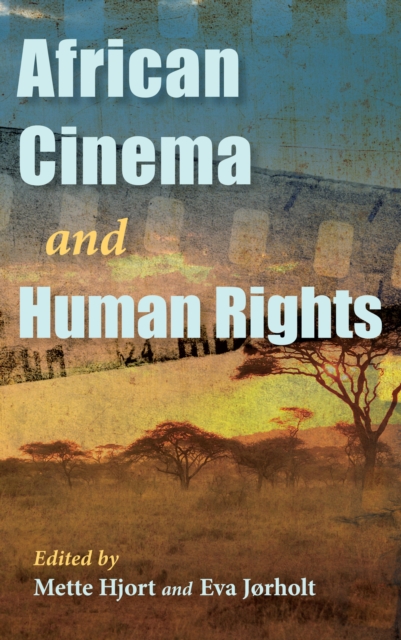
African Cinema and Human Rights
Bringing theory and practice together,African Cinema and Human Rightsargues that moving images have a significant role to play in advancing the causes of justice and fairness. The contributors to this volume identify three key ways in which film can achieve these goals:documentinghuman rights abuses and thereby supporting the claims of victims and goals of truth and reconciliation within larger communities;legitimating, and consequently solidifying, an expanded scope for human rights; andpromotingthe realization of social and economic rights. Including the voices of African scholars, scholar-filmmakers, African directors Jean-Marie Teno and Gaston Kaboré, and researchers whose work focuses on transnational cinema, this volume explores overall perspectives, and differences of perspective, pertaining to Africa, human rights, and human rights filmmaking alongside specific case studies of individual films and areas of human rights violations. With its interdisciplinary scope, attention to practitioners' self-understandings, broad perspectives, and particular case studies,African Cinema and Human Rightsis a foundational text that offers questions, reflections, and evidence that help us to consider film's ideal role within the context of our ever-continuing struggle towards a more just global society.
1. This volume is a foundational text exploring a variety of cinematic formats and disciplinary Perspectives. It has strong classroom appeal and will be useful in courses in cinema, anthropology, history, and global politics.
2. The works in this collection handle timely, key questions, such as how does the presentation of Africa and the understanding of human rights issues differ between films produced by Africans and films produced outside of the continent?
3. The editors are experienced and have an impressive number of solo authored and edited publications each. Mette Hjort is a returning IU Press author. Included are essays by both up-and-coming and major scholars of African cinema alongside scholar-filmmakers and legal experts. Interviews with Jean Marie Teno and Gaston Kaboré, two African filmmakers whose work routinely addresses issues of human rights, provide additional non-scholarly perspectives.
eBook

The Danish directors. 3, Dialogues on the new Danish documentary cinema
Following the two previous volumes in this series of practitioner interviews with Danish directors, this book focuses on Danish documentary cinema. Although many of the directors interviewed here have ventured successfully into the terrain of fiction, their main contributions to the thriving post-1980s milieu lie in the interconnected areas of documentary film and television. Emphasizing the new documentary cinema, this book features filmmakers who belong to the generation born in the 1970s. Many of the interviewees were trained at the National Film School of Denmark's now legendary Department of Documentary and Television. The term \"new\" also captures tendencies that cut across the work of the filmmakers. For example, for the generation in question, internationalization and the development of a new digital media culture are inevitable aspects of everyday life, and, indeed, of the professional environments in which they operate.
Book
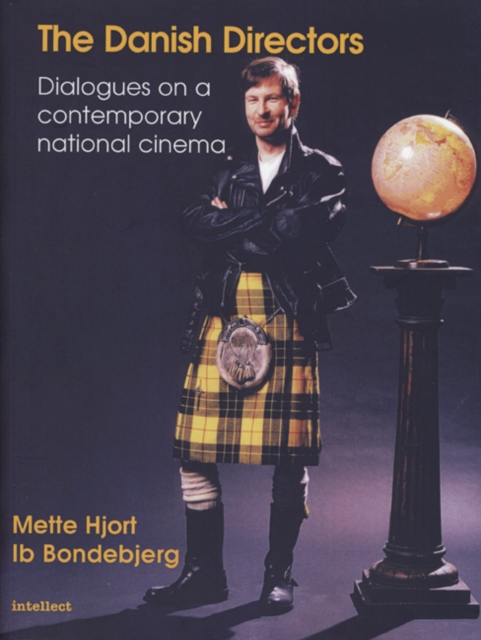
Danish Directors
This collection profiles canonized figures alongside recently-established filmmakers, featuring interviews with Lars von Trier, Thomas Vinterberg and more. It poses questions that engage with issues within film studies to stimulate debate. Each interview is preceded by the director's photograph, biographical information and filmography.
eBook

Emotion and the Arts
Erik Erikson (1902-1994) was one of the most eminent and prolific psychologists of the 20th century. Over his long career he published a dozen books, including classics such as Childhood and Society; Identity, Youth, and Crisis; and Young Man Luther . He was awarded the Pulitzer Prize and the National Book Award in 1970 for his biography Ghandi ‘s Truth. It was also in 1970, when he retired from Harvard University, that Erikson began to rethink his earlier theories of development. He became increasingly occupied with the conflicts and challenges of adulthood--a shift from his earlier writings on the “identity crises” of adolescence. For the past twenty years, Carol Hoare has written extensively on various aspects of Erikson ‘s work. She has been aided by access to Erikson ‘s unpublished papers at Harvard, as well as cooperation with Joan Erikson, the psychologist ‘s wife and longtime collaborator. By reconstructing Erikson ‘s theory of adulthood from his unpublished papers, Hoare provides not only a much-needed revision of Erikson ‘s work, but also a glimpse into the mind of one of the 20th century ‘s most profound thinkers.
eBook
Cinema and Nation
Ideas of national identity, nationalism and transnationalism are now a central feature of contemporary film studies, as well as primary concerns for film-makers themselves. Embracing a range of national cinemas including Scotland, Poland, France, Turkey, Indonesia, India, Germany and America, Cinema and Nation considers the ways in which film production and reception are shaped by ideas of national belonging and examines the implications of globalisation for the concept of national cinema. In the first three Parts, contributors explore sociological approaches to nationalism, challenge the established definitions of 'national cinema', and consider the ways in which states - from the old Soviet Union to contemporary Scotland - aim to create a national culture through cinema. The final two Parts address the diverse strategies involved in the production of national cinema and consider how images of the nation are used and understood by audiences both at home and abroad.
Mette Hjort is Associate Professor in the Department of Languages and Intercultural Studies, Aalborg University. Scott MacKenzie is Lecturer in Film and Media Studies at the School of English and American Studies, University of East Anglia, Norwich.
eBook