
Catalogue Search | MBRL


Are you sure you want to remove the book from the shelf?

{{itemTitle}}
32
result(s) for
"Hockley, Luke"
Sort by:

Frames of mind
The eminent psychologist Carl Jung is best known for such indelible contributions to modern thought as the concept of the collective unconscious, but his wide-spread work can also be fruitfully employed to analyze popular culture. Frames of Mind offers an introduction to the world of Post-Jungian film and television studies, examining how Jung's theories can heighten our understanding of everything from Chinatown and Star Trek to advertisements.
In this illuminating psychoanalysis of our media environment, Luke Hockley probes questions such as why we have genuine emotional responses to film events we know to be fictional, why we are compulsively driven to watch television, and how advertisers use unconscious motifs to persuade viewers.
eBook

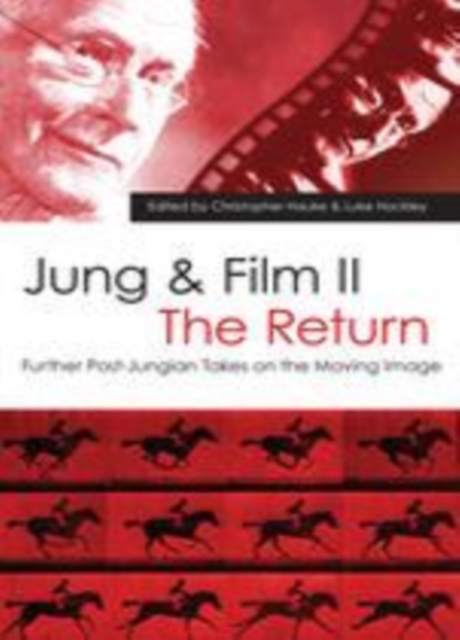
Jung and Film II. The return: new post-Jungian reflections on film
Since Jung and Film was first published in 2001, Jungian writing on the moving image in film and television has accelerated. Jung and Film II: The Return provides new contributions from authors across the globe willing to tackle the broader issues of film production and consumption, the audience and the place of film culture in our lives. As well as chapters dealing with particular film makers such as Maya Derren and films such as Birth, The Piano, The Wrestler and Breaking the Wave, there is also a unique chapter co-written by documentary film-maker Tom Hurvitz and New York Jungian analyst Margaret Klenck. Other areas of discussion include: the way in which psychological issues come under scrutiny in many movies the various themes that concern Jungian writers on film how Jungian ideas on psychological personality types can be applied in fresh ways to analyse a variety of characters. The book also includes a glossary to help readers with Jungian words and concepts. Jung and Film II is not only a welcome companion to the first volume, it is an important stand- alone work essential for all academics and students of analytical psychology as well as film, media and cultural studies.
eBook

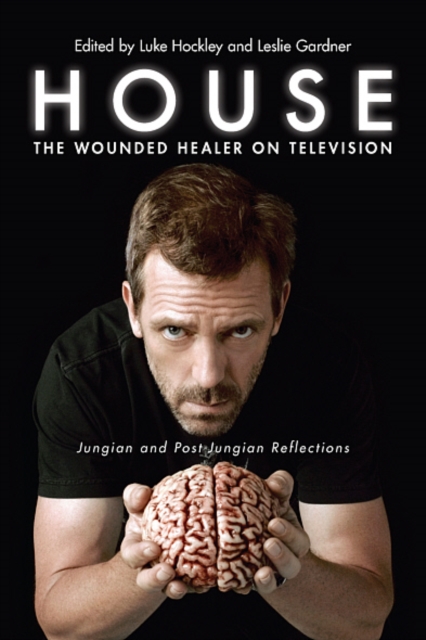
House: The Wounded Healer on Television
House MD is a globally successful and long-running medical drama. House: The Wounded Healer on Television employs a Jungian perspective to examine the psychological construction of the series and its namesake, Dr Gregory House.
The book also investigates the extent to which the continued popularity of House MD has to do with its representation of deeply embedded cultural concerns. It is divided into three parts - Diagnosing House, Consulting House and Dissecting House, - and topics of discussion include:
specific details, themes, motifs and tropes throughout the series
narrative, character and visual structure
the combination of performative effects, text and images of the doctor and his team
the activities of the hero, the wounded healer and the puer aeternus .
Offering an entirely fresh perspective on House MD , with contributions from medical professionals, academics and therapists, this book is essential reading for students and scholars of Jungian psychology. The inclusion of a glossary of Jungian terms means that this book can also be enjoyed by fans of House MD who have been seeking a more in-depth analysis of the series.
Luke Hockley , PhD, is Professor of Media Analysis in the Research Centre for Media, Art and Design (RIMAD) at the University of Bedfordshire, UK. Luke is co-editor of the International Journal of Jungian Studies (IJJS) and Jung and Film II: The Return , due to be published in 2011 by Routledge. Luke is also a psychotherapist in private practice in London and Bedfordshire.
Leslie Gardner, PhD, studied at the University of Essex Centre for Psychoanalytic Studies in the rhetoric of Jung, considering Vico as a precursor. She is on the Executive Committee of the International Association of Jungian Studies, a web-based organisation. She is presently running an international literary agency in London and is an occasional lecturer on writing at Manchester Metropolitan University, UK.
Introduction. Part I: Diagnosing House. Hockley , Doctoring Individuation: Gregory House, Physician, Detective or Shaman? Izod , The Physician’s Melancholia. Hauke , Playing House: Convincing Them of What You Know Simply By Who You Are. Part II: Consulting House. Waddell , House’s Caduceus Crutch. Huskinson , Anatomy of Genius: Inspiration Through Banality and Boring People. Cotter , Limping the Way to Wholeness: Wounded Feeling and Feeling Wounded. Porterfield , Our Inner Puer and its Playmates, the Shadow and the Trickster. Part III: Dissecting House. Rowland , House Not Ho(l)mes. Gardner , Gestures of Excess: An Exploratory Analysis of Melodrama as a Collective Archetype. Beebe , Not as a Stranger. Miller , I Feel Like a Failure – In-House Feminism.
eBook


Jung & Film II: The Return
Since Jung and Film was first published in 2001, Jungian writing on the moving image in film and television has accelerated. Jung and Film II: The Return provides new contributions from authors across the globe willing to tackle the broader issues of film production and consumption, the audience and the place of film culture in our lives.
As well as chapters dealing with particular film makers such as Maya Derren and films such as Birth, The Piano, The Wrestler and Breaking the Wave, there is also a unique chapter co-written by documentary film-maker Tom Hurvitz and New York Jungian analyst Margaret Klenck. Other areas of discussion include:
the way in which psychological issues come under scrutiny in many movies
the various themes that concern Jungian writers on film
how Jungian ideas on psychological personality types can be applied in fresh ways to analyse a variety of characters.
The book also includes a glossary to help readers with Jungian words and concepts. Jung and Film II is not only a welcome companion to the first volume, it is an important stand- alone work essential for all academics and students of analytical psychology as well as film, media and cultural studies.
eBook

Jung and Film II
This book tackles the broader issues of film production and consumption, the audience and the place of film culture in our lives.
eBook

House
House, M.D. is a globally successful and long-running medical drama. House: The Wounded Healer on Television employs a Jungian perspective to examine the internal psychological construction of the series and its namesake, Dr Gregory House.
eBook