
Catalogue Search | MBRL


Are you sure you want to remove the book from the shelf?

{{itemTitle}}
6
result(s) for
"Hodder, Ian, author"
Sort by:

Symbols in action : ethnoarchaeological studies of material culture
First published in 1982, this book presents the results of a series of field investigations carried out in Kenya, Zambia and the Sudan into the 'archaeological' remains and material culture of contemporary small-scale societies.
Book

Where are we heading? : the evolution of humans and things
A theory of human evolution and history based on ever-increasing mutual dependency between humans and things In this engaging exploration, archaeologist Ian Hodder departs from the two prevailing modes of thought about human evolution: the older idea of constant advancement toward a civilized ideal and the newer one of a directionless process of natural selection. Instead, he proposes a theory of human evolution and history based on \"entanglement,\" the ever-increasing mutual dependency between humans and things. Not only do humans become dependent on things, Hodder asserts, but things become dependent on humans, requiring an endless succession of new innovations. It is this mutual dependency that creates the dominant trend in both cultural and genetic evolution. He selects a small number of cases, ranging in significance from the invention of the wheel down to Christmas tree lights, to show how entanglement has created webs of human-thing dependency that encircle the world and limit our responses to global crises.
eBook

Where are we heading? : the evolution of humans and things
\"In this engaging exploration, archaeologist Ian Hodder departs from the two prevailing modes of thought about human evolution: the older idea of constant advancement toward a civilized ideal and the newer one of a directionless process of natural selection. Instead, he proposes a theory of human evolution and history based on \"entanglement,\" the ever-increasing mutual dependency between humans and things. Not only do humans become dependent on things, Hodder asserts, but things become dependent on humans, requiring an endless succession of new innovations. It is this mutual dependency that creates the dominant trend in both cultural and genetic evolution. He selects a small number of cases, ranging in significance from the invention of the wheel down to Christmas tree lights, to show how entanglement has created webs of human-thing dependency that encircle the world and limit our responses to global crises.\"--Provided by publisher.
Book
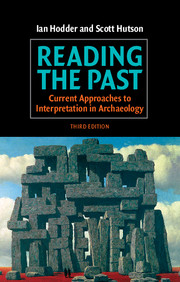
Reading the Past
The third edition of this classic introduction to archaeological theory and method has been fully updated to address the burgeoning of theoretical debate throughout the discipline. Ian Hodder and Scott Hutson argue that archaeologists must bring to bear a variety of perspectives in the complex and uncertain task of constructing meaning from the past. While remaining centred on the importance of hermeneutics, agency and history, the authors explore cutting-edge developments in areas such as post-structuralism, neo-evolutionary theory and whole new branches of theory such as phenomenology. With the addition of two completely new chapters, the third edition of Reading the Past presents an authoritative, state-of-the-art analysis of contemporary archaeological theory. Also including new material on feminist archaeology, historical approaches such as cultural history, and theories of discourse and signs, this book represents essential reading for any student or scholar with an interest in the past.
eBook
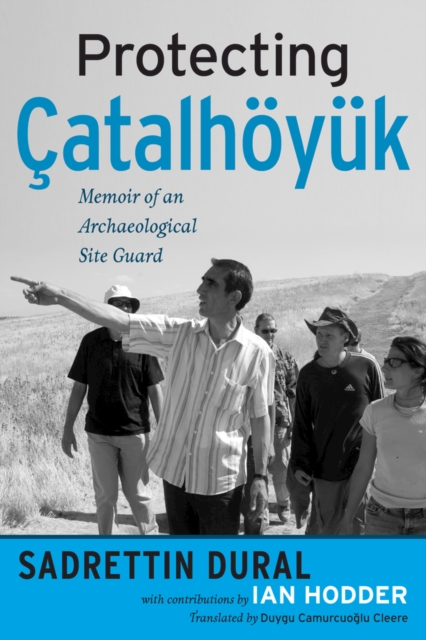
Protecting Çatalhöyük
They are essential to every major archaeological excavation but rarely acknowledged by the visiting researchers once the artifacts have been shipped. As part of the innovative, multivocal output from the famous Turkish Neolithic site of Çatalhöyük, we hear from one of the site guards, Sadrettin Dural, who tells the story of the excavation from the point of view of the \"Other.\" He offers tales of the strange habits of archaeologists, describes the local in-fighting that scholars never see, and explains how scientists can be protected from the Yatirs, spirits of the dead who guard the mound. Ian Hodder, director of the Çatalhöyük project, provides explanatory notes for the reader and an interview with the author, exploring indigenous interpretations of ancient sites and the archaeologists who excavate them. For the archaeologist, this offers a revolutionary new viewpoint on their work. For the cultural anthropologist, Dural's role as site guard is only a small part of his life as a Turkish villager. The author recounts the daily lived experience of one man in a contemporary Turkish village, including changing economic strategies for supporting his family, brushes with the law, trips to the beach and the city, and Turkish phone sex.
eBook

Archaeology in the Making
Archaeology in the Making is a collection of bold statements about archaeology, its history, how it works, and why it is more important than ever. This book comprises conversations about archaeology among some of its notable contemporary figures. They delve deeply into the questions that have come to fascinate archaeologists over the last forty years or so, those that concern major events in human history such as the origins of agriculture and the state, and questions about the way archaeologists go about their work. Many of the conversations highlight quite intensely held personal insight into what motivates us to pursue archaeology; some may even be termed outrageous in the light they shed on the way archaeological institutions operate - excavation teams, professional associations, university departments.Archaeology in the Making is a unique document detailing the history of archaeology in second half of the 20th century to the present day through the words of some of its key proponents. It will be invaluable for anybody who wants to understand the theory and practice of this ever developing discipline.
eBook