
Catalogue Search | MBRL


Are you sure you want to remove the book from the shelf?

{{itemTitle}}
42
result(s) for
"Holeňa, Martin"
Sort by:


Text-to-Ontology Mapping via Natural Language Processing with Application to Search for Relevant Ontologies in Catalysis
The paper presents a machine-learning based approach to text-to-ontology mapping. We explore a possibility of matching texts to the relevant ontologies using a combination of artificial neural networks and classifiers. Ontologies are formal specifications of the shared conceptualizations of application domains. While describing the same domain, different ontologies might be created by different domain experts. To enhance the reasoning and data handling of concepts in scientific papers, finding the best fitting ontology regarding description of the concepts contained in a text corpus. The approach presented in this work attempts to solve this by selection of a representative text paragraph from a set of scientific papers, which are used as data set. Then, using a pre-trained and fine-tuned Transformer, the paragraph is embedded into a vector space. Finally, the embedded vector becomes classified with respect to its relevance regarding a selected target ontology. To construct representative embeddings, we experiment with different training pipelines for natural language processing models. Those embeddings in turn are later used in the task of matching text to ontology. Finally, the result is assessed by compressing and visualizing the latent space and exploring the mappings between text fragments from a database and the set of chosen ontologies. To confirm the differences in behavior of the proposed ontology mapper models, we test five statistical hypotheses about their relative performance on ontology classification. To categorize the output from the Transformer, different classifiers are considered. These classifiers are, in detail, the Support Vector Machine (SVM), k-Nearest Neighbor, Gaussian Process, Random Forest, and Multilayer Perceptron. Application of these classifiers in a domain of scientific texts concerning catalysis research and respective ontologies, the suitability of the classifiers is evaluated, where the best result was achieved by the SVM classifier.
Journal Article

Application of Artificial Neural Networks in Crystal Growth of Electronic and Opto-Electronic Materials
In this review, we summarize the results concerning the application of artificial neural networks (ANNs) in the crystal growth of electronic and opto-electronic materials. The main reason for using ANNs is to detect the patterns and relationships in non-linear static and dynamic data sets which are common in crystal growth processes, all in a real time. The fast forecasting is particularly important for the process control, since common numerical simulations are slow and in situ measurements of key process parameters are not feasible. This important machine learning approach thus makes it possible to determine optimized parameters for high-quality up-scaled crystals in real time.
Journal Article

PERFORMANCE OF CLASSIFICATION CONFIDENCE MEASURES IN DYNAMIC CLASSIFIER SYSTEMS
Classifier combining is a popular technique for improving classification quality. Common methods for classifier combining can be further improved by using dynamic classification confidence measures which adapt to the currently classified pattern. However, in the case of dynamic classifier systems, the classification confidence measures need to be studied in a broader context - as we show in this paper, the degree of consensus of the whole classifier team plays a key role in the process. We discuss the properties which should hold for a good confidence measure, and we define two methods for predicting the feasibility of a given classification confidence measure to a given classifier team and given data. Experimental results on 6 artificial and 20 real-world benchmark datasets show that for both methods, there is a statistically significant correlation between the feasibility of the measure, and the actual improvement in classification accuracy of the whole classifier system; therefore, both feasibility measures can be used in practical applications to choose an optimal classification confidence measure.
Journal Article
Smart Design of Cz-Ge Crystal Growth Furnace and Process
The aim of this study was to evaluate the potential of the machine learning technique of decision trees to understand the relationships among furnace design, process parameters, crystal quality, and yield in the case of the Czochralski growth of germanium. The ultimate goal was to provide the range of optimal values of 13 input parameters and the ranking of their importance in relation to their impact on three output parameters relevant to process economy and crystal quality. Training data were provided by CFD modelling. The variety of data was ensured by the Design of Experiments method. The results showed that the process parameters, particularly the pulling rate, had a substantially greater impact on the crystal quality and yield than the design parameters of the furnace hot zone. Of the latter, only the crucible size, the axial position of the side heater, and the material properties of the radiation shield were relevant.
Journal Article

An approach to structure determination and estimation of hierarchical Archimedean Copulas and its application to Bayesian classification
Copulas are distribution functions with standard uniform univariate marginals. Copulas are widely used for studying dependence among continuously distributed random variables, with applications in finance and quantitative risk management; see, e.g., the pricing of collateralized debt obligations (Hofert and Scherer,
Quantitative Finance, 11
(5), 775–787,
2011
). The ability to model complex dependence structures among variables has recently become increasingly popular in the realm of statistics, one example being data mining (e.g., cluster analysis, evolutionary algorithms or classification). The present work considers an estimator for both the structure and the parameters of hierarchical Archimedean copulas. Such copulas have recently become popular alternatives to the widely used Gaussian copulas. The proposed estimator is based on a pairwise inversion of Kendall’s tau estimator recently considered in the literature but can be based on other estimators as well, such as likelihood-based. A simple algorithm implementing the proposed estimator is provided. Its performance is investigated in several experiments including a comparison to other available estimators. The results show that the proposed estimator can be a suitable alternative in the terms of goodness-of-fit and computational efficiency. Additionally, an application of the estimator to copula-based Bayesian classification is presented. A set of new Archimedean and hierarchical Archimedean copula-based Bayesian classifiers is compared with other commonly known classifiers in terms of accuracy on several well-known datasets. The results show that the hierarchical Archimedean copula-based Bayesian classifiers are, despite their limited applicability for high-dimensional data due to expensive time consumption, similar to highly-accurate classifiers like support vector machines or ensemble methods on low-dimensional data in terms of accuracy while keeping the produced models rather comprehensible.
Journal Article
Development and Optimization of VGF-GaAs Crystal Growth Process Using Data Mining and Machine Learning Techniques
The aim of this study was to assess the ability of the various data mining and supervised machine learning techniques: correlation analysis, k-means clustering, principal component analysis and decision trees (regression and classification), to derive, optimize and understand the factors influencing VGF-GaAs growth. Training data were generated by Computational Fluid Dynamics (CFD) simulations and consisted of 130 datasets with 6 inputs (growth rate and power of 5 heaters) and 5 outputs (interface position and deflection, and temperatures at various positions in GaAs). Data mining results confirmed a good dispersion of the training data without the feasibility of a dimensionality reduction. Data clustering was observed in relation to the position of the crystallization front relative to the side heaters. Based on the statistical performance criteria and training results, decision trees identified the most decisive inputs and their ranges for a favorable interface shape and to keep GaAs temperature beyond limits for heavy arsenic evaporation. Decision trees are a recommendable machine learning technique with short training times and acceptable predictive accuracy based on small volume of CFD training data, capable of providing guidelines for understanding the crystal growth process, which is a prerequisite for the growth of low-cost, high-quality bulk crystals.
Journal Article
Decision Tree-Supported Analysis of Gallium Arsenide Growth Using the LEC Method
In this study, an axisymmetric Czochralski furnace model for the LEC growth of gallium arsenide is presented. We produced 88 datasets through computational fluid dynamics simulations. Among the many parameters that affect crystal growth, a total of 13 input parameters were selected, including the geometry and material parameters of the hot zone (crucible, heaters, radiation shield, and crystal), as well as the process parameters (such as pulling and rotation rates, heating power, etc.). Voronkov criteria (v/Gn), interface deflection, and the average interface temperature gradient were selected as the output parameters. We carried out a correlation analysis between the variables and used decision trees to study the impact of the 13 input variables on the output variables. The results indicated that in the growth of gallium arsenide, the main factor affecting interface deflection and the average interface thermal gradients is the crucible rotation rate. For v/Gn, it is the pulling rate.
Journal Article
Real Time Predictions of VGF-GaAs Growth Dynamics by LSTM Neural Networks
The aim of this study was to assess the aptitude of the recurrent Long Short-Term Memory (LSTM) neural networks for fast and accurate predictions of process dynamics in vertical-gradient-freeze growth of gallium arsenide crystals (VGF-GaAs) using datasets generated by numerical transient simulations. Real time predictions of the temperatures and solid–liquid interface position in GaAs are crucial for control applications and for process visualization, i.e., for generation of digital twins. In the reported study, an LSTM network was trained on 1950 datasets with 2 external inputs and 6 outputs. Based on network performance criteria and training results, LSTMs showed the very accurate predictions of the VGF-GaAs growth process with median root-mean-square-error (RMSE) values of 2 × 10⁻³. This deep learning method achieved a superior predictive accuracy and timeliness compared with more traditional Nonlinear AutoRegressive eXogenous (NARX) recurrent networks.
Journal Article
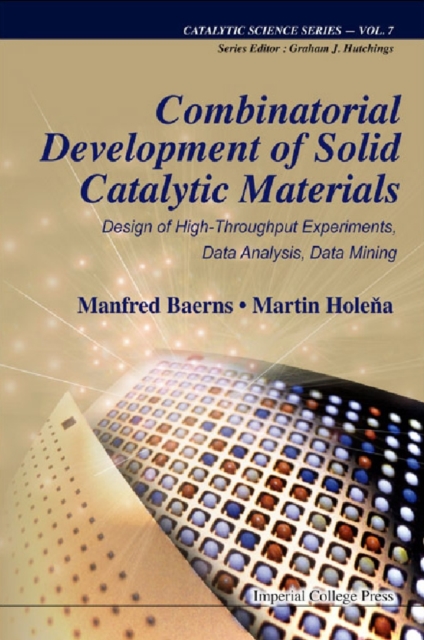
Combinatorial development of solid catalytic materials
The book provides a comprehensive treatment of combinatorial development of heterogeneous catalysts. In particular, two computer-aided approaches that have played a key role in combinatorial catalysis and high-throughput experimentation during the last decade — evolutionary optimization and artificial neural networks — are described. The book is unique in that it describes evolutionary optimization in a broader context of methods of searching for optimal catalytic materials, including statistical design of experiments, as well as presents neural networks in a broader context of data analysis. It is the first book that demystifies the attractiveness of artificial neural networks, explaining its rational fundamental — their universal approximation capability. At the same time, it shows the limitations of that capability and describes two methods for how it can be improved. The book is also the first that presents two other important topics pertaining to evolutionary optimization and artificial neural networks: automatic generating of problem-tailored genetic algorithms, and tuning evolutionary algorithms with neural networks. Both are not only theoretically explained, but also well illustrated through detailed case studies.
eBook