
Catalogue Search | MBRL


Are you sure you want to remove the book from the shelf?

{{itemTitle}}
5
result(s) for
"Holmes, Brian, editor"
Sort by:

An atlas of agendas : mapping the power, mapping the commons
A political, social and economic atlas, informing the public about sociopolitical power structures and activating opportunities for the self and the commons. Utilizes the opportunities of infographics from the local to the global and back again.
Book

The Routledge Handbook of Language in the Workplace
The Routledge Handbook of Language in the Workplace provides a
comprehensive survey of linguistic research on language in the workplace written by
top scholars in the field from around the world. The Handbook
covers theoretical and methodological approaches, explores research in different
types of workplace settings, and examines some key areas of workplace talk that have
been investigated by workplace researchers. Issues of identity have become a major
focus in recent workplace research and the Handbook highlights some
core issues of relevance in this area, such as gender, leadership, and intercultural
communication. As the field has developed, applications of workplace research for
both native and non-native speakers have emerged. Insights can inform and improve
input from practitioners training workers in a range of fields and across a variety
of contexts, and the Handbook foregrounds some of the ways
workplace research can do this. This is an invaluable resource for researchers and
graduate students interested in learning more about workplace discourse.
eBook

Fins into limbs
Long ago, fish fins evolved into the limbs of land vertebrates and tetrapods. During this transition, some elements of the fin were carried over while new features developed. Lizard limbs, bird wings, and human arms and legs are therefore all evolutionary modifications of the original tetrapod limb. A comprehensive look at the current state of research on fin and limb evolution and development, this volume addresses a wide range of subjects—including growth, structure, maintenance, function, and regeneration. Divided into sections on evolution, development, and transformations, the book begins with a historical introduction to the study of fins and limbs and goes on to consider the evolution of limbs into wings as well as adaptations associated with specialized modes of life, such as digging and burrowing. Fins into Limbs also discusses occasions when evolution appears to have been reversed—in whales, for example, whose front limbs became flippers when they reverted to the water—as well as situations in which limbs are lost, such as in snakes. With contributions from world-renowned researchers, Fins into Limbs will be a font for further investigations in the changing field of evolutionary developmental biology.
eBook

Culinary linguistics : the chef's special
Language and food are universal to humankind. Language accomplishes more than a pure exchange of information, and food caters for more than mere subsistence. Both represent crucial sites for socialization, identity construction, and the everyday fabrication and perception of the world as a meaningful, orderly place. This volume contains an introduction to the study of food and an extensive overview of the literature focusing on its role in interplay with language. It is the only publication fathoming the field of food and food-related studies from a linguistic perspective. The research articles assembled here encompass a number of linguistic fields, ranging from historical and ethnographic approaches to literary studies, the teaching of English as a foreign language, psycholinguistics, and the study of computer-mediated communication, making this volume compulsory reading for anyone interested in genres of food discourse and the linguistic connection between food and culture.
eBook
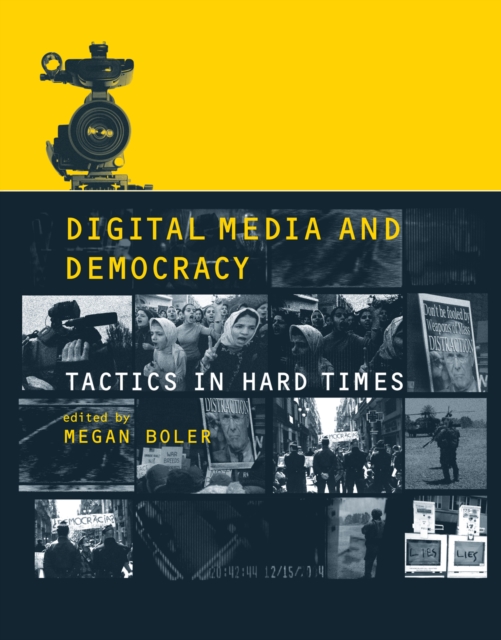
Digital Media and Democracy
Media scholars, artists, activists, and journalists discuss how the uses of the emerging “Social Web” redefine the public sphere and influence mainstream journalism.
In an age of proliferating media and news sources, who has the power to define reality? When the dominant media declared the existence of WMDs in Iraq, did that make it a fact? Today, the “Social Web” (sometimes known as Web 2.0, groupware, or the participatory web)—epitomized by blogs, viral videos, and YouTube—creates new pathways for truths to emerge and makes possible new tactics for media activism. In Digital Media and Democracy, leading scholars in media and communication studies, media activists, journalists, and artists explore the contradiction at the heart of the relationship between truth and power today: the fact that the radical democratization of knowledge and multiplication of sources and voices made possible by digital media coexists with the blatant falsification of information by political and corporate powers. The book maps a new digital media landscape that features citizen journalism, The Daily Show, blogging, and alternative media. The contributors discuss broad questions of media and politics, offer nuanced analyses of change in journalism, and undertake detailed examinations of the use of web-based media in shaping political and social movements. The chapters include not only essays by noted media scholars but also interviews with such journalists and media activists as Amy Goodman of Democracy Now!, Media Matters host Robert McChesney, and Hassan Ibrahim of Al Jazeera.
Contributors and Interviewees
Shaina Anand, Chris Atton, Megan Boler, Axel Bruns, Jodi Dean, Ron Deibert, Deepa Fernandes, Amy Goodman, Brian Holmes, Hassan Ibrahim, Geert Lovink, Nathalie Magnan, Robert McChesney, Graham Meikle, Susan Moeller, Alessandra Renzi, Ricardo Rosas, Trebor Scholz, D. Travers Scott, Rebecca Statzel
eBook