
Catalogue Search | MBRL


Are you sure you want to remove the book from the shelf?

{{itemTitle}}
101
result(s) for
"Holstein, Martha"
Sort by:


On Being an Old Woman in Contemporary Society
This introduction argues that gender continues to be a factor in women's life trajectories, and to understand its impact, we must view gender through a life-course perspective. This allows us to see how gender injustices from our 20s or 40s shape our late-life experiences, and gives
old and young a common agenda for action. This article supports feminism as a social movement, making collective action essential to giving women a chance to live fuller lives, and it considers old women's situation in contemporary society.
Journal Article
A Call to Action: Where To From Here?
The author posits what is left to do in this \"half-changed world\" for women of all ages-especially for women in late life. She asks for a recognition of complexity so as to leave space for vulnerability, sadness, and the need for help as well as joy. She makes a plea for recognizing
diversity and the accomplishment that is old age, and asks old women to look ahead, not backward, to what is possible now. She reaffirms a commitment to a life-course analysis and the opportunities for intergenerational analysis and organizing as a feminist project, suggesting that advocacy
is everyone's task, as all must stand up for the issues that contribute to a decent old age.
Journal Article

Stimulating β-Cell Regeneration by Combining a GPR119 Agonist with a DPP-IV Inhibitor
Activating G-protein coupled receptor 119 (GPR119) by its agonists can stimulate glucagon like peptide-1 (GLP-1) release. GLP-1 is rapidly degraded and inactivated by dipeptidylpeptidase-IV (DPP-IV). We studied the efficiency of combining PSN632408, a GPR119 agonist, with sitagliptin, a DPP-IV inhibitor, on β-cell regeneration in diabetic mice.
Diabetes in C57BL/6 mice was induced by streptozotocin. PSN632408 and sitagliptin alone or in combination were administered to diabetic mice for 7 weeks along with BrdU daily. Nonfasting blood glucose levels were monitored. After treatment, oral glucose tolerance test (OGTT), plasma active GLP-1 levels, β-cell mass along with α- and β-cell replication, and β-cell neogenesis were evaluated.
Normoglycemia was not achieved in vehicle-treated mice. By contrast, 32% (6 of 19) of PSN632408-treated diabetic mice, 36% (5 of 14) sitagliptin-treated diabetic mice, and 59% (13 of 22) diabetic mice treated with PSN632408 and sitagliptin combination achieved normoglycemia after 7 weeks treatment. Combination therapy significantly increased plasma active GLP-1 levels, improved glucose clearance, stimulated both α- and β-cell replication, and augmented β-cell mass. Furthermore, treatment with combination therapy induced β-cell neogenesis from pancreatic duct-derived cells.
Our results demonstrate that combining a GPR119 agonist with a DPP-IV inhibitor may offer a novel therapeutic strategy for stimulating β-cell regeneration and reversing diabetes.
Journal Article

A Tale for Our Times: From the Bronx to Chicago in 76 Years
This essay is a reflection on how personal history shapes who we are as we age and what matters to us, focusing on women. I begin by briefly recounting the formative aspects of my early years and midlife, and then show how these influence the choices I make in old age, as well as the concerns and anxieties I experience. I discuss lifestyle, family, and economic concerns, along with fear of dementia, and ageism. I conclude with a few comments about the kind of society that would facilitate decency and meaningful choice for the heterogeneous group who constitute America's aging.
Journal Article

A looming dystopia: Feminism, aging, and community-based long-term care
Old age often brings with it chronic conditions that make it difficult to handle the activities of daily life. In the United States, unpaid family caregivers, predominantly women, provide most of this care. I explore why this situation has come about and persists and further ground my image of a dystopian future in neoliberalism, the policymaking process, and contemporary politics. I then offer an ethical and policy foundation for an alternative approach to providing needed long-term care services and make provisional suggestions for actions that ought to be taken now and in the near future to avoid this dystopian future.
Journal Article
A looming dystopia: Feminism, aging, and community-based long-term care
Old age often brings with it chronic conditions that make it difficult to handle the activities of daily life. In the United States, unpaid family caregivers, predominantly women, provide most of this care. I explore why this situation has come about and persists and further ground my image of a dystopian future in neoliberalism, the policymaking process, and contemporary politics. I then offer an ethical and policy foundation for an alternative approach to providing needed long-term care services and make provisional suggestions for actions that ought to be taken now and in the near future to avoid this dystopian future.
Journal Article
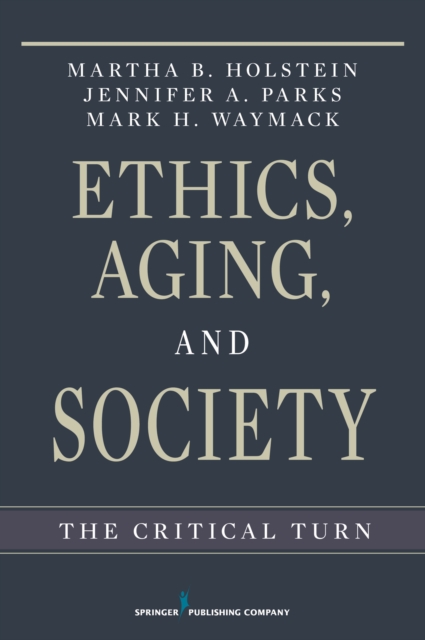
Ethics, aging, and society
This book presents second generation issues in ethics, aging, and society by presenting critical outcomes that arise when ethics is applied to the practical concerns that occur in day-to-day elder care. The first volume in over 10 years to address ethics and gerontology, it is unparalleled in its comprehensiveness and integration of well-developed philosophical arguments with empirical research, humanistic scholarship, and insights gained from practical experience. This book challenges the tried and true approaches to ethical issues in aging and opens avenues for creative problem-solving. The authors' diverse backgrounds bring the advantages of both interdisciplinary scholarship and practical experience to this comprehensive textbook. It is an essential resource for those interested in, and working with, older people, from upper-level undergraduate students and graduate-division students, to gerontology practitioners in training.
eBook
A Feminist Perspective on Anti-Aging Medicine
Holstein considers anti-aging medicine, a potential new weapon in the postmodern task of self-creation, through a feminist lens. It is her view that, short of a major cultural upheaval, older women will experience the negative effects of anti-aging medicine more forcefully than will men.
Journal Article
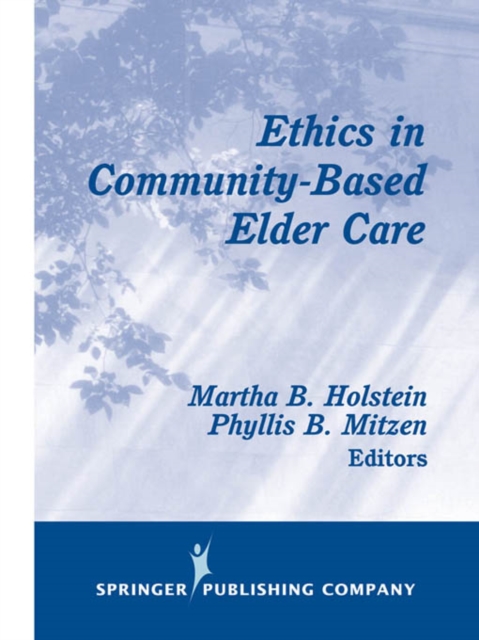
Ethics in community-based elder care
Caring for elders outside of institutions is the fastest growing sector of US health care.Building on their research study at the Park Ridge Center, editors Holstein and Mitzen, together with a team of experts, examine the complexities involved in developing an ethics for community-based long-term care.
eBook