
Catalogue Search | MBRL


Are you sure you want to remove the book from the shelf?

{{itemTitle}}
7
result(s) for
"Hook, Christa"
Sort by:

Ottoman infantryman 1914-18
\"Following the Balkan Wars of 1912-1913, the Ottoman Empire undertook a massive military retraining programme. Although many histories have derided the Ottoman Army as a poor fighting force, this was more often due to poor leadership and logistics than the quality of their troops. The typical Ottoman soldier, the asker, was tough, well-trained, and courageous. Fighting from Gallipoli to Mesopotamia and to the Caucasus, against both regular Allied armies and the irregulars of the Arab Revolt, they proved themselves to be able frontline troops. Illuminated by first-hand accounts, period photographs and specially commissioned artwork, this is the first English-language title to focus exclusively on the Ottoman infantryman in World War I.\"--Back cover.
Book

Letter: Malaria Battle
For decades, health workers have been dismayed to witness the decline in treatment options for malaria, as drug resistance wiped out once-effective drugs. Recently, effective new medicines - artemisinin-based combinations (ACT) - have been developed. These can completely cure a patient in three days. However, ACT is more expensive than older treatments.
Newspaper Article


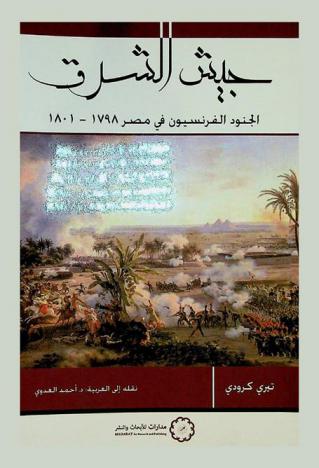
جيش الشرق : الجنود الفرنسيون في مصر 1798-1801
عرض المؤلف في هذا الكتاب شهادات كثيرة لعدد من الضباط والجنود والمدنيين الناجين من رجال الحملة التي يستأثر أرشيف شاتو دي ڤينسين بمعظمها عن مختلف أوجه حياتهم في مصر، وانطباعاتهم عنها، ودورهم في الأحداث التي شاركوا فيها. وسنرى أن المؤلف سيلعب دورا لم يعتده المؤرخون، بل لا يفضلونه أو بالأحرى لا يجيدونه غالبا. سيتوارى المؤرخ تماما، وسينكر ذاته ليفسح المجال لشهود العيان ليرووا تلك الأحداث التي شاركوا في صنعها بأنفسهم، وهي وإن كانت رؤية من جانب واحد وتعكس وجهة نظر المحتل فحسب، فقد جاءت متماثلة مع مشروعه الذي صدر به كتابه \"الجندي الفرنسي في مصر\".
Book

Uncovering Alternate Ethnic Identity Trajectories: A Cluster Analysis of the MEIM and Psychological Well-Being
There is vast support in the racial-ethnic identity literature that there is a positive association between racial-ethnic identity and psychological well-being. The current study calls attention to the possibility that there may actually be heterogeneity among racial-ethnic minority group members regarding this link whereby the pathway to psychological well-being may involve an alternate identity that accords limited importance to race and ethnicity. We utilized cluster analysis with two independent datasets (N = 414, N = 506) to examine trends within the data based on the most frequently referenced measure of ethnic identity—Multigroup Ethnic Identity Measure (MEIM; Phinney in J Adolesc Res 7(2):156–176, 10.1177/074355489272003, 1992)—several of which are in-line with the findings of extant research. A four-cluster solution fits the data the best. The first two clusters we observed fit with identify profiles already observed in the literature. Cluster 1 (High) included participants with high levels of ethnic identity and high levels of well-being. Cluster 2 (Low) was comprised of participants with low levels of ethnic identity and well-being. Of interest was Cluster 3 (Alternate), which revealed a pattern not recorded in previous research whereby participants had low levels of ethnic identity and high levels of well-being. Cluster 4 (Enhanced) presented an ethnicity-mental health connection similar to that of Cluster 1, but participants in this group had high scores on the MEIM with even more elevated ratings of well-being. Therefore, simple linear depictions of the association between the MEIM and indicators of well-being may not fully capture the complexity of the relationship. In contrast to what has been previously asserted, some individuals may achieve well-being through something other than ethnicity.
Journal Article