
Catalogue Search | MBRL


Are you sure you want to remove the book from the shelf?

{{itemTitle}}
1,171
result(s) for
"Hope, William"
Sort by:

The ghost pirates
\"The Mortzestus was rumored to be haunted and sure enough, after two weeks out of port the rigging went slack, a ghostly form arose from the sea, and a dense mist descended around the ship. The desperate crew's chilling fate is recounted in this compulsive page-turner by a master of seafaring yarns\"-- Provided by publisher.
Book


بيت على الحدود
هي رواية رعب خارقة للطبيعة بقلم كاتب الخيال البريطاني وليام هوب هودجسون. تمثل الرواية سجلا عن رجل يعيش في منزل منعزل، وتجاربه عن المخلوقات الخارقة للطبيعة وأبعاد أخرى. وضع كاتب الرعب الأمريكي لافكرافت هذه القصة وغيرها من أعمال هودجسون بأنها من أعظم ما أثر عليه، وصفها تيري براتشيت أنها رواية «تمثل انفجارا كبيرا في عالمي الخاص بصفتي قارئا للخيال العلمي والفانتازيا وكاتب لاحقا.
Book

Individualised antibiotic dosing for patients who are critically ill: challenges and potential solutions
Infections in critically ill patients are associated with persistently poor clinical outcomes. These patients have severely altered and variable antibiotic pharmacokinetics and are infected by less susceptible pathogens. Antibiotic dosing that does not account for these features is likely to result in suboptimum outcomes. In this Review, we explore the challenges related to patients and pathogens that contribute to inadequate antibiotic dosing and discuss how to implement a process for individualised antibiotic therapy that increases the accuracy of dosing and optimises care for critically ill patients. To improve antibiotic dosing, any physiological changes in patients that could alter antibiotic concentrations should first be established; such changes include altered fluid status, changes in serum albumin concentrations and renal and hepatic function, and microvascular failure. Second, antibiotic susceptibility of pathogens should be confirmed with microbiological techniques. Data for bacterial susceptibility could then be combined with measured data for antibiotic concentrations (when available) in clinical dosing software, which uses pharmacokinetic/pharmacodynamic derived models from critically ill patients to predict accurately the dosing needs for individual patients. Individualisation of dosing could optimise antibiotic exposure and maximise effectiveness.
Journal Article
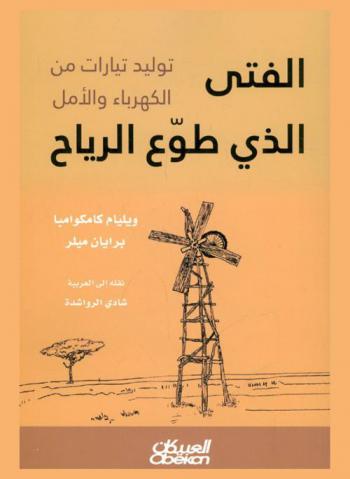
الفتى الذي طوع الرياح : توليد تيارات من الكهرباء والأمل
هذا الكتاب يحكي قصة واقعية مثيرة عن الإبداع الإنساني وقدرة الإنسان على التغلب على الصعوبات وهي قصة سوف تحفز أي إنسان يشك في قدرته على تغيير مجتمعه وتحسين حياة من يعيشون حوله هذه قصة ملهمة تبين أن التغيير الكبير يمكن أن يبدأ من فكرة صغيرة تدور أحداث الكتاب حول فتى عاش في بلد ينتشر فيه السحر وكان العلم الحديث بالنسبة إلى أهله لغزا محيرا لكن ويليام كان قد قرأ عن طواحين الهواء وكان يحلم ببناء واحدة تجلب لقريته الصغيرة وهو ما يتمتع به سوى %2 من سكان مالاوي الكهرباء والماء الجاري وكان جيرانه يسمونه ميسالا (المجنون) لكن ويليام رفض التخلي عن أحلامه. بكومة من كتب العلوم القديمة وبعض قطع الحديد البالية وقطع جرار مهمل وعجلتي دراجة هوائية محطمة ومخزون من الفضول والتصميم إنطلق لتنفيذ خطة جريئة لأختراع معجزة صغيرة ستغير حياة كل من حوله.
BOOK

Liposomal Amphotericin B (AmBisome®): A Review of the Pharmacokinetics, Pharmacodynamics, Clinical Experience and Future Directions
Liposomal amphotericin B (AmBisome
®
; LAmB) is a unique lipid formulation of amphotericin B. LAmB is a standard of care for a wide range of medically important opportunistic fungal pathogens. LAmB has a significantly improved toxicity profile compared with conventional amphotericin B deoxycholate (DAmB). Despite nearly 20 years of clinical use, the pharmacokinetics and pharmacodynamics of this agent, which differ considerably from DAmB, remain relatively poorly understood and underutilized in the clinical setting. The molecular pharmacology, preclinical and clinical pharmacokinetics, and clinical experience with LAmB for the most commonly encountered fungal pathogens are reviewed. In vitro, experimental animal models and human clinical trial data are summarized, and novel routes of administration and dosing schedules are discussed. LAmB is a formulation that results in reduced toxicity as compared with DAmB while retaining the antifungal effect of the active agent. Its long terminal half-life and retention in tissues suggest that single or intermittent dosing regimens are feasible, and these should be actively investigated in both preclinical models and in clinical trials. Significant gaps remain in knowledge of pharmacokinetics and pharmacodynamics in special populations such as neonates and children, pregnant women and obese patients.
Journal Article
الفتى الذي طوع الرياح : توليد تيارات من الكهرباء والأمل
هذا الكتاب يحكي قصة واقعية مثيرة عن الإبداع الإنساني وقدرة الإنسان على التغلب على الصعوبات وهي قصة سوف تحفز أي إنسان يشك في قدرته على تغيير مجتمعه وتحسين حياة من يعيشون حوله هذه قصة ملهمة تبين أن التغيير الكبير يمكن أن يبدأ من فكرة صغيرة تدور أحداث الكتاب حول فتى عاش في بلد ينتشر فيه السحر وكان العلم الحديث بالنسبة إلى أهله لغزا محيرا لكن ويليام كان قد قرأ عن طواحين الهواء وكان يحلم ببناء واحدة تجلب لقريته الصغيرة وهو ما يتمتع به سوى %2 من سكان مالاوي الكهرباء والماء الجاري وكان جيرانه يسمونه ميسالا (المجنون) لكن ويليام رفض التخلي عن أحلامه. بكومة من كتب العلوم القديمة وبعض قطع الحديد البالية وقطع جرار مهمل وعجلتي دراجة هوائية محطمة ومخزون من الفضول والتصميم إنطلق لتنفيذ خطة جريئة لأختراع معجزة صغيرة ستغير حياة كل من حوله.
BOOK

Optimizing antimicrobial use: challenges, advances and opportunities
An optimal antimicrobial dose provides enough drug to achieve a clinical response while minimizing toxicity and development of drug resistance. There can be considerable variability in pharmacokinetics, for example, owing to comorbidities or other medications, which affects antimicrobial pharmacodynamics and, thus, treatment success. Although current approaches to antimicrobial dose optimization address fixed variability, better methods to monitor and rapidly adjust antimicrobial dosing are required to understand and react to residual variability that occurs within and between individuals. We review current challenges to the wider implementation of antimicrobial dose optimization and highlight novel solutions, including biosensor-based, real-time therapeutic drug monitoring and computer-controlled, closed-loop control systems. Precision antimicrobial dosing promises to improve patient outcome and is important for antimicrobial stewardship and the prevention of antimicrobial resistance.There is considerable variability in antimicrobial pharmacokinetics and pharmacodynamics, which can pose challenges for treatment of infection and antimicrobial resistance development. In this Review, Holmes and colleagues discuss how precision antimicrobial therapy, including biosensors and individualized treatment, can contribute to antimicrobial stewardship.
Journal Article

F901318 represents a novel class of antifungal drug that inhibits dihydroorotate dehydrogenase
There is an important medical need for new antifungal agents with novel mechanisms of action to treat the increasing number of patients with life-threatening systemic fungal disease and to overcome the growing problem of resistance to current therapies. F901318, the leading representative of a novel class of drug, the orotomides, is an antifungal drug in clinical development that demonstrates excellent potency against a broad range of dimorphic and filamentous fungi. In vitro susceptibility testing of F901318 against more than 100 strains from the four main pathogenic Aspergillus spp. revealed minimal inhibitory concentrations of ≤0.06 μg/mL—greater potency than the leading antifungal classes. An investigation into the mechanism of action of F901318 found that it acts via inhibition of the pyrimidine biosynthesis enzyme dihydroorotate dehydrogenase (DHODH) in a fungal-specific manner. Homology modeling of Aspergillus fumigatus DHODH has identified a predicted binding mode of the inhibitor and important interacting amino acid residues. In a murine pulmonary model of aspergillosis, F901318 displays in vivo efficacy against a strain of A. fumigatus sensitive to the azole class of antifungals and a strain displaying an azole-resistant phenotype. F901318 is currently in late Phase 1 clinical trials, offering hope that the antifungal armamentarium can be expanded to include a class of agent with a mechanism of action distinct from currently marketed antifungals.
Journal Article

Fourth European Conference on Infections in Leukaemia (ECIL-4): guidelines for diagnosis, prevention, and treatment of invasive fungal diseases in paediatric patients with cancer or allogeneic haemopoietic stem-cell transplantation
Invasive opportunistic fungal diseases (IFDs) are important causes of morbidity and mortality in paediatric patients with cancer and those who have had an allogeneic haemopoietic stem-cell transplantation (HSCT). Apart from differences in underlying disorders and comorbidities relative to those of adults, IFDs in infants, children, and adolescents are unique with respect to their epidemiology, the usefulness of diagnostic methods, the pharmacology and dosing of antifungal agents, and the absence of interventional phase 3 clinical trials for guidance of evidence-based decisions. To better define the state of knowledge on IFDs in paediatric patients with cancer and allogeneic HSCT and to improve IFD diagnosis, prevention, and management, the Fourth European Conference on Infections in Leukaemia (ECIL-4) in 2011 convened a group that reviewed the scientific literature on IFDs and graded the available quality of evidence according to the Infectious Diseases Society of America grading system. The final considerations and recommendations of the group are summarised in this manuscript.
Journal Article