
Catalogue Search | MBRL


Are you sure you want to remove the book from the shelf?

{{itemTitle}}
564
result(s) for
"Hopkins, Lisa"
Sort by:

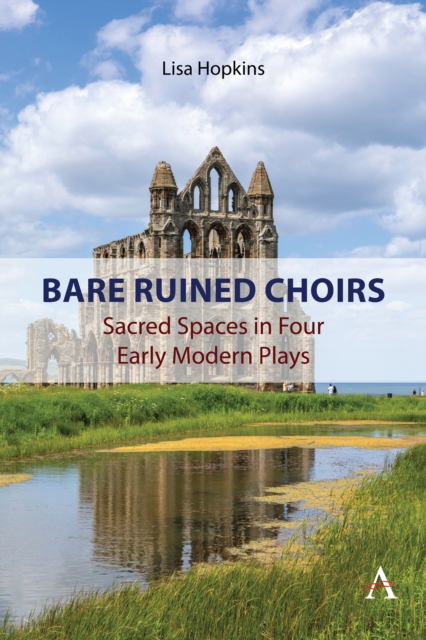
Bare Ruined Choirs
The book discusses the demarcation of secular and sacred territory in early modern English drama. It focuses primarily on four plays, Thorney Abbey, A Knack to Know a Knave, A Shoemaker a Gentleman and The Lovesick King, but puts these in dialogue with Hamlet, Macbeth, King Lear and Doctor Faustus.
eBook

Bess of Hardwick : new perspectives
\"Bess of Hardwick was one of the most extraordinary figures of Elizabethan England. She was born the daughter of a country squire but by the end of her long life (which a recent redating of her birth suggests was even longer than previously thought) she was the richest woman in England outside the royal family, had risen to the rank of countess and seen two of her daughters do the same, and had built one of the major 'prodigy houses' of the period, Hardwick Hall. While married to her fourth husband, the Earl of Shrewsbury, she had been jailer to Mary, Queen of Scots, and her granddaughter by her second marriage, Lady Arbella Stuart, was of royal blood and might have succeeded to the throne of England. This wide-ranging collection brings out the full range of her activities and impact\"-- Provided by publisher.
Book

Addressing the Audience and Making History: Soliloquies in Richard III
Few plays make such varied or such bravura use of soliloquies as Shakespeare’s Richard III. The opening forty-one-line monologue by Richard himself allows an actor to show what he can do and to capture his audience and offers a view on processes of historical causation: having started with six uses of the word ‘our’, Richard not only moves on to say ‘I’ nine times (supplemented by ‘my’ and ‘me’), but also explains that his plans are going to affect the future of others, too. His plot to set his brothers against each other is going to change the course of history; moreover, it will do so by using the stalking-horse of a prophecy, a form of speech which presumes that the future is already unalterably fixed. Other soliloquies in the play also offer insights into historical process. This paper examines the differing tonality of the play’s soliloquies and the kind of information offered in them to argue that while Richard III officially subscribes to Tudor myths of the past, it not only implicitly urges the audience to a more sceptical take, but in fact raises questions about whether we can ever be sure about how history was made.
Journal Article

The genres of Renaissance tragedy
This collection of newly commissioned essays explores the extraordinary versatility of Renaissance tragedy and shows how it enables exploration of issues ranging from gender to race to religious conflict, as well as providing us with some of the earliest dramatic representations of the lives of ordinary Englishmen and women. The book mixes perspectives from emerging scholars with those of established ones and offers the first systematic examination of the full range and versatility of Renaissance tragedy as a literary genre. It works by case study, so that each chapter offers not only a definition of a particular kind of Renaissance tragedy but also new research into a particularly noteworthy or influential example of that genre.
Book

Drama and the Succession to the Crown, 1561-1633
Hopkins argues the succession to the throne was a burning topic not only in the final years of Elizabeth but well into the 1630s, and drama, with its disguised identities and oblique relationship to reality, was a safe way to air it. Hopkins analyzes some of the ways in which plays-from Marlowe's and Shakespeare's to Webster's and Ford's-reflect, negotiate and dream the issue of the succession.
eBook

Essex : the cultural impact of an Elizabethan courtier
\"This collection of new essays about the Earl of Essex, one of the most important figures of the Elizabethan court, resituates his life and career within the richly diverse contours of his cultural and political milieu. It identifies the ways in which his biography has been variously interpreted both during his own lifetime and since his death in 1601.\"--Page 4 of cover.
Book

The genres of Renaissance tragedy
This collection of essays explores tragedy, the most versatile of Renaissance literary genres, revealing its astonishing thematic, stylistic and emotional range. Each chapter consists of a case study, offering not only a definition of a particular kind of Renaissance tragedy but also new research into an important example of that genre. There is only one chapter on Shakespeare; instead contributors attend to subgenres of tragedy – biblical tragedy and closet drama, for example – in which Shakespeare did not engage and others in which the nature of his influence is interrogated, producing original critical readings of individual plays which show how interventions in these subgenres can be mapped onto debates surrounding numerous important issues, including national identity, the nature of divine authority, early modern youth culture, gender and ethics, as well as questions relating to sovereignty and political intervention. The chapters also highlight the rich range of styles adopted by the early modern tragic dramatists and show how opportunely the genre as a whole is positioned for speaking truth to power. Collectively, these essays reassess the various sub-genres of Renaissance tragedy in ways which respond to the radical changes that have affected the critical landscape over the last few decades.
eBook

Innovative Library Workplaces
Though this book took root during the pandemic, it is not of the pandemic: The changes wrought are permanent. Innovative Library Workplaces proposes a way forward after this monumental disruption, recognizing that neither the pandemic nor the work culture prior to it is a good model for what comes next.
eBook

Early Modern Theatre and the Figure of Disability
What work did physically disabled characters do for the early modern theatre? Through a consideration of a range of plays, including Doctor Faustus and Richard III, Genevieve Love argues that the figure of the physically disabled prosthetic body in early modern English theatre mediates a set of related ‘likeness problems’ that structure the theatrical, textual, and critical lives of the plays of Shakespeare and his contemporaries. The figure of disability stands for the relationship between actor and character: prosthetic disabled characters with names such as Cripple and Stump capture the simultaneous presence of the fictional and the material, embodied world of the theatre. When the figure of the disabled body exits the stage, it also mediates a second problem of likeness, between plays in their performed and textual forms. While supposedly imperfect textual versions of plays have been characterized as ‘lame’, the dynamic movement of prosthetic disabled characters in the theatre expands the figural role which disability performs in the relationship between plays on the stage and on the page. Early Modern Theatre and the Figure of Disability reveals how attention to physical disability enriches our understanding of early modern ideas about how theatre works, while illuminating in turn how theatre offers a reframing of disability as metaphor.
eBook