
Catalogue Search | MBRL


Are you sure you want to remove the book from the shelf?

{{itemTitle}}
194
result(s) for
"Horn, Gerd-Rainer"
Sort by:


El ascenso meteórico de los movimientos estudiantiles en ‘1968’: los contextos y las características de un fenómeno transnacional
Partiendo de la consideración histórica de 1968 como fenómeno social, politico y cultural, comparable con otros momentos del pasado contemporaneo, se realiza un estudio de los marcos en los que tuvieron lugar las protestas estudiantiles, particularmente en la Europa Ocidental Meridional, y los elementos que convirtieron al 1968 estudiantil en un fenómeno que superó las fronteras politicas. Presto especial atención a algunas de las diferencias cualitativas respecto a la manera en que se vivió 1968 en la Europa del \"Norte\" y la Europa \"Mediterránea\", en una linea invisible pero tangible que iría de Rotterdam a Trieste. Destaco la perspectiva anticolonial, tercermundista, anticapitalista, antirrepresiva, antidictatorial y antiburocrática de los movimiento estudiantiles en 1968, asi como otros factores, como la influencia del catolicismo social radical, que yo llamo \"el espiritu del VaticanoII\". En definitiva, analizo las condiciones materiales e intelectuales necesarias para el activismo estudiantil radical antes, durante y después de 1968, en el apogeo de la influencia transnacional de la Nueva Izquierda.
Journal Article
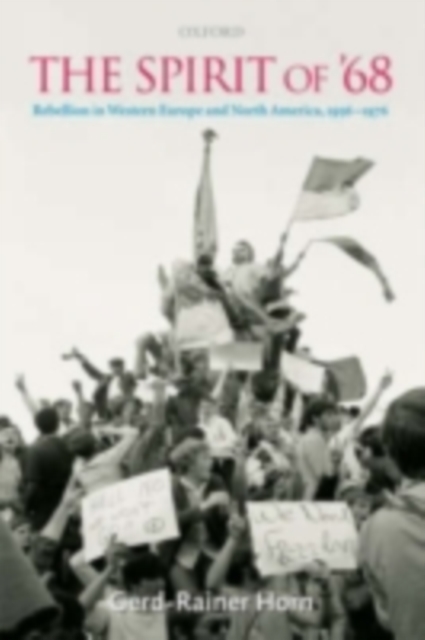
The spirit of '68
In virtually all corners of the Western world, 1968 witnessed a highly unusual sequence of popular rebellions. In Italy, France, Spain, Vietnam, the United States, West Germany, Czechoslovakia, Mexico, and elsewhere, millions of individuals took matters into their own hands to counter imperialism, capitalism, autocracy, bureaucracy, and all forms of hierarchical thinking. Recent reinterpretations have sought to play down any real challenge to the socio-political status quo in these events, but Gerd-Rainer Horn's book offers a spirited counterblast. 1968, he argues, opened up the possibility that economic and political elites on both sides of the Iron Curtain could be toppled from their position of unnatural superiority to make way for a new society where everyday people could, for the first time, become masters of their own destiny. Furthermore, Horn contends, the moment of crisis and opportunity culminating in 1968 must be seen as part of a larger period of experimentation and revolt. The ten years between 1956 and 1966, characterised above all by the flourishing of iconoclastic cultural rebellions, can be regarded as a preparatory period which set the stage for the non-conformist cum political revolts of the subsequent 'red' decade (1966-1976). Horn's geographic centres of attention are Western Europe, including the first full examination of Mediterranean revolts, and North America. He placed particular emphasis on cultural nonconformity, the student movement, working class rebellions, the changing contours of the Left, and the meaning of participatory democracy. His book will make fascinating reading for anyone interested in this turbulent period and the fundamental changes that were wrought upon societies either side of the Atlantic.
eBook
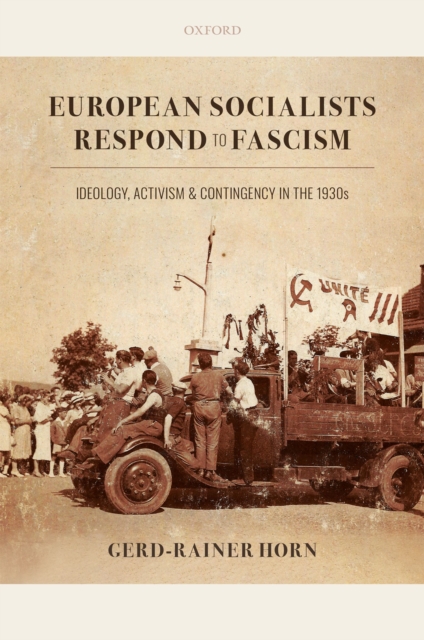
European socialists respond to fascism : ideology, activism, and contingency in the 1930s
Based on documents collected in six European countries, European Socialists Respond to Fascism: Ideology, Activism and Contingency in the 1930s is a transnational study of largely parallel developments in Austria, Belgium, France, Germany, and Spain in the years 1933-1936. Triggered into action by the shock effect of the Nazi rise to power in Germany, socialists throughout Western Europe entered an unusually active period of practical reorientation and debate over political strategy which helped determine the contours of European politics up to the outbreak of World War II and beyond. Stressing the transnational dimension of this process while simultaneously integrating local, regional, and national factors, this work finds that it was social democracy, rather than communism, that acted as the primary vehicle for radical change among European marxists during the 1930s. Following major figures within the European left and the significant events that made up the inter-war period, Gerd-Rainer Horn demonstrates the interconnectedness of Europe's interwar socialists. Finally, Horn manages to relate these findings to the ongoing interdisciplinary debate on structure, agency, and contingency in the historical process.
eBook


From ‘Radical’ to ‘Realistic’: Hendrik de Man and the International Plan Conferences at Pontigny and Geneva, 1934–1937
When at Christmas 1933 the Belgian Workers' Party adopted the Plan de Man to guide its forward march to socialism, European critics of unfettered capitalist development listened carefully. Deeply worried by Hitler's legal rise to power, socialist activists and intellectuals were then searching for new answers to the crises of their day, and many believed that they had found a blueprint in the Plan. Inspired by the activist politician Hendrik de Man, a series of international plan conferences, assembling the entire spectrum of western European pro-socialist, non-Stalinist economists, met between September 1934 and October 1937. The changing nature of these debates exemplify the fate of European socialism in the mid-1930s, descending from optimistic belief in a democratic socialist future towards technocratic pragmatism in the space of thirty-seven months.
Journal Article
