
Catalogue Search | MBRL


Are you sure you want to remove the book from the shelf?

{{itemTitle}}
5
result(s) for
"Horowitz, Daniel, 1938-"
Sort by:


On the Cusp
How did the 1950s become \"The Sixties\"? This is the question at the heart of Daniel Horowitz's On the Cusp. Part personal memoir, part collective biography, and part cultural history, the book illuminates the dynamics of social and political change through the experiences of a small, and admittedly privileged, generational cohort.
A Jewish \"townie\" from New Haven when he entered Yale College in fall 1956, Horowitz reconstructs the undergraduate career of the class of 1960 and follows its story into the next decade. He begins by looking at curricular and extracurricular life on the all-male campus, then ranges beyond the confines of Yale to larger contexts, including the local drama of urban renewal, the lingering shadow of McCarthyism, and decolonization movements around the world. He ponders the role of the university in protecting the prerogatives of class while fostering social mobility, and examines the growing significance of race and gender in American politics and culture, spurred by a convergence of the personal and the political. Along the way he traces the political evolution of his classmates, left and right, as Cold War imperatives lose force and public attention shifts to the civil rights movement and the war in Vietnam.
Throughout Horowitz draws on a broad range of sources, including personal interviews, writings by classmates, reunion books, issues of the Yale Daily News, and other undergraduate publications, as well as his own letters and college papers. The end product is a work consistent with much of Horowitz's previously published scholarship on postwar America, further exposing the undercurrent of discontent and dissent that ran just beneath the surface of the so-called Cold War consensus.
eBook


Consuming Pleasures
How is it that American intellectuals, who had for 150 years worried about the deleterious effects of affluence, more recently began to emphasize pleasure, playfulness, and symbolic exchange as the essence of a vibrant consumer culture? The New York intellectuals of the 1930s rejected any serious or analytical discussion, let alone appreciation, of popular culture, which they viewed as morally questionable. Beginning in the 1950s, however, new perspectives emerged outside and within the United States that challenged this dominant thinking. Consuming Pleasures reveals how a group of writers shifted attention from condemnation to critical appreciation, critiqued cultural hierarchies and moralistic approaches, and explored the symbolic processes by which individuals and groups communicate.Historian Daniel Horowitz traces the emergence of these new perspectives through a series of intellectual biographies. With writers and readers from the United States at the center, the story begins in Western Europe in the early 1950s and ends in the early 1970s, when American intellectuals increasingly appreciated the rich inventiveness of popular culture. Drawing on sources both familiar and newly discovered, this transnational intellectual history plays familiar works off each other in fresh ways. Among those whose work is featured are Jürgen Habermas, Roland Barthes, Umberto Eco, Walter Benjamin, C. L. R. James, David Riesman and Marshall McLuhan, Richard Hoggart, members of London's Independent Group, Stuart Hall, Paddy Whannel, Tom Wolfe, Herbert Gans, Susan Sontag, Reyner Banham, and Robert Venturi and Denise Scott Brown.
eBook
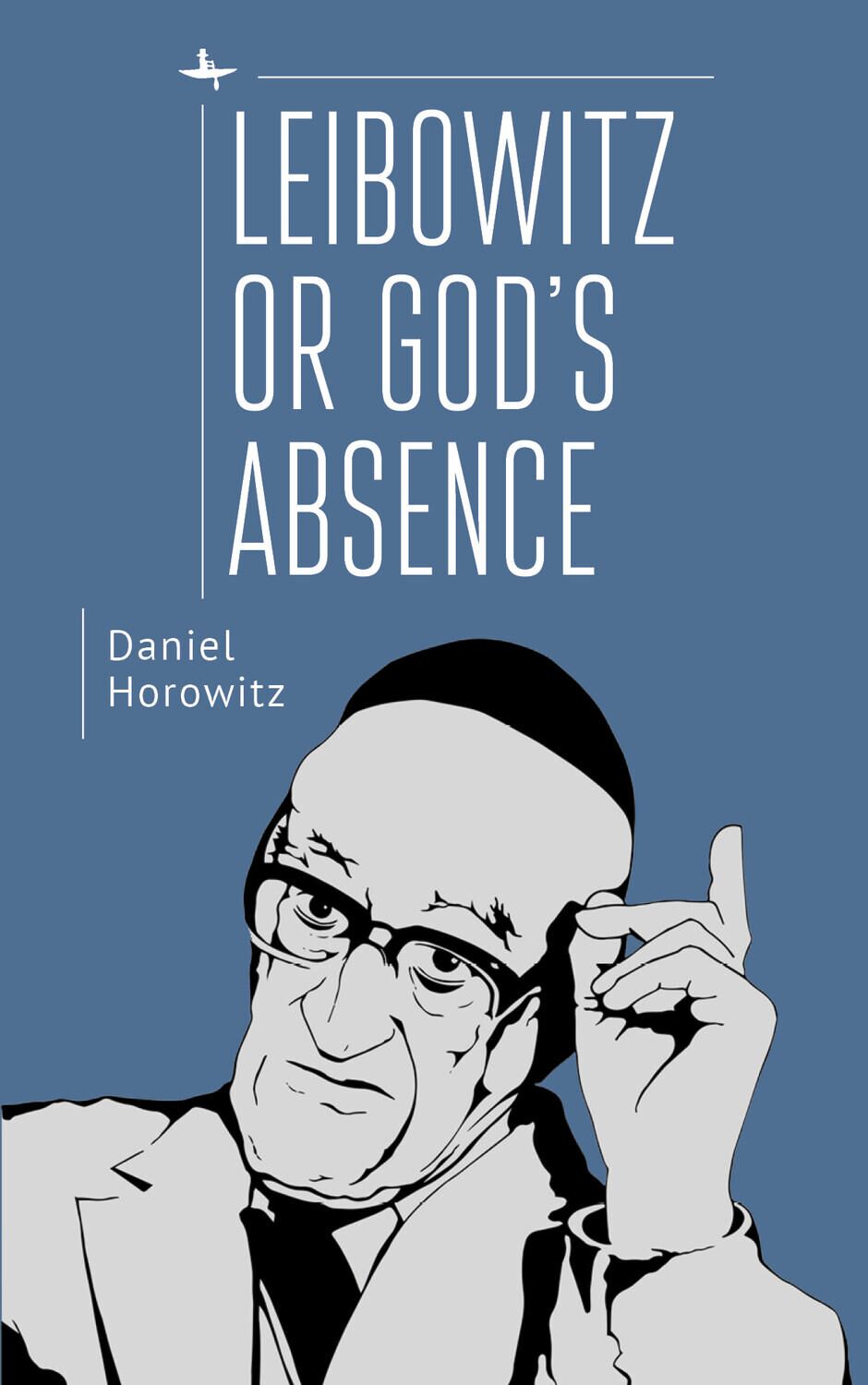
Leibowitz or God's Absence
As a scientist, philosopher and scholar in Jewish thought, Yeshayahu Leibowitz was one of the most noteworthy thinkers in the twentieth century. Leibowitz was an orthodox Jew, but rejected the notion of divine intervention in nature or history. So what was actually Leibowitz' belief? This is what this book is about.
eBook