
Catalogue Search | MBRL


Are you sure you want to remove the book from the shelf?

{{itemTitle}}
40
result(s) for
"Horwath, Alexander"
Sort by:

آخر عرض سينمائي أمريكي عظيم : سينما هوليود الجديدة في العقد الثامن من القرن العشرين
آخر عرض سينمائي أمريكي عظيم: سينما هوليوود الجديدة في العقد الثامن من القرن العشرين هو كتاب من تأليف توماس إلسيسر. يتناول الكتاب فترة هوليوود الجديدة، وهي حركة سينمائية ظهرت في الولايات المتحدة بين أواخر الستينات ونهاية السبعينات، حيث خرجت عن تقاليد سينما هوليوود الكلاسيكية. يستعرض إلسيسر في كتابه كيف أن هذه الفترة كانت مليئة بالتجارب السينمائية الجريئة والمبتكرة، حيث قام المخرجون الشباب مثل فرانسيس فورد كوبولا، ومارتن سكورسيزي، وستيفن سبيلبرغ، بتقديم أفلام جديدة ومختلفة عن السائد آنذاك ؛ تميزت أفلام هذه الفترة بالاهتمام بالمحتوى والجمالية، واستخدام شخصيات غريبة ومتناقضة في دور البطولة، وكسر طرق السرد التقليدية. الكتاب يقدم تحليلا عميقا للأفلام الرئيسية والشخصيات البارزة في هذه الحركة، ويشرح كيف أثرت هذه الأفلام على السينما الأمريكية والعالمية. كما يناقش الكتاب التحديات التي واجهتها هذه الحركة وكيف انتهت مع بداية الثمانينات.
Book
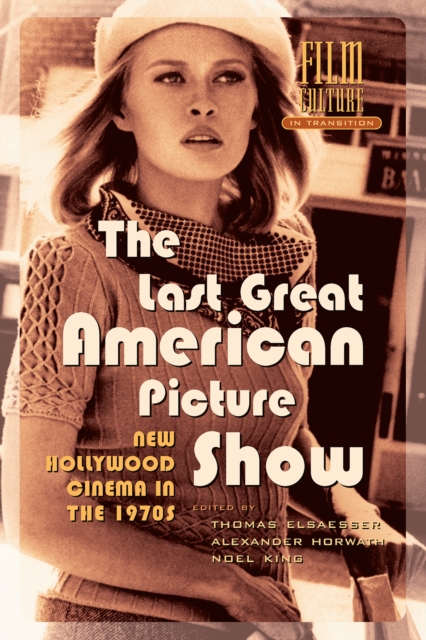
The last great American picture show: new Hollywood cinema in the 1970s
The Last Great American Picture Show brings together essays by scholars and writers who chart the changing evaluations of the American cinema of the 1970s, sometimes referred to as the decade of the lost generation, but now more and more recognized as the first New Hollywood, without which the cinema of Francis Coppola, Steven Spielberg, Robert Zemeckis, Tim Burton or Quentin Tarantino could not have come into existence. Identified with directors such as Sam Peckinpah, Arthur Penn, Peter Bogdanovich, Monte Hellman, Bob Rafelson, Hal Ashby, Robert Altman and James Toback, American cinema of the 1970s is long overdue for this re-evaluation. Many of the films have not only come back from oblivion, as the benchmark for new directorial talents. They have also become cult films in the video shops and the classics of film courses all over the world.
eBook

The Old Life. Reframing Film \Restoration\: Some Notes
The following notes are the result of pausing a little to review the 16 years I have spent in the field of film preservation and film curatorship, a set of professions and institutions entrusted with the task of passing on the medium to future generations. In relation to our field, it means that the actual content of film, that which film can contain and express as a cultural technique and as a specific form of thought, is inseparably bound to its \"writing instruments\" (its Schreibzeug, in Nietzsche's German original) - its technological basis and material tools. [...]in the future - and beyond any idealistic notions of \"content\" as an immaterial \"idea\" or \"story\" - analogue films will remain fully understandable if analogue film, including its \"parts\", of which the film strip itself is only one, remains accessible as a working system. Furthermore, the challenges of media convergence (which is at the centre of digital culture) have brought about new debates concerning the long-term preservation of older forms of media art and media culture. The discipline that transmits film and cinema into the future could gain a lot if it sought more contact with certain debates in contemporary art history and curatorship. In that world, there is little doubt that different forms of technology- and media-based art need to be preserved, restored, and transmitted in view of their individual systemic parameters - and that they need to be kept available and exhibited that way, both for the public and...
Journal Article
The last great american picture show
The Last Great American Picture Show brings together essays by scholars and writers who chart the changing evaluations of the American cinema of the 1970s, sometimes referred to as the decade of the lost generation, but now more and more recognized as the first New Hollywood, without which the cinema of Francis Coppola, Steven Spielberg, Robert Zemeckis, Tim Burton or Quentin Tarantino could not have come into existence. Identified with directors such as Sam Peckinpah, Arthur Penn, Peter Bogdanovich, Monte Hellman, Bob Rafelson, Hal Ashby, Robert Altman and James Toback, American cinema of the 1970s is long overdue for this re-evaluation. Many of the films have not only come back from oblivion, as the benchmark for new directorial talents. They have also become cult films in the video shops and the classics of film courses all over the world.
eBook
Peter Konlechner (1936-2016)
Perhaps it was what he secretly strove for as co-founder and during all of his 38 years as co-director (1964-2001) of the museum: to create something robust, \"reliable, responsive, and responsible\", something that has a chance to last, against all odds - and, at the same time, to allow it to breathe \"passionately\", with a poetic and \"larger than life\" spirit. From the earliest days of the Film Museum, Konlechner valued equally ephemeral film documents and the \"masterpieces\" of cinema, and he gave star treatment to filmmakers when no criticalhistorical consensus about them was yet in sight - from Karl Valentin, Fridrikh Ermler, and Humphrey Jennings, to Gregory Markopoulos, Straub/Huillet, and Frederick Wiseman, to Werner Schroeter, Eric Rohmer, and Martin Scorsese (all of whom featured very prominently, often more than once, in the 1967-1975 seasons). The media followed suit, ensuring the museum's visibility and its prominent role in public discourse even when the size of its budget and staff should have placed it on the margins. FIAF colleagues, filmmakers and museum curators worldwide praised the museum for its dans la constitution d'une collection de documents de première importance, la création de la bibliothèque spécialisée dans le cinéma la plus réputée et la plus fréquentée d'Autriche, l'enseignement de l'art et de l'histoire du cinéma documentaire à deux générations d'étudiants à l'Université de Vienne et même, en 1974, la réalisation d'un documentaire à base d'archives sur le cinéaste Dziga Vertov.
Journal Article

The Last Great American Picture Show
For many lovers of film, American cinema of the late 1960s and early 1970s - dubbed the New Hollywood - has remained a Golden Age. As the old studio system gave way to a new generation of American auteurs, directors such as Monte Hellman, Peter Bogdanovich, Bob Rafelson, Martin Scorsese, but also Robert Altman, James Toback, Terrence Malick and Barbara Loden helped create an independent cinema that gave America a different voice in the world and a different vision to itself. The protests against the Vietnam War, the Civil Rights movement and feminism saw the emergence of an entirely different political culture, reflected in movies that may not always have been successful with the mass public, but were soon recognized as audacious, creative and off-beat by the critics. Many of the films have subsequently become classics.
The Last Great Picture Show brings together essays by scholars and writers who chart the changing evaluations of this American cinema of the 1970s, sometimes referred to as the decade of the lost generation, but now more and more also recognised as the first of several 'New Hollywoods', without which the cinema of Francis Coppola, Steven Spielberg, Robert Zemeckis, Tim Burton or Quentin Tarantino could not have come into being.
eBook

The Last Great American Picture Show
The Last Great American Picture Show brings together essays by scholars and writers who chart the changing evaluations of the American cinema of the 1970s, sometimes referred to as the decade of the lost generation, but now more and more recognized as the first New Hollywood, without which the cinema of Francis Coppola, Steven Spielberg, Robert Zemeckis, Tim Burton or Quentin Tarantino could not have come into existence. Identified with directors such as Sam Peckinpah, Arthur Penn, Peter Bogdanovich, Monte Hellman, Bob Rafelson, Hal Ashby, Robert Altman and James Toback, American cinema of the 1970s is long overdue for this re-evaluation. Many of the films have not only come back from oblivion, as the benchmark for new directorial talents. They have also become cult films in the video shops and the classics of film courses all over the world. This title is available in the OAPEN Library - http://www.oapen.org.
eBook