
Catalogue Search | MBRL


Are you sure you want to remove the book from the shelf?

{{itemTitle}}
428
result(s) for
"Howard, Guy"
Sort by:

Alien hearts
Alien Hearts \"was the last novel that Guy de Maupassant completed before succumbing to the effects of tertiary syphilis of which he was to die at forty-three. It is the most original and surprising of his novels and the one in which he attains a truly tragic perception of the wounded human heart. \"Alien Hearts \"is the story of lovers bound by bitterness as much as by passion. Maupassant's hero falls for a woman of the world, a glacially dazzling beauty whose past with an abusive husband leads her to hold him-and everyone-at arm's length. He seeks solace with a servant girl, but remains racked by pointless infatuation.
Book

The future of water and sanitation: global challenges and the need for greater ambition
Water and sanitation services are critical for public health. The importance of these services is reflected in SDG 6 and the associated targets 6.1, 6.2 and 6.3. Much progress remains to be made to achieve these targets, but it is already becoming clear that greater ambition is needed. This paper looks at three global challenges: the need to increase the level of service to protect public health including infectious respiratory diseases; the role of sanitation in combatting anti-microbial resistance (AMR); and the urgent need to build more climate-resilient services. We need to upgrade the SDG targets to focus on universal access to piped water on premises, to incorporate action on AMR in definitions of safe sanitation and to embed actions to improve resilience, which take into account the greater ambition called for in the SDG 6 targets. This requires a shift in thinking in the sector, away from relying on households and communities to manage their services to properly funded, professional services staffed by trained technical, managerial and finance staff. This will require more public finance and better use of financial instruments that have proved effective in other sectors. Increasing our ambition will mean the world can achieve the aim of universal access to safe, sustainable, and resilient services and protect public health.
Journal Article
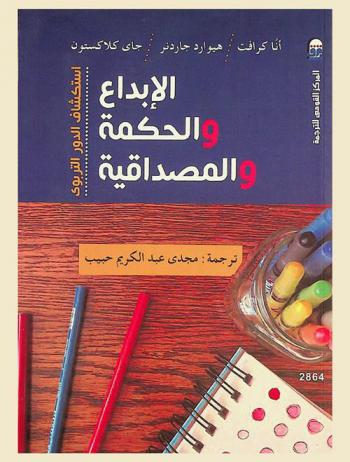
الإبداع والحكمة والمصداقية : استكشاف الدور التربوي
تدور أحداث هذه الرواية في فضاءات مختلفة تتراوح بين أنغولا والبرتغال، وتستمد مادتها السردية من مرجعيات ذاتية، لها علاقة بشخصية الكاتب وأحواله الخاصة، وأخرى تاريخية تتعلق بالظروف التي كانت تمر بها الأمة البرتغالية وما يدور في فلك إمبراطوريتها المتهالكة من مستعمرات تناضل من أجل استقلالها الوشيك أواسط سبعينيات القرن الماضي. إنها رواية استثنائية وقوية وتستدعي قارئا نشيطا، فعالا وفاعلا وتستوجب أيضا قارئا متيقظا رغم ترنح السارد وهذيانه المستمر تحت تأثير الخمرة. إنها رواية ترج القارئ رجا وتستفزه حتى يتمكن من مسايرة أسلوب بطيء يتسم بالاستطرادات الكثيرة والإيحاءات المتكررة، مما يقلل من أهمية الحدث ويعطي مساحة أوسع للصور الذهنية والتعقيدات التناصية التي تخدم الفكرة وتعمق المعنى.
Book

The implications of three major new trials for the effect of water, sanitation and hygiene on childhood diarrhea and stunting: a consensus statement
Background
Three large new trials of unprecedented scale and cost, which included novel factorial designs, have found no effect of basic water, sanitation and hygiene (WASH) interventions on childhood stunting, and only mixed effects on childhood diarrhea. Arriving at the inception of the United Nations’ Sustainable Development Goals, and the bold new target of safely managed water, sanitation and hygiene for all by 2030, these results warrant the attention of researchers, policy-makers and practitioners.
Main body
Here we report the conclusions of an expert meeting convened by the World Health Organization and the Bill and Melinda Gates Foundation to discuss these findings, and present five key consensus messages as a basis for wider discussion and debate in the WASH and nutrition sectors. We judge these trials to have high internal validity, constituting good evidence that these specific interventions had no effect on childhood linear growth, and mixed effects on childhood diarrhea. These results suggest that, in settings such as these, more comprehensive or ambitious WASH interventions may be needed to achieve a major impact on child health.
Conclusion
These results are important because such basic interventions are often deployed in low-income rural settings with the expectation of improving child health, although this is rarely the sole justification. Our view is that these three new trials do not show that WASH in general cannot influence child linear growth, but they do demonstrate that these specific interventions had no influence in settings where stunting remains an important public health challenge. We support a call for transformative WASH, in so much as it encapsulates the guiding principle that – in any context – a comprehensive package of WASH interventions is needed that is tailored to address the local exposure landscape and enteric disease burden.
Journal Article

COVID-19 : urgent actions, critical reflections and future relevance of ‘WaSH’ : lessons for the current and future pandemics
The COVID-19 pandemic placed hygiene at the centre of disease prevention. Yet, access to the levels of water supply that support good hand hygiene and institutional cleaning, our understanding of hygiene behaviours, and access to soap are deficient in low-, middle- and high-income countries. This paper reviews the role of water, sanitation and hygiene (WaSH) in disease emergence, previous outbreaks, combatting COVID-19 and in preparing for future pandemics. We consider settings where these factors are particularly important and identify key preventive contributions to disease control and gaps in the evidence base. Urgent substantial action is required to remedy deficiencies in WaSH, particularly the provision of reliable, continuous piped water on-premises for all households and settings. Hygiene promotion programmes, underpinned by behavioural science, must be adapted to high-risk populations (such as the elderly and marginalised) and settings (such as healthcare facilities, transport hubs and workplaces). WaSH must be better integrated into preparation plans and with other sectors in prevention efforts. More finance and better use of financing instruments would extend and improve WaSH services. The lessons outlined justify no-regrets investment by government in response to and recovery from the current pandemic; to improve day-to-day lives and as preparedness for future pandemics.
Journal Article
Sanitary inspection and microbial health risks associated with enteric bacteria in groundwater sources in Ilara-Mokin and Ibule-Soro, Nigeria
This study set out to determine the sanitary risk scores and microbial health risks associated with wells and boreholes in Ilara-Mokin and Ibule-Soro, Nigeria. Water samples (n = 96) were collected over a period of five months to determine the levels of enteric bacteria and to perform a Quantitative Microbial Risk Assessment (QMRA) of drinking water quality. Sanitary risk scores revealed `medium' and `low' overall risks for the wells and boreholes, respectively. Three risk factors (faulty fence; small apron; pollution sources) exhibited high significant (p < 0.01) association with the presence of E. coli and thermotolerant coliforms in water samples from the wells. E. coli and Salmonella ranged from 1.82 to 2.28 and 2.15 to 2.63 log10 CFU/100 ml respectively in water from the wells, but were below detection limit in water from the boreholes. Shigella and Campylobacter were detected in all water samples. Estimated risks of infection associated with Shigella (2.1 × 10⁻² to 2.3 × 10⁻¹) were higher than those of Campylobacter (6.7 × 10⁻² to 1.9 × 10⁻¹) and Salmonella (1.9×10⁻³ to 5.6×10⁻³). Adaption of water safety plans may be advantageous in these settings, since intentional ingestion of water from the wells and boreholes may pose potential risks of diarrheal illness to humans.
Journal Article

TAp63γ and ΔNp63β Promote Osteoblastic Differentiation of Human Mesenchymal Stem Cells: Regulation by Vitamin D3 Metabolites
The transcription factor p63 is required for skeletal formation, and is important for the regulation of 1α,25(OH)2D3 receptor (VDR) in human mesenchymal stem cells (hMSC). Herein we report that TAp63γ and ΔNp63β appear to be an integral part of the osteoblastic differentiation of hMSC and are differentially regulated by the vitamin D3 metabolites 1α,25(OH)2D3 and 24R,25(OH)2D3. We compared the endogenous expression of p63 isoforms (TA- and ΔNp63) and splice variants (p63α, -β, -γ), in naive hMSC and during osteoblastic differentiation of hMSC. TAp63α and -β were the predominant p63 variants in naive, proliferating hMSC. In contrast, under osteoblastic differentiation conditions, expression of p63 changed from the TAp63α and -β to the TAp63γ and ΔNp63β variants. Transient overexpression of the p63 variants demonstrated that TAp63β, ΔNp63β, and ΔNp63γ increased alkaline phosphatase activity and ΔNp63α and -γ increased the expression of mRNA for osteocalcin and osterix. Our results support the hypothesis that TAp63α and -β promote a naive state in hMSC. Moreover, TAp63γ is increased during and promotes early osteoblastic differentiation through the expression of pro-osteogenic genes; VDR, Osterix, Runx2 and Osteopontin. ΔNp63β also appears to support osteogenic maturation through increased alkaline phosphatase activity. Treatment with 1α,25(OH)2D3 increased the expression of mRNA for ΔNp63, while addition of 24R,25(OH)2D3 increased the expression of TA- and ΔNp63γ variants. These novel findings demonstrate for the first time that p63 variants are differentially expressed in naive hMSC (TAp63α,β), are important during the osteoblastic differentiation of hMSC (TAp63γ and ΔNp63β), and are differentially regulated by the vitamin D3 metabolites, 1α,25(OH)2D3 and 24R,25(OH)2D3. The molecular nuances and mechanisms of osteoblastic differentiation presented here will hopefully improve our understanding of bone development, complications in bone repair (mal- and non-union fractures), osteoporosis and possibly lead to new modalities of treatment.
Journal Article

Heat Adaptation Benefits for Vulnerable groups In Africa (HABVIA): a study protocol for a controlled clinical heat adaptation trial
Background
Temperatures across Africa are expected to rise at up to twice the rate of mean global temperatures, posing significant health threats to vulnerable communities. Prolonged exposure to high day- and night-time temperatures has been implicated in a myriad of adverse health outcomes. The built environment and inadequate housing can exacerbate these consequences, prompting the need to evaluate heat adaptation interventions as a sustainable adaptation strategy for low-income and informal settlement dwellers. The Heat Adaptation Benefits for Vulnerable groups In Africa (HABVIA) study aims to assess the impact of passive cooling interventions in homes on several key physiologic and mental health outcomes, as well as building internal thermal conditions.
Methods
HABVIA is a 3-year prospective controlled study to identify, implement and assess heat adaptation solutions in four low-income communities in one urban and one rural site in Ghana and South Africa, respectively. In each site,
N
=240 participants (
N
=60 per site) will be assigned to intervention or control groups. The intervention is focused on lowering the nighttime temperature of the home environment. Health and biometric data will be collected through a combination of physiological measurements, questionnaires, and biochemical measures taken at 3 time points during the hot season. Clinical outcomes include objective sleep behaviour, core body temperature, physical activity, blood pressure, blood glucose, anthropometrics, and body composition. Indoor and outdoor environmental data will be collected continuously using fixed indoor sensors and automatic weather stations. Housing and community characteristics, and socio-economic information will be collected. Quantitative comparisons will be made between intervention and control conditions using generalised linear mixed models. Qualitative data from consultive workshops will be used to assess the acceptability and feasibility of the adaptations.
Discussion
Robust evaluation of the environmental and health outcomes of heat adaptations are limited for Africa, despite high climate vulnerability. HABVIA will address some of these gaps by assessing low-cost passive cooling interventions to promote heat resilience and improve health outcomes, providing real-world evidence for the feasibility of readily implementable and scalable adaptations in local contexts.
Trial registration
Pan African Clinical Trials Registry (PACTR) PACTR202401521630856, version 1. Retrospectively registered on January 12, 2024.
Journal Article

Associations of inter-annual rainfall decreases with subsequent HIV outcomes for persons with HIV on antiretroviral therapy in Southern Africa: a collaborative analysis of cohort studies
Background
Periods of droughts can lead to decreased food security, and altered behaviours, potentially affecting outcomes on antiretroviral therapy (ART) among persons with HIV (PWH). We investigated whether decreased rainfall is associated with adverse outcomes among PWH on ART in Southern Africa.
Methods
Data were combined from 11 clinical cohorts of PWH in Lesotho, Malawi, Mozambique, South Africa, Zambia, and Zimbabwe, participating in the International epidemiology Databases to Evaluate AIDS Southern Africa (IeDEA-SA) collaboration. Adult PWH who had started ART prior to 01/06/2016 and were in follow-up in the year prior to 01/06/2016 were included. Two-year rainfall from June 2014 to May 2016 at the location of each HIV centre was summed and ranked against historical 2-year rainfall amounts (1981–2016) to give an empirical relative percentile rainfall estimate. The IeDEA-SA and rainfall data were combined using each HIV centre’s latitude/longitude. In individual-level analyses, multivariable Cox or generalized estimating equation regression models (GEEs) assessed associations between decreased rainfall versus historical levels and four separate outcomes (mortality, CD4 counts < 200 cells/mm
3
, viral loads > 400 copies/mL, and > 12-month gaps in follow-up) in the two years following the rainfall period. GEEs were used to investigate the association between relative rainfall and monthly numbers of unique visitors per HIV centre.
Results
Among 270,708 PWH across 386 HIV centres (67% female, median age 39 [IQR: 32–46]), lower rainfall than usual was associated with higher mortality (adjusted Hazard Ratio: 1.18 [95%CI: 1.07–1.32] per 10 percentile rainfall rank decrease) and unsuppressed viral loads (adjusted Odds Ratio: 1.05 [1.01–1.09]). Levels of rainfall were not strongly associated with CD4 counts < 200 cell/mm
3
or > 12-month gaps in care. HIV centres in areas with less rainfall than usual had lower numbers of PWH visiting them (adjusted Rate Ratio: 0.80 [0.66–0.98] per 10 percentile rainfall rank decrease).
Conclusions
Decreased rainfall could negatively impact on HIV treatment behaviours and outcomes. Further research is needed to explore the reasons for these effects. Interventions to mitigate the health impact of severe weather events are required.
Journal Article

Response to Waja and Motlogeloa (2024): The need for robust research methodology when studying climate and health in developing countries
We clarify several areas of misunderstanding raised by Waja and Motlogeloa's (S Afr J Sei. 2024; 120(7/8), Art. #18588) critique of our previous publication analysing the associations between drought and acquiring HIV in several countries in sub-Saharan Africa.
Journal Article