
Catalogue Search | MBRL


Are you sure you want to remove the book from the shelf?

{{itemTitle}}
261
result(s) for
"Howard, Josh"
Sort by:

The Hunger Games
Set in a future where the Capitol selects a boy and girl from the twelve districts to fight to the death on live television. Katniss Everdeen volunteers to take her younger sister's place for the latest match.
DVD
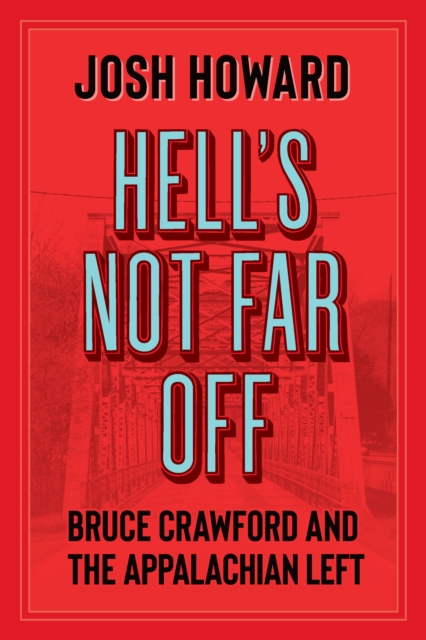
Hell's Not Far Off
A biography of Bruce Crawford, a southwest Virginia journalist-writer of the radical tradition and one of the first to interpret Appalachian labor history.Hell's Not Far Off is a grounded, politically engaged study of the Appalachian journalist and political critic Bruce Crawford, a scourge of coal and railway interests.
eBook

On Sport, Public History, and Public Sport History
This essay explores the relationship between public history and sport history within the United States and outlines a historiography of public sport history. Public history is the presence, usage, and effects of the past in our everyday lived realities, while public sport history is the intersection of these ideas with sport. In the United States, most public sport history is visible through sport museums, halls of fame, and nostalgic celebrations. To this point, sport museums and halls of fame have received significant attention fom academics, but surprisingly little literature exists on other forms of public sport history. This essay concludes with suggestions for promising avenues of future research to this field.
Journal Article

Hell's Not Far Off
A biography of Bruce Crawford, a southwest Virginia journalist-writer of the radical tradition and one of the first to interpret Appalachian labor history.
Hell’s Not Far Off is a grounded, politically engaged study of the Appalachian journalist and political critic Bruce Crawford, a scourge of coal and railway interests. Crawford fought injustices wherever he saw them at major risk to his own life and became an early interpreter of Appalachian labor history.
His writings and actions from the 1920s to the 1960s helped shape southwest Virginia and West Virginia. Through Crawford’s Weekly , a newspaper active from 1920 to 1935, Crawford challenged the Ku Klux Klan, lynch mobs, and the private police forces of coal barons. The wounds received for these efforts were the closing of his paper and a bullet to his leg during a Harlan County strike in the 1930s. In his work after journalism, he led the West Virginia branch of the Federal Writers’ Project during the political standoff over the contents of the state’s official guidebook.
In Hell’s Not Far Off , Josh Howard resurrects strands of a radical tradition centered especially on matters of labor, environment, and race, drawing attention to that tradition’s ongoing salience: “Present-day Appalachia’s fights were [Crawford’s], and his fights are still ours.”
eBook


Green Pastures Restored
\"The recreation area became a sacred space for the African American community and served as a soul fulfilling experience,\" according to Dr. Calvin McClinton, a retired Howard University professor originally from Alleghany County. In other words, it helps explain to us the power of place.2 In addition to such personal and community sentiment, Green Pastures provides greater depth into the long civil rights movement in Virginia by revealing actions by the National Association for the Advancement of Colored People (NAACP) and the role of federal, state, and local actors in creating public spaces for Black Americans. Virginia State Senator J. C. Carpenter wrote in 1950 that he believed Green Pastures to be the only Black American outdoor recreation area nationally, and certainly the only location in the state and region that offered outdoor recreation, notably swimming, exclusively for African Americans. According to historian William O'Brien, most segregated picnicking spaces proposed on federal lands went unused or unbuilt because of local white hostility.6 The USFS officially maintained a nondiscrimination policy throughout the 1930s, which included an unofficial ban on segregated facilities even in the Jim Crow South.
Journal Article

Defending Person and Reputation
Violence peaked in Virginia during the early-1890s with a series of racially-motivated lynchings and honor killings in the western mountains. Governor Charles O’Ferrall responded by demanding county courts rededicate themselves to enforcing law and preventing extralegal violence, which led to a statewide decrease in lynchings. The governor’s demands were not intended to create better race or labor relations, but were more to create social stability attractive to outside investors. As a result, county courts did just that: prevent extralegal violence, make arrests, and hold trials all in the interest of presenting an image of stability. One specific town in western Virginia – Clifton Forge – provides an excellent case study to explore this phenomenon. Clifton Forge became a major railroad hub in 1888, and residents committed one of the state’s most brutal lynchings in 1891. The governor’s call for order certainly targeted Clifton Forge, yet violence persisted there throughout the mid-1890s. Most visible to outsiders was two murders and the subsequent trials. A railroad conductor shot dead a prominent Natural Bridge businessman, and a young African-American man assaulted a white woman and murdered a black girl. Clifton Forge residents demanded different types of mob justice in each of these cases, but the legal system prevailed. However, both trials had flaws; one was overturned on appeal, the other a clear sham. These trials reveal that judges and local media were committed to both justice and presenting the image of justice, the latter of which being more important both for the town’s future and in appeasing the governor.
Journal Article