
Catalogue Search | MBRL


Are you sure you want to remove the book from the shelf?

{{itemTitle}}
107
result(s) for
"Howe, Elizabeth Teresa"
Sort by:

Education and women in the early modern Hispanic world
Considering the presence and influence of educated women of letters in Spain and New Spain, this study looks at the life and work of early modern women who advocated by word or example for the education of women. The subjects of the book include not only such familiar figures as Sor Juana and Santa Teresa de Jesús, but also of less well known women of their time.
The author uses primary documents, published works, artwork, and critical sources drawn from history, literature, theatre, philosophy, women's studies, education and science. Her analysis juxtaposes theories espoused by men and women of the period concerning the aptitude and appropriateness of educating women with the actual practices to be found in convents, schools, court, theaters and homes. What emerges is a fuller picture of women's learning in the early modern period.
eBook
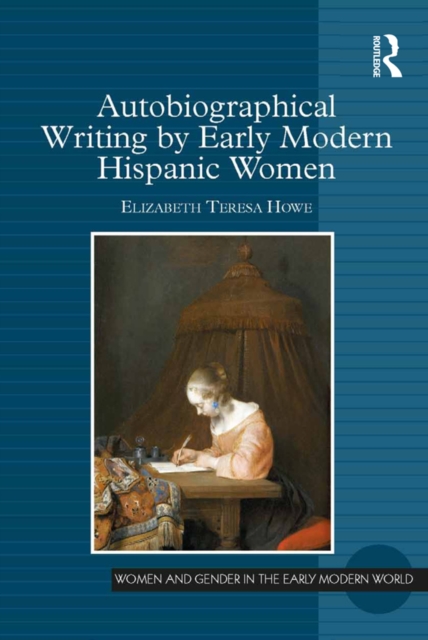
Autobiographical Writing by Early Modern Hispanic Women
Women's life writing in general has too often been ignored, dismissed, or relegated to a separate category in those few studies of the genre that include it. The present work addresses these issues and offers a countervailing argument that focuses on the contributions of women writers to the study of autobiography in Spanish during the early modern period, both in Spain and in Mexico.
eBook
The Visionary Life of Madre Ana de San Agustín
In two relaciones of her life, Madre Ana de San Agustín, a member of the Discalced Carmelite reform under Santa Teresa, reveals a rich interior life of visions, locutions, and visits to heaven and hell. Guiding her at many junctures of her spiritual journey is the figure of Santa Teresa, both before and after the saint's death in 1582. Although Madre Ana does not refer to any books save the Divine Office, the details she provides suggest her familiarity with numerous devotional and mystical texts by men and women available at the time. Her accounts share many of the characteristics of these earlier works. Equally interesting are the connections she draws between her visions and the outside world, especially the struggle over the Carmelite reform. En las dos 'relaciones' de su vida, la Madre Ana de San Agustín, Carmelita descalza de la Reforma teresiana, revela una rica vida interior de visiones, locuciones, y visitas al cielo y al infierno. Guiándola en su viaje espiritual está la figura de Santa Teresa, antes y después de la muerte de ésta en 1582. Aunque Madre Ana no cita ninguna obra salvo el Oficio Divino, los detalles empleados en sus narrativas sugieren un conocimiento de varios textos de la literatura mística y devota escritos por hombres y mujeres que fueron publicados y circulados durante la época. Las 'relaciones' de Madre Ana reflejan algunas de las características de estas obras anteriores. A la vez las conexiones que ella hace entre sus visiones y el mundo cotidiano, especialmente en cuanto al conflicto de la Reforma Descalza, son igualmente interesantes. ELIZABETH HOWE is Professor of Spanish at Tufts University, Massachusetts.
eBook


San Juan de la Cruz and the Cántico Espiritual
The predominant imagery of progress in western mystical writing usually describes some form of ascent. The Subida del monte Carmelo by San Juan de la Cruz certainly suggests the notion in Spanish mystical writing. While San Juan proffers ascent (subida) in the title of the commentary on “En una noche oscura,” the poem proper does not present a sense of verticality at all but, rather, an essentially horizontal passage from the “casa sosegada” to (re)union with the Lover in a static apotheosis described in the final strophes. Similarly, a paradoxical presentation of movement appears in the Cántico espiritual. This article considers San Juan’s use of verbs of movement, especially within the Cántico espiritual, as metaphors for the underlying mystical message he ascribes to his poem. It also demonstrates the presence of the same extended metaphor in other poems of his, including “En una noche oscura” and the “Llama de amor viva.
Journal Article


Duelling Sonnets: The Battle of the Lovers in Lope de Vega's El perro del hortelano
In his Arte nuevo de hacer comedias , Lope de Vega suggests that \"el soneto está bien en los que aguardan … y para las de amor las redondillas.\" In his comedia, El perro del hortelano , therefore, it comes as a surprise that the sonnet is used throughout, both to express feelings of love as well as of the frustrations of waiting for that love to be reciprocated by the real object of the characters' affections. In fact, El perro del hortelano has the distinction of including the largest number of sonnets (9) of any of Lope's comedias . This article examines the sonnets, spoken and written by Diana, Teodoro, and Marcela, that appear in the course of the play. In these poems, the characters give voice to the conflicting feelings engendered by love and desire. The duelling sonnets are presented as exercises intended to respond to others' needs, but, as the audience is made aware, actually reveal the characters' real feelings. As the principals interact in scenes surrounding the sonnets, they establish an overt and covert conversation about love, honor, and social standing. Resolution of the convoluted plot occurs in the final act but in a form that underscores the dark comedy of the work as a whole.
Journal Article