
Catalogue Search | MBRL


Are you sure you want to remove the book from the shelf?

{{itemTitle}}
102
result(s) for
"Howe, Leo"
Sort by:

Being unemployed in Northern Ireland : an ethnographic study
In this study of unemployment in Belfast, Dr Howe successfully refutes some of the widely held myths about the black economy, the welfare benefit system and the so-called culture of dependency. This is a major ethnography of unemployment and the first community-based book on contemporary unemployment in the United Kingdom.
Book
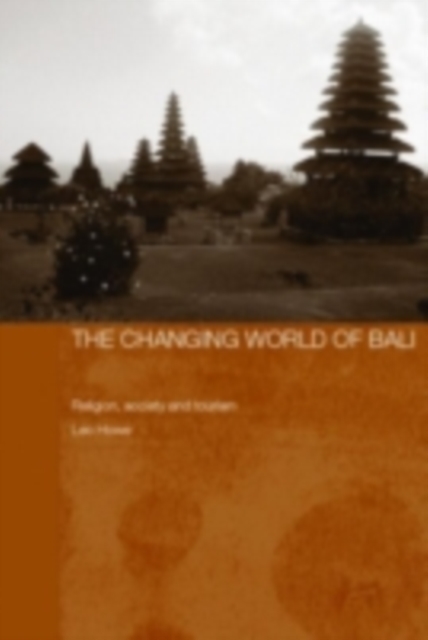
The Changing World of Bali
\"The glossy guide book image of Bali is of a timeless paradise whose people are devoutly religious and artistically gifted. However, a hundred years of colonialism, war and Indonesian independence, and tourism have produced both modernizing changes and created an image of Bali as 'traditional'.
Incorporating up-to-date ethnographic field work the book investigates the myriad of ways in which the Balinese has responded to the influx of outside influence. The book focuses on the fascinating interrelationship between tourism, economy, culture and religion in Bali, painting a twenty-first century picture of the Balinese. In documenting these diverse changes Howe critically assesses some of the work of Bali's most famous ethnographer, Clifford Geertz and demonstrates the importance of a historically grounded and broadly contextualized approach to the analysis of a complex society.\"
eBook

Risk, Ritual and Performance
Performance approaches to the interpretation of ritual highlight process, presence, strategy and uniqueness. They are often favourably contrasted to textual approaches said to emphasize meaning, structure and stability. However, this sharp distinction can be maintained only by ignoring the notion of inscription, which is central to text. Inscription is a political process which involves risk, strategy and struggle. Moreover, commonly performance approaches neglect questions of risk in ritual action. Ritual is often seen as suppressing risk, but many rituals are events involving high risk. This article considers various Balinese rituals in which risk is a prominent feature, and suggests ways in which a focus on risk may aid our understanding of ritual.
Journal Article
Tourism, culture and identity
Until recently anthropologists treated tourism as a nuisance to be avoided rather than as an object of study in its own right. They conducted their fieldwork in areas well away from centres of tourist concentration, perhaps in the hope of experiencing a less contaminated section of society, as if tourists only made a difference where they were physically present. Even when tourists were present in large numbers, and tourism began to be studied, it still tended to be conceptualised as an isolated phenomenon, an add-on or afterthought to the real business of describing an indigenous culture. Tourism was something that had an impact, but only on the surface of the host society, so it remained marginal, and for the most part could be safely ignored. Tourism was seen as a temporary and artificial meeting of very different - even incompatible - groups of people which could only give rise to artificial outcomes and bastardised, commodified cultures, fit only to be exposed and condemned (Wood 1997: 2-3). Faced with these assumptions it was difficult to describe tourism other than in terms of cost-benefit analysis - asking whether tourism was good or bad for the host society.
Book Chapter
Colonialism, caste and the beginnings of tourism
There were to be no plantations or factories in Bali, indeed virtually no commercial exploitation at all, certainly not the kind that occurred in Dutch-colonised Java (Geertz 1963a), northern Sumatra (Stoler 1985), and the Spice Islands (Ricklefs 1981). In fact, the main reason for Bali's incorporation into the Dutch colonial empire was more strategic than economic. To protect and consolidate Dutch interests in Java against interference from the English after the Napoleonic wars, when Java was governed temporarily by Sir Thomas Stamford Raffles (later to found Singapore) the Dutch felt it expedient to control Bali, situated a few miles east of the larger island. Economics played a part too, but only insofar as the Dutch wanted to stop Balinese piracy and the plundering of shipwrecks. The colonial project they set in motion in Bali - what came to be called by the Dutch 'Baliseering' or the 'Balinisation of Bali' - amounted to a reconstitution of what the Dutch thought Balinese society must once have been. This is a strange notion, and I shall try to explain the colonial thinking behind it.
Book Chapter
The efficacy of ritual action and the transformation of religion
In earlier periods in anthropology, issues concerning ritual action were often characterised as a series of questions about instrumentality and expressivity. Why are beliefs in magical and ritual action generated? What are the ends and purposes of ritual action? What do ritual and magical action symbolically express about social relationships and societal arrangements? Are such practices rational? It used to be the anthropologist who asked these questions - nowadays it is quite often members of the group being studied. They may do so because they are uncertain as to whether they should carry on believing in the efficacy of ritual action, and are unsure whether the resources of time, money, labour and materials consumed in ritual are necessary or simply wasted. They may need to decide which among competing religious systems they should give allegiance to, given that one system demands ritual action while another denounces it. They may question whether an emphasis on ritual deflects attention away from a different meaning of religion, a different attitude to divinity, or a different kind of religious experience.
Book Chapter
Introduction
On the night of 12 October 2002 a bomb exploded outside the Sari Club in the tourist village of Kuta on Bali's south coast, eventually killing over two hundred people. Within hours news of the tragedy had reached most areas of Bali and was being reported by the media throughout the world. In the first few days after the bomb there were many theories as to who the terrorists were. In the West, for example, it was widely assumed to be the act of an al Qa'ida terrorist cell, while among many Muslims in Indonesia it was believed to be the American CIA trying to discredit Islam. On the island, many blamed fanatical Muslims for trying to extend the communal violence in Ambon, Kalimantan, Lombok and other areas of Indonesia by inciting religious and ethnic violence in Hindu Bali, ultimately with a view to securing an Islamic state by destabilising the fragile incumbent one. However, though I am introducing the book in this way I am less interested in who the actual culprits were than in using the event to sketch some social and cultural themes that will later receive more detailed treatment.
Book Chapter

New religions of Bali
When independence was achieved in 1950 the fledgling Indonesian state faced many challenges. The most pressing was how to create a unitary nation state in the face of the unprecedented cultural, ethnic and religious diversity of the societies which now comprised it, and which threatened to pull it apart. One possible solution was to make Islam the state's official religion, since the majority of its people were Muslims. However, many of the mostly Javanese authors of the constitution and leaders of the revolution were only nominally Muslim. In practice they followed a speculative and philosophical religion, a syncretic blending of both Hindu and Islamic beliefs (Geertz 1960, Ch. 17; Beatty 1999, Ch. 6). They were concerned that an Islamic state would be disruptive to national unity, since it would alienate those of other religious persuasions. An uneasy compromise was reached in which belief in one god - rather than specific belief in Allah - would be the first principle of the national ideology, the Pancasila.
Book Chapter
Controversies about Balinese hierarchy
This chapter looks at the changing and dynamic nature of caste and hierarchical social relations in modern day Bali by looking at three key issues - competing interpretations of Balinese social structure, wealth and hierarchical status, and commoner kinship associations. I shall demonstrate that despite the relative lack of interest in this area of Balinese social life by other anthropologists, caste and hierarchy remain crucial institutions. Hierarchy in pre-colonial Bali is beyond the scope of this book, and interested readers are encouraged to consult the excellent works of Boon (1977), Geertz (1980), Wiener (1995) and Schulte Nordholt (1996).
Book Chapter
Balinese character assassination?
In this chapter I explore the issue of Balinese character, not to prove writers like Margaret Mead, Clifford Geertz and Unni Wikan wrong and substitute my own ideas, but because it is useful to explore some of the theoretical and ethnographic problems involved in the enterprise. Since descriptions of Balinese character have often revolved around issues of fear - either the anxiety surrounding conduct on the public stage or to the possibility of attack by witches and sorcerers - I have deliberately kept this chapter relatively light-hearted. This is both to counter the impression that everyday life for Balinese people is dominated by tension and worry, and to give the reader a flavour of how ordinary Balinese people think, talk and act in response to these concerns.
Book Chapter