
Catalogue Search | MBRL


Are you sure you want to remove the book from the shelf?

{{itemTitle}}
821
result(s) for
"Howes, Michael"
Sort by:

Can public awareness, knowledge and engagement improve climate change adaptation policies?
Communities that are vulnerable to the impacts of climate change need to adapt to increase their resilience. Effective government policies and plans are a key component of this transition, but they are not sufficient in themselves. The community needs to be made aware of the risks, acquire knowledge about the options that are available for a response, and be empowered to take their own actions. Effective public engagement is therefore key to success in planning for climate change. This paper focuses on the importance of public engagement in climate change adaptation policy. It undertakes a systematic quantitative review of the literature dealing with the core themes of climate change awareness, knowledge, and engagement in policy-making. The findings reveal a gap in the existing academic literature on public engagement, its impacts on different types of knowledge, and the integration of both into climate change adaptation policy. In addition, findings show a strong link between public knowledge and engagement that can be used to encourage and motivate the public by using behavioural economics as a policy instrument. The paper also makes a useful contribution by identifying more effective strategies to improve climate change resilience and sustainability.
Journal Article

Environmental Sustainability: A Case of Policy Implementation Failure?
For a generation, governments around the world have been committed to sustainable development as a policy goal. This has been supported by an array of new policies ranging from international agreements, to national strategies, environmental laws at many levels of government, regional programs, and local plans. Despite these efforts, decades of scientific monitoring indicate that the world is no closer to environmental sustainability and in many respects the situation is getting worse. This paper argues that a significant contributing factor to this situation is policy implementation failure. A systematic review of the literature reveals that the failure to achieve the intended outcomes of environmental policies is due to economic, political and communication factors. Conflict between the objectives of environmental policies and those focused on economic development, a lack of incentives to implement environmental policies, and a failure to communicate objectives to key stakeholders are all key factors that contribute to the inability to attain environmental sustainability.
Journal Article

Interrogating resilience
In the context of accelerated global change, the concept of resilience, with its roots in ecological theory and complex adaptive systems, has emerged as the favored framework for understanding and responding to the dynamics of change. Its transfer from ecological to social contexts, however, has led to the concept being interpreted in multiple ways across numerous disciplines causing significant challenges for its practical application. The aim of this paper is to improve conceptual clarity within resilience thinking so that resilience can be interpreted and articulated in ways that enhance its utility and explanatory power, not only theoretically but also operationally. We argue that the current confusion and ambiguity within resilience thinking is problematic for operationalizing the concept within policy making. To achieve our aim, we interrogate resilience interpretations used within a number of academic and practice domains in the forefront of contending with the disruptive and sometimes catastrophic effects of global change (primarily due to climate change) on ecological and human-nature systems. We demonstrate evolution and convergence among disciplines in the interpretations and theoretical underpinnings of resilience and in engagement with cross-scale considerations. From our analysis, we identify core conceptual elements to be considered in policy responses if resilience is to fulfill its potential in improving decision making for change. We offer an original classification of resilience definitions in current use and a typology of resilience interpretations. We conclude that resilience thinking must be open to alternative traditions and interpretations if it is to become a theoretically and operationally powerful paradigm.
Journal Article

Across the Great Divide: A Systematic Literature Review to Address the Gap Between Theory and Practice
An unresolved dilemma facing many disciplines is how theory and practice can better work together to enhance the decision-making processes on the ground. This widely-known theory-practice gap often contributes to the misdiagnosis of problems and undermines the effectiveness of responses. Despite decades of research into why this gap remains, there is still a continuing and heated debate as to why it exists and how it could be resolved. This article examines the theory-practice gap through a systematic review that draws insights across diverse disciplines such as health, science, governance, and business. It builds a conceptual framework based on the findings, allowing for the analysis of the various drivers and solutions for addressing the gap. The findings show that to resolve this gap is necessary to change our perspective of the gap and understand it as a bilateral issue, where both theory and practice play a role in creating the gap. Thus, solutions to the gap need to follow a cyclical and integrative approach. As the gap may never be fully closed, the framework provides the tools to respond to it whenever it arises. Future research will be required to empirically test and advance the framework.
Plain language summary
This study aims to tackle the persistent problem known as the “theory-practice gap,” which has puzzled various fields, including public health, education, nursing, and many others, for decades. The gap refers to the challenge of applying theoretical knowledge to real-world situations effectively. Despite much research, the causes and solutions for this gap remain unclear. The study takes a multidisciplinary approach to answer three key questions: 1) What is the theory-practice gap, and what does it involve? 2) What causes this gap? 3) How can we address it? By answering these questions, the study creates a theoretical framework to understand the underlying issues of the gap. The review identifies various drivers that hinder the integration of theory and practice and evaluates their significance. It also suggests an innovative model centered on learning and reflection, emphasizing that theory and practice are interdependent. This model suggests that practical situations can generate theory through reflection and that theory can influence and improve practice. The study’s results provide a holistic approach to addressing the gap, integrating perspectives from multiple disciplines. It also highlights the need to develop tools for assessing the gap, particularly in knowledge translation. While this study is a crucial first step in accumulating and integrating knowledge about the gap, future research should aim to validate its findings among practitioners from different sectors and regions. Understanding and addressing the theory-practice gap is crucial in fields like climate change and ensures that theoretical knowledge can be effectively applied in practical contexts. This study offers a promising starting point for further research and practical solutions to bridge this persistent divide.
Journal Article
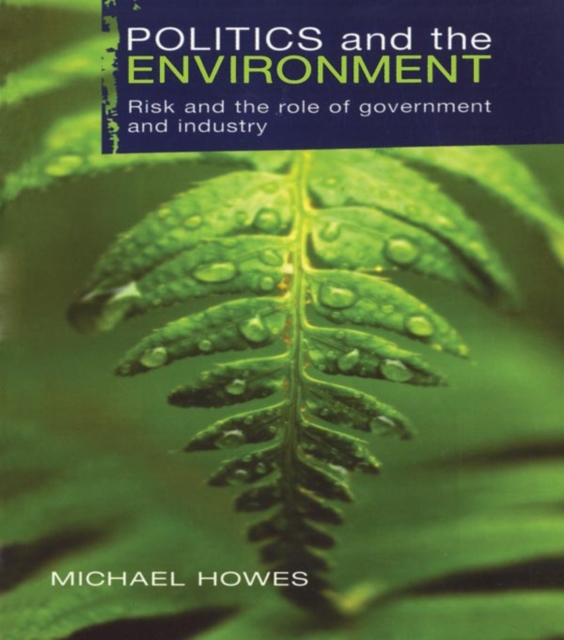
Politics and the Environment
'An evenhanded, realistic and thoughtful approach to identifying environmental problems and management goals'
Stephen Zavestoski, Assistant Professor of Sociology and Environmental Studies, University of San Francisco
'...a theoretically advanced yet accessible treatment of environmental governance, drawing on an impressive range of material to investigate the roles of states and industries in addressing environmental problems.'
Harriet Bulkeley, Department of Geography, University of Durham
'Written in the vein of critical optimism, this book is pitched at the right level to inspire people trying to make pragmatic changes to their governmental and industrial systems: trying to make a difference where it counts.'
Timothy Doyle, Associate Professor in Geographical and Environmental Studies, University of Adelaide
What is the future for our environment? We face serious risks of major industrial accidents and global environmental degradation, yet new technological developments promise a standard of living unimaginable only a few generations ago.
Michael Howes outlines the ways in which governments have responded to environmental risk over the past four decades. He examines the key environmental issues and the claims of envirosceptics, offering a new strategy for making major administrative decisions in the face of uncertainty. He explains how governments have developed environmental policy, and the ongoing tensions between science, industry, the state, social movements, and electoral politics. In a clear, straightforward manner, he shows how to use the work of theorists Ulrich Beck, Michel Foucault and John Dryzek to analyse environmental policy. He also develops a new method of measuring the effectiveness of environmental governance in developed countries.
Howes draws on a wide array of sources from business, government, environment groups, academic research, and NGOs to illustrate his arguments, with comparisons between the environmental policies of th
eBook
Climate Change Adaptation Influences and Barriers Impacting the Asian Agricultural Industry
There has been an increasing interest among scholars regarding the impacts of climate change on agriculture and possible adaptation strategies for farmers. Little attention has been paid, however, to reviewing adaptation initiatives amongst farmers in Asia. This article fills this knowledge gap by examining the current literature on Asian farmers’ perception of climate change, their adaptation strategies, key factors influencing their choices, and the barriers to change. A systematic quantitative literature review is undertaken of 48 papers taken from a range of sources. The review indicates that farmers’ perceptions of climate change have been consistent with the scientific data. It further identifies farmers’ adaptation strategies with regards to soil conservation, water management and land use changes. The review shows numerous factors influencing, and barriers impacting, farmers’ ability to adapt. Influencing factors were analysed and categorised into five groups: cognitive, demographic, social-economic, resources, and institutional. Barriers hampering their adaptive capacity were identified as: a lack of access to information, a lack of access to extension services, limited awareness and knowledge, and limited financial options. The review finishes with some recommendations for future research.
Journal Article

A GROWING MOVEMENT: MOTIVATIONS FOR JOINING COMMUNITY GARDENS
Community gardens play an important role in building urban resilience through improving food security and by increasing neighbourhood social capital. As community gardens become more popular in many countries, understanding what motivates people to join them and stay involved is, therefore, worth researching. This paper explores the key motivations of community gardeners using data from interviews conducted with people involved in a range of community gardens on the east coast of Australia (including Brisbane, the Gold Coast and Sydney) as well as two locations in Denmark (Copenhagen and Odense). Our analysis synthesised three main categories of motivation which are broadly described as “individual”, “community” and “gardening”. Individual motivations included: a retirement activity; educating one’s own children about growing and eating good food; access to organic produce; alternative to supermarket food; and personal learning, enjoyment and satisfaction. Community motivations included: civic action; a way to meet people when new to the neighbourhood; growing food for charities; teaching children to interact with the community; and community-based social activity. Gardening motivations included: being outdoors; enjoying nature; access to earth; and growing food plants. While community gardening is often cited as a sustainable activity, the environment only emerged once as a key focus in relation to organic food production. Interestingly, there was still evidence of sustainable practices such as community composting and pesticide-free growing across all sites. The range of motivations show that the gardens go some way towards improving the quality of life in urban environments through providing intergenerational social interactions which are enjoyable, increasing local social capital and inadvertently improving local food security and sustainability.
Journal Article
Local Action with a Global Vision: The Transformative Potential of Food Social Enterprises in Australia
There is an urgent need to make food systems more sustainable and resilient. Such a transformation goes beyond technological innovation and requires economic and social change. Research interest in the transformative potential of community level action has increased. Food social enterprises often operate at the community level and consist of not-for-profit organisations that aim to make a positive contribution to social justice and environmental sustainability. The question addressed in this paper is whether these social enterprises are limited to isolated improvements or have the capacity to transform food systems more widely. This paper uses a multi-dimensional framework (involving the social setting, operational models, governance, and institutional context) to analyse the transformative potential of eight food social enterprises in the Australian cities of Brisbane and Melbourne. The analysis indicates that these enterprises create social networks, pursue agendas aligned with a global vision of transformation, and include a diversity of stakeholders. Their operational models are consistent with the goals of environmental sustainability and social justice. Their governance involves equality, transparency, and flexibility. In the institutional context, support from public policy is limited and there is a need to improve their engagement with governmental actors. While food social enterprises are well placed in the quest to make food systems more consistent with ecological dynamics and social justice, they need to engage in greater advocacy for institutional change in order to maximise their transformative potential.
Journal Article

The Problem of Inclusion in Deliberative Environmental Valuation
The idea of inclusive collective decision-making is important in establishing democratic legitimacy, but it fails when citizens are excluded. Stated-preference methods of valuation, which are commonly used in economics, have been criticised because the principle of willingness to pay may exclude low-income earners who do not have the capacity to pay. Deliberative valuation has been advocated as a way to overcome this problem, but deliberation may also be exclusive. In this review, two deliberative valuation frameworks are compared. The first is grounded on the idea of rational discourse that emphasises argument at the expense of other communicative strategies. It seeks to secure inclusion through procedural rules and prerequisites, but fails to address the underlying democratic limitation of argumentation. The second does not rely on the distinction between rational and rhetorical speech, and therefore admits alternative forms of communication. This approach recognises differences in the communicative capacities and practices of those who take part in deliberation, and so is better equipped to improve, though not to guarantee, inclusion.
Journal Article