
Catalogue Search | MBRL


Are you sure you want to remove the book from the shelf?

{{itemTitle}}
77
result(s) for
"Howkins, John"
Sort by:
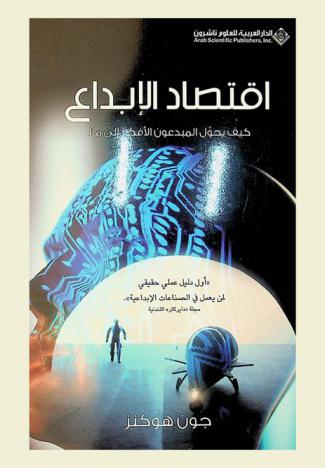
اقتصاد الإبداع : كيف يحول المبدعون الأفكار إلى مال
يدور موضوع الكتاب حول العلاقة بين الإبداع والاقتصاد ولكن هل الإبداع شيئا جديدا، أو الاقتصاد كذلك، بالتأكيد لا، إذا ما هو الجديد الذي يقدمه هذا الكتاب : \"الجديد هو طبيعة تلك العلاقة ومداها وكيفية اجتماعهما معا، الشيء الذي يؤدي إلى ثروة حقيقية\" وفي عصرنا الحالي أصبح ذوو الأفكار، أي أولئك الذين يمتلكونها، أكثر نفوذا ممن يشغلون الآلات، بل إنهم وفي كثير من الحالات، أكثر نفوذا ممن يمتلكون الآلات، لهذا فإن العلاقة بين الإبداع والاقتصاد تبقى غير مرئية ومن هنا أراد المؤلف أن يجمع لنا جميع هذه المكونات (الإبداع، الملكية الفكرية، الإدارة، رأس المال والثروة) ضمن إطار شامل نتج عنه هذا الدليل العملي الذي سماه \"اقتصاد الإبداع\".
BOOK


Frozen empires: A history of the Antarctic sovereignty dispute between Britain, Argentina, and Chile, 1939–1959
This dissertation investigates the causes, development, and the partial resolution of the Antarctic sovereignty dispute that took place between Britain, Argentina, and Chile between 1939 and 1959. It has two interconnected arguments. The first argument is that the dispute had its roots in a clash between British imperialism and South American nationalism, and, as a consequence, ought to be seen as part of the wider history of European decolonization in the years during and after the Second World War. The second argument is that the history of the sovereignty dispute offers an excellent opportunity for “doing environmental history” due to the relative simplicity of human-nature-culture interactions in Antarctica. By putting these two arguments together, it becomes possible to write an “environmental history of decolonization.” Within the context of the sovereignty dispute, this dissertation asks the question: what happened to British imperial claims to “dominion over nature” during the decolonization of the British Empire in the mid-twentieth century? Over the course of the sovereignty dispute, Argentina and Chile sought to challenge Britain's claims to “environmental authority” in Antarctica with their own “environmental nationalism.” Rather than conceding to the South American challenge, Britain initially responded by redoubling its efforts to maintain Antarctic sovereignty. However, as the three countries learned more about the reality of the Antarctic environment, their political perceptions of the region changed. The British, in particular, became less attached to exclusive sovereignty and successfully negotiated a limited international regime that would retain their political influence without the need for formal control. The Antarctic Treaty of 1959 brought a partial end to the sovereignty dispute by “freezing” all sovereignty claims for its duration.
Dissertation


A market for creativity
Qiong Zi Flower is a small but funky shop in Shanghai's tree-lined Julu Road, which would not be out of place in Sydney or Tokyo. Owner and designer Qiong Zi sells high-class women's clothing notable for bold designs and startling colours. Her clothes are elegant and sensual, even sexy. They echo the Shanghai women of the '30s, more French chic than New York glamour, but with a dash of the up-to-the minute Milan pizzazz you find in Etro or Roberto Cavalli. A typical dress costs about RMB1400 ($215), one-third its likely price in London or New York. Many foreigners are caught up in China's buzz and many Chinese, keen to succeed, welcome the foreigners' experience of consumer markets and business methods. For an aspiring Chinese, having a Western partnership is a mark of success. Deng Min, an up-and-coming fabric designer, has won a good reputation for her imaginative designs, but says: \"I haven't really succeeded until I can sell through a European chain.\" Like [Sandra Shmith], she knows the Chinese domestic market will take off but doesn't know when. Artists, of course, play on this tension. It's what artists do. Some of the best work does so openly, as in Yue Minjun's smiling faces and Liu Xiaodong's New Immigrants at the Three Gorges, which restaurateur Zhang Lan bought for $2.7 million. But sometimes the Government gets nervous. Zhang Huan's solo show at the Shanghai Art Museum was mysteriously cancelled last March because, it was rumoured, the city's authorities disapproved.
Newspaper Article
