
Catalogue Search | MBRL


Are you sure you want to remove the book from the shelf?

{{itemTitle}}
35
result(s) for
"Hruby, Zachary"
Sort by:

The weight of ritual: Classic Maya jade head pendants in the round
A newly discovered jade head pendant from the Guatemalan site of Ucanal illuminates a rarely considered element of Classic Maya royal ceremonies: weight. The largest and probably the heaviest of its kind, this pendant is a rare example of Classic Maya belt ornaments. Finely carved jade ornaments symbolised the prestige and wealth of elite officials, but were also metaphors for the weighty burdens of office. This paper considers the phenomenological role of jade jewellery, which would have encumbered Maya royalty greatly during public ceremonies. While such a perspective underscores the ritual work of elites, an analytical focus on weight also highlights the anonymous people who carried burdens.
Journal Article

CONTROL, COLLAPSE, AND RESILIENCE AT RÍO AMARILLO IN THE COPAN VALLEY, HONDURAS
This article documents the transition from the Late Classic to Postclassic periods at Río Amarillo, a hinterland outpost of the Copan polity, and at an associated residential group, Site 5, in the Río Amarillo East Pocket of the Copan Valley. Late Classic period evidence indicates that the site of Río Amarillo operated as an administrative center for the Copan polity with the likely objective of increased agricultural production for the burgeoning population in the Copan Pocket. In the Terminal Classic period, Río Amarillo shared the fate of Copan, with evidence indicating it was burned and sacked. However, unlike the Copan Pocket, many residential groups remained occupied during the Early Postclassic. Here we focus on Site 5. An unbroken occupation from the Late Classic through to the end of the Early Postclassic period, as this site provides a window into an existence without the requirements of tribute given to their western neighbor. We hypothesize that the smaller settlement size and higher amount of rainfall in this valley pocket, as well as a richer and more diversified environment, were important factors in the survival of some of its population.
Journal Article

A Late Postclassic (ca. AD 1350–1521) Border Shrine at the Site of Tayasal, Petén, Guatemala
Shrines were a regular component of ceremonial architecture in the public plazas of Postclassic Maya centers. Small shrines and natural landmarks such as caves and outcrops at the borders of settlements or in wilderness locations also served, and in some cases continue to serve, as important ritual loci for Maya peoples. These more peripheral locales were not only critical access points to the supernatural, but also served to delineate places. Because these border features, which represent only a given moment in a constantly shifting social and political landscape, are sometimes unmodified or are inconspicuous, they are relatively ephemeral and difficult to identify in the archaeological record. This paper documents a Late Postclassic shrine paired with a natural feature, a small hill, from the site of Tayasal in Petén, Guatemala. We argue that it served as a border shrine. Paired with the small hill, the two embodied a liminal frontier, not only between earthly and spiritual realms but also between settled and unsettled space. Los santuarios eran un componente regular de la arquitectura ceremonial en las plazas públicas de los centros mayas del Posclásico. Sin embargo, los santuarios pequeños y ciertos rasgos naturales del paisaje, como cuevas y afloramientos en las orillas de los asentamientos o en lugares alejados de los mismos, también sirvieron y, en algunos casos, siguen sirviendo como importantes sitios rituales para los Mayas. Estos espacios periféricos no solo eran puntos de acceso a lo sobrenatural, sino que también servían para demarcar lugares. Debido a que estos rasgos fronterizos representan solo un momento en un paisaje social y político en cambio constante, a veces no están modificados, o son discretos, efímeros y, en consecuencia, difíciles de identificar arqueológicamente. Este artículo documenta un santuario del Posclásico tardío asociado a un rasgo natural, un pequeño cerro, del sitio de Tayasal en Petén, Guatemala. Argumentamos que funcionó como un santuario fronterizo y que, junto con el pequeño cerro, revelaba una frontera liminal no solo entre los espacios terrenales y espirituales, sino también entre espacios poblados y no poblados.
Journal Article
INTERREGIONAL INTERACTION IN TERMINAL CLASSIC YUCATAN: RECENT OBSIDIAN AND CERAMIC DATA FROM VISTA ALEGRE, QUINTANA ROO, MEXICO
We use ceramic and obsidian data from the ancient Maya port site of Vista Alegre to discuss long-distance exchange during the Terminal Classic (c. AD 850–1100) period. This is a time often associated with increased international trade relations and the growth of Chichen Itza as a dominant regional power in the northern Maya lowlands. Critical to the increased volume of international trade were the merchants who transported goods along the coast of Yucatan in large trading canoes. By combining a macroscopic assessment of the ceramics with visual, XRF, and INAA analyses of the obsidian artifacts, we gain insight into the various socioeconomic forces at work moving goods around the Peninsula. Given the paucity of Terminal Classic settlement in the interior Yalahau region, Vista Alegre appears to be an isolated site during this period, approximately 40 km from the nearest coastal neighbor. This allows us to focus on coastal exchange as the sole means by which goods arrived at the site. Our preliminary data contribute to the growing literature on the role market economies played in the Maya area, and the increased opportunities this afforded coastal peoples as circum-peninsular trade became more common through time. En este trabajo utilizamos información sobre la cerámica y la obsidiana del antiguo puerto Maya de Vista Alegre, Quintana Roo, México, para discutir el intercambio a larga distancia durante el periodo Clásico terminal (ca. 850–1100 dC). Dicho periodo es frecuentemente asociado con el incremento de las relaciones comerciales internacionales y el crecimiento de Chichén Itzá como centro regional dominante en las tierras bajas Mayas del norte. Los comerciantes que transportaban bienes a lo largo de la costa de Yucatán en grandes canoas comerciales fueron fundamentales para el aumento del volumen del comercio internacional. Combinando la examinación macroscópica de la cerámica con el estudio visual, por fluorescencia de rayos X y por análisis instrumental de activación neutrónica (XRF e INAA, respectivamente, por sus siglas en inglés) de los artefactos de obsidiana, se obtuvo información sobre las diversas fuerzas socio-económicas involucradas en el transporte de mercancías alrededor de la península. Dada la escasez de asentamientos del Clásico terminal en el interior de la región de Yalahau, Vista Alegre parece haber sido un sitio aislado durante este periodo, localizado a aproximadamente 40 km del asentamiento costero más cercano. Esto permite enfocarnos en el intercambio costero como el único medio por el cual las mercancías llegaron al sitio. La información preliminar aquí presentada contribuye al creciente conjunto de investigaciones sobre el papel que desempeñaron las economías de mercado en el área Maya y las mayores oportunidades que esto brindó a los pueblos costeros.
Journal Article

Evidence for a Classic Maya Spearthrower
The atlatl in Mesoamerican archaeology is usually associated with the great cultures of Central Mexico, or as a marker of Central Mexican influence. Iconographie and linguistic evidence, however, points to a different, perhaps parallel, form of the atlatl from the Maya area. The Classic Maya spearthrower seems to have been made differently, was closely associated with hunting, and may have played a different role in Maya mythology than that of Central Mexican weapon, which was clearly rooted in the Teotihuacan cult of sacred war. El atlatl en la arqueología Mesoamericana se asocia generalmente con las grandes culturas del Centro de México, o como un marcador de la influencia Centromexicana. La evidencia iconográfica y linguística, sin embargo, apunta a una forma diferente, tal vez paralela, del atlatl en el área maya. El atlatl maya del periodo Clásico parece haber sido hecho de manera diferente, estaba asociado con la caza, y puede haber formado un papel diferente en la mitología Maya que el del arma del centro de México, que estaba claramente arraigada en el culto de la guerra sagrada de Teotihuacan. Der Atlatl wird in der Archäologie Mesoamerikas gewöhnlich mit den großen Kulturen Zentralmexikos in Verbindung gebracht, oder er gilt als Merkmal des Einflusses aus Zentralmexiko. Ikonographische und linguistische Belege deuten jedoch auf eine andere, vielleicht parallele Form des Atlatls aus dem Maya-Gebiet hin. Der klassische Maya-Speerwerfer scheint anders hergestellt worden zu sein, wurde eng mit der Jagd in Verbindung gebracht und spielte in der Mythologie der Maya möglicherweise eine andere Rolle als die zentralmexikanische Waffe, die eindeutig in Teotihuacans Kult des heiligen Krieges verwurzelt war.-
Journal Article

The Technology of Maya Civilization
The ancient Maya shaped their world with stone tools. Lithic artifacts helped create the cityscape and were central to warfare and hunting, craft activities, cooking, and ritual performance. 'The Technology of Maya Civilization' examines Maya lithic artefacts made of chert, obsidian, silicified limestone, and jade to explore the relationship between ancient civilizations and natural resources. The volume presents case studies of archaeological sites in Guatemala, Mexico, Belize, and Honduras. The analysis draws on innovative anthropological theory to argue that stone artefacts were not merely cultural products but tools that reproduced, modified, and created the fabric of society.
Chapter 1
eBook
An incised ceramic vessel excavated at Ucí, Yucatán, Mexico
A Late Classic Chocholá style vessel recently excavated from Ucí, Yucatan, Mexico, contains text and iconography with several remarkable features. The iconography shows an unusual pairing of the Moon Goddess and God D. The text states the vase was for drinking cacao with a previously unattested reference to chili or some other spicy plant. The owner carried a title similar to one commonly found in the La Corona and Calakmul regions as well as the title uukiy ajaw, “Lord of Ucí”. Since the vase was found in a burial in a relatively modest monumental platform, the Lord of Ucí likely gave this vase away to a lesser noble interred in this platform. Given the continuity in the place name from the Late Classic to the Colonial era to the present, Ucí joins a short list of other locations whose current names derive directly from Classic Period inscriptions. This continuity excites many contemporary residents of Ucí, drawing them into a closer relationship with the past and its re-construction in the present.
Una vasija Chocholá del Clásico Tardío, encontrada recientemente en Ucí, Yucatán, México, contiene iconografía y escritura con varios elementos distintivos. La iconografía muestra un inusual emparejamiento de la Diosa de la Luna, Diosa I, y el Dios D. La escritura de la vasija demuestra que se usaba para tomar una bebida hecha de cacao. También contiene una referencia previamente no registrada del uso de un tipo de chile o algún otro tipo de planta astringente. El dueño de la vasija portaba un título similar a uno muy común en la región de La Corona y Calakmul, así como el título de uukiy ajaw o el “Señor de Ucí”. Ya que la vasija fue encontrada en un entierro intrusivo en una plataforma monumental relativamente modesta, el “Señor de Ucí” probablemente le regaló la vasija a un noble menor que fue enterrado en dicha plataforma. Dada la continuidad en el nombre del sitio desde el Clásico Tardío a la era Colonial y hasta el día presente, Ucí se une a una lista muy corta de otras localidades cuyos nombres contemporáneos son derivados directamente de inscripciones del Clásico. Esta continuidad ha alentado a muchos residentes actuales de Ucí, los trae a una relación más estrecha con el pasado y su reconstrucción durante el presente.
Ein Gefäß im spätklassischen Chocholá-Stil, das kürzlich in Ucí, Yucatán, Mexiko, ausgegraben wurde, ist mit bemerkenswertem Text und Ikonographie verziert. Die Ikonographie zeigt eine ungewöhnliche Paarung der Mondgöttin und des Gottes D. Der Text besagt, dass die Vase zum Trinken von Kakao diente, mit einem bisher unbestätigten Hinweis auf Chili oder ein anderes pflanzliches Gewürz. Der Besitzer trug einen Titel, wie er in den Regionen La Corona und Calakmul üblich ist, sowie den Titel uukiy ajaw, „Herr von Ucí“. Da das Gefäß in einer Bestattung in einer relativ bescheidenen monumentalen Plattform gefunden wurde, hat der „Herr von Ucí“ dieses Gefäß wahrscheinlich an einen untergeordneten Adligen verschenkt, der an diesem Ort bestattet wurde. Angesichts der Kontinuität des Ortsnamens von der spätklassischen über die koloniale Ära bis zur Gegenwart reiht sich Ucí in eine kurze Liste anderer Orte ein, deren heutige Namen bereits in Inschriften aus der klassischen Zeit belegt sind. Diese Kontinuität ist für die zeitgenössischen Bewohner von Ucí von großer Bedeutung und bringt sie in eine engere Beziehung zur vorkolonialen Vergangenheit und ihrer Ausstrahlung bis in die Gegenwart.
Journal Article

Lithic Technologies and Economies at El Zotz
The economy of the El Zotz region, specifically the procurement, production and consumption of stone tools, is difficult to describe in broad strokes, due to its disjointed history and shifting centers of power. Although the tenuous political position of regional centers through time can be attributed to varying and various masters, many lithic traditions were relatively conservative over hundreds, if not thousands, of years. Local knappers also took part in many lithic traditions that spanned the entirety of the Lowlands, such as the production of celtiform bifaces used for chopping, pecking, and hammering (figure 9.1). However, it is unclear if
Book Chapter
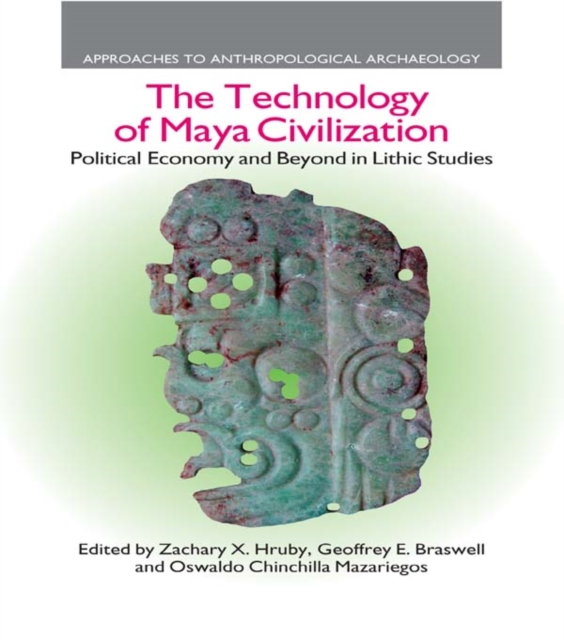
The technology of Maya civilization : Political economy and beyond in lithic studies
The ancient Maya shaped their world with stone tools. Lithic artifacts helped create the cityscape and were central to warfare and hunting, craft activities, cooking, and ritual performance. 'The Technology of Maya Civilization' examines Maya lithic artefacts made of chert, obsidian, silicified limestone, and jade to explore the relationship between ancient civilizations and natural resources. The volume presents case studies of archaeological sites in Guatemala, Mexico, Belize, and Honduras. The analysis draws on innovative anthropological theory to argue that stone artefacts were not merely cultural products but tools that reproduced, modified, and created the fabric of society.
eBook
Polities, Boundaries, and Trade in the Classic Period Usumacinta River Basin
Se explora en el presente artículo las consecuencias de las fronteras políticas para el intercambio de cerámica, jade, y obsidiana a lo largo del Rio Usumacinta medio y sus valles adyacentes. Se enfoca principalmente en los reinos de Yaxchilan y Piedras Negras, cuyos dinastías llegaron a sus apogeos durante el periodo Clásico tardío (c. 600—810 d.C.). Antes que la construcción de la red de carreteras modernas, la cuenca del Rio Usumacinta funciono como uno de las rutas de intercambio más importante de Mesoamerica, conectando las tierras altas de Chiapas y Guatemala con las tierras bajas Mayas al norte hasta el costo del Golfo de México. Sin embargo, para los Mayas antiguos las rutas por el rio y corredores sobre la tierra no eran carreteras abiertas sobre cuales movieron personas y la mercancía de manera libre. Los datos arqueológicos de los centros dinásticos y asentamientos rurales de los reinos de Piedras Negras y Yaxchilan indican que el intercambio quedo profundamente afectado por las divisiones políticas entre las dos entidades políticas, durante el Clásico tardío y después. In diesem Artikel werden die Konsequenzen politischer Grenzen für den Handel mit Keramik, Jade und Obsidian entlang des mittleren Usumacinta-Flusses und der angrenzenden Täler diskutiert. Das Augenmerk richtet sich dabei vor allem auf die Königtümer von Yaxchilan und Piedras Negras, deren Dynastien den Höhepunkt ihrer Macht in der Späten Klassik (600—810 n. Chr.) hatten. Vor der Existenz moderner Straßennetze stellte das Flusssystem des Usumacinta eine der Haupthandelsrouten dar, die das Hochland von Chiapas und Guatemala mit dem Maya-Tiefland und dem Golf von Mexiko verband. Dennoch waren die Flussrouten und Landwege der Usumacinta-Region für die Maya keine offenen Handelswege, auf denen Güter und Menschen unbeschränkt verkehren konnten. Die archäologischen Befunde aus den dynastischen Zentren und den Siedlungen im Hinterland der Königtümer von Yaxchilan und Piedras Negras machen deutlich, dass der Handel während der klassischen Zeit und später erheblich von den politischen Grenzen zwischen den beiden politischen Einheiten beeinflusst war.
Journal Article