
Catalogue Search | MBRL


Are you sure you want to remove the book from the shelf?

{{itemTitle}}
130
result(s) for
"Hu, Angang"
Sort by:


Mao and the Cultural Revolution (Volume 3)
Acclaimed national researcher Hu Angang presents Mao and the Cultural Revolution, an immensely rich account of the massive political event of 1966-1977 that brought seismic changes to the landscape of New China.A culmination of Mao Zedong's political amtions, the Cultural Revolution restored his power and prestige as paramount leader, albeit at great costs to the economic and social development to the country. The impact of the movement -- more significantly, the politics that drove it -- deeply influences political philosophy in China today.Hu Angang's work provides a unique perspective and objective assessment of the progression of the Cultural Revolution, focusing on the intraparty politics, the Politburo's international outlook, and the political thought of the Chinese leadership that shaped this pivotal decade. _x0000_.
eBook
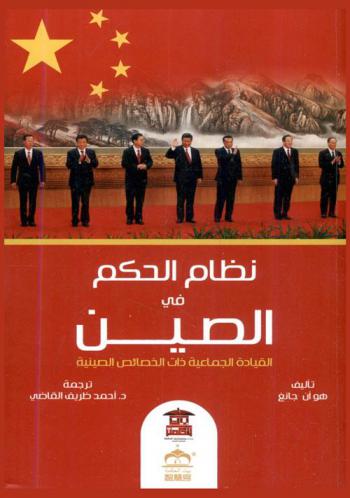
نظام الحكم في الصين : القيادة الجماعية ذات الخصائص الصينية
هذا الكتاب يوضح للقارئ العربي لأول مرة آليات حكم وإدارة دولة بحجم قارة يعيش فيها خمس سكان العالم، ليغير الفكرة الشائعة في العالم عن غياب الديمقراطية في الصين ويكشف عن نوع أخر من الديمقراطية يختلف تماما عن المفهوم الغربي، هذا النوع من الديمقراطية هو تراث خمسة الآلاف عام ظلت تحافظ عليه الصين حتى بعد أن تحولت لدولة شيوعية في العصر الحديث.
BOOK
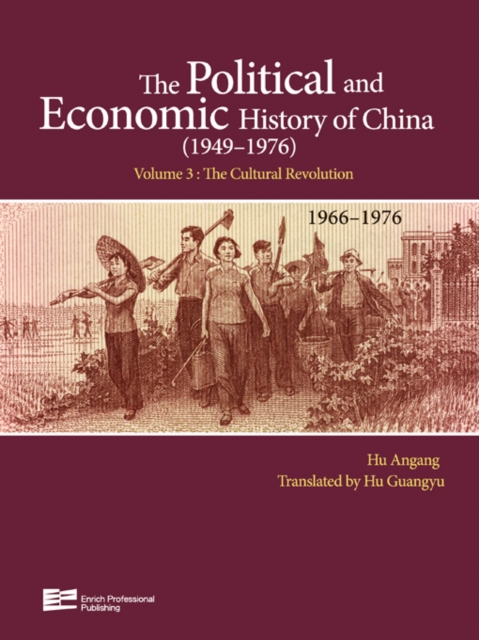
The Political and Economic History of China, (3-Volume Set)
Surveys the Most Tumultuous Periods in China's Modern History A detailed chronicle of an era of chaos and political turbulence, The Political and Economic History of China (1949-1976) is a must-read book for anyone interested in the history of modern China. This series, in three volumes, covers the Cultural Revolution, the Great Leap Forward, the Golden Age of Industrialization, and the other important events that shaped China. The incidents in this series are the ones which laid the groundwork for the subsequent 30 years of reforms in China and which have influenced the latest ideological and policy developments, such as President Xi's recent series of reforms. Written by Hu Angang of Tsinghua University. He is the director of the National Research Group of the Chinese Academy of Social Sciences, China's most prominent political think-tank.
eBook


China: Achieving the Vision of Common Prosperity in 2035
This paper discusses how to realize the visionary goal of “basically realizing socialist modernization by 2035 and achieving more obvious and substantial progress in the common prosperity of all people,” proposed by the fifth plenary session of the 19th Central Committee of the Communist Party of China. Based on the Marxist political economy, this paper focuses on the theoretical and practical issues of common prosperity. It then comprehensively elaborates on the profound connotation of common prosperity, the goals, the ways by which to achieve it, and the design of indicator system and assessment methods to be used. Looking ahead to the next years, it makes a medium- and long-term analysis and forecasts on the economic and social goals related to the development of common prosperity from 2021 to 2035, analyzes the opportunities and challenges involved in achieving common prosperity, proposes to continuously narrow the three major development gaps between regions, urban and rural areas, and residents' incomes, realizes the goal of equalizing basic public services, and finally offers a strategic path by which to achieve common prosperity over a series of steps and stages. The strategic path, major tasks, and key measures for achieving common prosperity in stages featured in the Chinese experience will provide the rest of the world with references by which to solve the challenges of wealth gaps for humankind.
Journal Article

The Distinctive Transition of China's Five-Year Plans
China has taken a distinctive path of economic transition, combining both the market and the plan. In introducing the market mechanism, the government has not abandoned the planning mechanism, as was done in other socialist countries, but instead has reformed it. The five-year plan has thus been transformed from economic planning to public affairs governance planning. Today the plan and the market are combined so that the two supplement and stimulate each other.
Journal Article
The Cultural Revolution (1966-1976)
Surveys the Most Tumultuous Periods in China's Modern History A detailed chronicle of an era of chaos and political turbulence, The Political and Economic History of China (1949-1976) is a must-read book for anyone interested in the history of modern China. This series, in three volumes, covers the Cultural Revolution, the Great Leap Forward, the Golden Age of Industrialization, and the other important events that shaped China. The incidents in this series are the ones which laid the groundwork for the subsequent 30 years of reforms in China and which have influenced the latest ideological and policy developments, such as President Xi's recent series of reforms. Written by Hu Angang of Tsinghua University. He is the director of the National Research Group of the Chinese Academy of Social Sciences, China's most prominent political think-tank. Volume 3 presents: 1. The First Phase (1966-1969): Full Scale Civil War; 2. The Second Phase (1969-1973): Life-and-Death Struggles between Mao Zedong and Lin Biao; 3. The Third Phase (1973-1976): The Political Struggle between Deng Xiaoping and Jiang Qing; 4. Official Verdict on the Maoist Era.
eBook

Investigating Regional Disparities of China's Human Development with Cluster Analysis: A Historical Perspective
This paper adopts both one-dimensional and multi-dimensional cluster analysis to analyze China's HDI data for 1982, 1995, 1999, and 2003, and to classify China's provinces into four tiers based on the three basic developmental aspects embedded in HDI. The classifications by cluster analysis depends on the observations' similarities with respect to clustering variable(s), rather than subjectively predetermined threshold values adopted by major international organizations, like UNDP, to make their classification. By investigating the multi-dimensional clustering results, this paper describes the features of each of the four tiers based on their characteristics within the three developmental aspects, explores the patterns of cross-tier disparities, and tracks the evolutions from a historical perspective. Also found is that, in China, the overall regional disparities have been increasingly attributable to regional economic disparities.
Journal Article

The Great Leap Forward, 1957-1965
Surveys the Most Tumultuous Periods in China's Modern History A detailed chronicle of an era of chaos and political turbulence, The Political and Economic History of China (1949-1976) is a must-read book for anyone interested in the history of modern China. This series, in three volumes, covers the Cultural Revolution, the Great Leap Forward, the Golden Age of Industrialization, and the other important events that shaped China. The incidents in this series are the ones which laid the groundwork for the subsequent 30 years of reforms in China and which have influenced the latest ideological and policy developments, such as President Xi's recent series of reforms. Written by Hu Angang of Tsinghua University. He is the director of the National Research Group of the Chinese Academy of Social Sciences, China's most prominent political think-tank. Volume 2 presents: 1. The Maoist Nation-Building Model: New Democracy; 2. The First Golden Age of China's Industrialization; 3. Collectivization and Nationalization in China; 4. Rise and Fall of the Great Leap Forward; 5. Lushan Conference and the Seven-Thousand Cadres Conference.
eBook