
Catalogue Search | MBRL


Are you sure you want to remove the book from the shelf?

{{itemTitle}}
14
result(s) for
"Hu, Binjun"
Sort by:

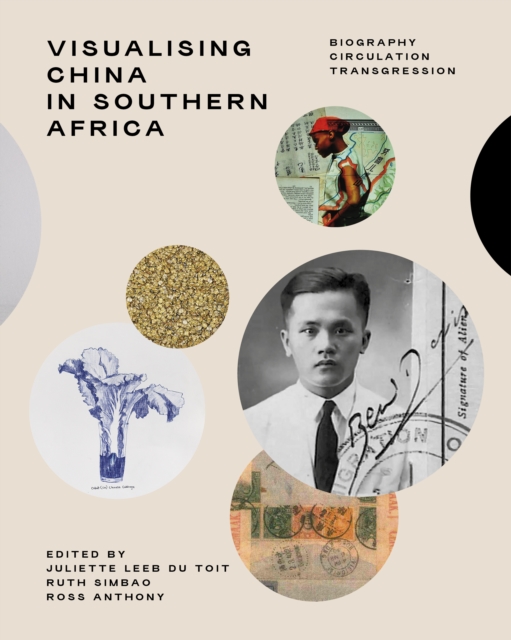
Visualising China in Southern Africa
Engaging with the work of contemporary African and Chinese artists while analysing broader material production, the essays in this volume are wide-ranging in their analysis of ceramics, photography, painting, etching, sculpture, film, performance, postcards, stamps, installations, political posters, cartoons and architecture.
With China’s rise as the new superpower, its presence in Africa has expanded, leading to significant economic, geopolitical and cultural shifts. Chinese and African encounters through the lens of the visual arts and material culture, however, is a neglected field. Visualising China in Southern Africa is a ground-breaking volume that addresses this deficit through engaging with the work of contemporary African and Chinese artists while analysing broader material production that prefigures the current relationship. The essays are wide-ranging in their analysis of ceramics, photography, painting, etching, sculpture, film, performance, postcards, stamps, installations, political posters, cartoons and architecture. Richly illustrated, the collection includes scholarly chapters, photo essays, interviews, and artists’ personal accounts, organised around four themes: material flows, orientations and transgressions, spatial imaginaries, and biographies.
eBook

Research on Urban entity boundary and virtual boundary based on GIS--Taking Dujiangyan City as an example
This paper uses the Point of Information (POI) point of interest and population distribution feature data in Dujiangyan City as the basic data, and uses spatial analysis methods, such as nuclear density analysis, contour analysis and standard deviation ellipse, to study the correlation between the entity and virtual boundaries of Dujiangyan. The results show that the urban entity and online activity intensity of Dujiangyan spreads around Xingfu, Guankou, and Puyang. The entity boundaries of the city and the virtual boundary in these three areas overlap basically, except for the city of Dujiangyan. The entity and online activities are not balanced in intensity, and there are obvious dividing lines in the area near Longchi. The entity and virtual boundaries of the city are quite different in Qingcheng Mountain and Juyuan.
Journal Article
Visualising China in Southern Africa: Circulation, Biography, Transgression
China and Africa have long shared a history of allegiance and contact points through global political forces from the time of colonialism and the Cold War. With China's rise as the new superpower, its presence in Africa has expanded, leading to significant economic, geopolitical and cultural shifts. While issues such as trade, aid and development have received much attention, Chinese and African encounters through the lens of the visual arts and material culture is a neglected field. Visualising China in Southern Africa: Biography, Circulation, Transgression is a ground-breaking volume that addresses this deficit through engaging with the work of contemporary African and Chinese artists while analysing broader material production that prefigures the current relationship. The essays are wide-ranging in their analysis of ceramics, photography, painting, etching, sculpture, film, performance, postcards, stamps, installations, political posters, cartoons and architecture. Visualising China in Southern Africa confines its focus to southern Africa, yet even within this region, the context is complex. Ethnicity and nationalism, the lingering influence of Cold War allegiances and colonial configurations all continue to play a role. The various visual cultures discussed in this volume emphasise the commonality of these categories, but also point towards other shared histories that transcend the nation-state category. The collection includes scholarly chapters, photo essays, interviews, and artists' personal accounts, organised around four themes: material flows, orientations and transgressions, spatial imaginaries, and biographies. The artists, photographers, filmmakers, curators and collectors in this volume include: Stary Mwaba, Hua Jiming, Anawana Haloba, Gerald Machona, Nobukho Nqaba, Marcus Neustetter, Brett Murray, Diane Victor, William Kentridge, Kristin NG-Yang, Kok Nam, Mark Lewis, the Chinese Camera Club of South Africa, Wu Jing, Henion Han and Shengkai Wu.
eBook
A Chinese Immigrant Collector and the Story of His Stamp Cover
INTERTWINED HISTORIESHaving relocated from China to South Africa in 2009, I have become aware of my own ethnicity and have been questioning what it means to be a Chinese immigrant in South Africa. My personal story compels me to consider the ways that other Chinese immigrants have lived through this process of self-configuration. This chapter has been inspired by my frequent encounters with Chinese collectors in South Africa and the limited representations of individual stories. I weave together the story of Chinese immigrant collector Shengkai Wu (Figure 2.1), also known as David Wu, and an object biography of a postage stamp cover that he had acquired in South Africa.In so doing, the intimate connection between the collector, Shengkai Wu, and the object itself is revealed. Together, they are seen to create an entangled space, one that reveals some of the complexities of the circulation of people and things in the movement between China and South Africa. The space is constructed, firstly, through the biography of the stamp cover as a source of knowledge that reveals historical details of Shayuchung postal history and a South African Chinese family in the 1940s. Secondly, the space is channelled through Shengkai Wu's own narrative about his stamp-cover collecting practices. Importantly, the life histories of objects and people cannot be collected separately, for people and the things they cherish are intertwined in complex ways that are difficult to disentangle.STORIES AND OBJECT BIOGRAPHIESShengkai Wu's perception of the stamp cover derives from his lived experience of interacting with this object. In an interview, he describes the stamp cover as having a life of its own, sustained by the process of circulation. It was his fate, he says, to be able to encounter it and eventually achieve ownership of it. This understanding resonates with the scholarly interest in object biographies that has emerged over the past few decades.The creation of object biographies, as a methodology, draws from material culture research that traces the life history of an object from its creation to present day (Appadurai 1986; Kopytoff 1986; Gosden and Marshall 1999). These often-untold stories illustrate the fact that objects, such as the stamp cover discussed here, present an often-overlooked microscopic perception that provokes us to contemplate traces of history. Igor Kopytoff (1986) proposes the need to interpret objects fully at multiple points, such as processes of production, exchange and consumption.
Book Chapter

Advancing Adsorption and Separation with Modified SBA-15: A Comprehensive Review and Future Perspectives
Mesoporous silica SBA-15 has emerged as a promising adsorbent and separation material due to its unique structural and physicochemical properties. To further enhance its performance, various surface modification strategies, including metal oxide and noble metal incorporation for improved catalytic activity and stability, organic functionalization with amino and thiol groups for enhanced adsorption capacity and selectivity, and inorganic–organic composite modification for synergistic effects, have been extensively explored. This review provides a comprehensive overview of the recent advances in the surface modification of SBA-15 for adsorption and separation applications. The synthesis methods, structural properties, and advantages of SBA-15 are discussed, followed by a detailed analysis of the different modification strategies and their structure–performance relationships. The adsorption and separation performance of functionalized SBA-15 materials in the removal of organic pollutants, heavy metal ions, gases, and biomolecules, as well as in chromatographic and solid–liquid separation, is critically evaluated. Despite the significant progress, challenges and opportunities for future research are identified, including the development of low-cost and sustainable synthesis routes, rational design of SBA-15-based materials with tailored properties, and integration into practical applications. This review aims to guide future research efforts in developing advanced SBA-15-based materials for sustainable environmental and industrial applications, with an emphasis on green and scalable modification strategies.
Journal Article
A Review of the Occurrence and Recovery of Rare Earth Elements from Electronic Waste
Electronic waste (e-waste) contains valuable rare earth elements (REEs) essential for various high-tech applications, making their recovery crucial for sustainable resource management. This review provides an overview of the occurrence of REEs in e-waste and discusses both conventional and emerging green technologies for their recovery. Conventional methods include physical separation, hydrometallurgy, and pyrometallurgy, while innovative approaches such as bioleaching, supercritical fluid extraction, ionic liquid extraction, and lanmodulin-derived peptides offer improved environmental sustainability and efficiency. The article presents case studies on the extraction of REEs from waste permanent magnets and fluorescent powders, highlighting the specific processes involved. Future research should focus on developing eco-friendly leaching agents, separation materials, and process optimization to enhance the overall sustainability and efficiency of REE recovery from e-waste, addressing both resource recovery and environmental concerns effectively.
Journal Article
Water Leaching Kinetics of Boron from the Alkali-Activated Ludwigite Ore
The primary aim of this study was to investigate the boron leaching process from alkali-activated ludwigite ore. Initially, the ore underwent activation through roasting at 1050 °C for 60 min with 20% sodium carbonate. Subsequently, the study examined the influence of leaching parameters, including temperature, time, liquid-to-solid ratio, and particle size, using the activated ore as the raw material. Additionally, water leaching characteristics of the residues and boron kinetics were analyzed. The results demonstrated that boron leaching efficiency reached 93.71% from the reduced ludwigite ore under specific conditions: leaching temperature of 180 °C, leaching time of 6 h, liquid-to-solid ratio of 8:1, and feed particle size of 52.31 μm (average particle size). Leach residue characteristics indicated the dissolution of minerals during the process. The boron behavior during water leaching followed the Avrami Equation, and the kinetics equation was derived by fitting the leaching data. Moreover, the activation energy (Ea) value for boron leaching was determined to be 8.812 kJ·mol−1 using the Arrhenius Equation, indicating that the leaching process is controlled by diffusion.
Journal Article

ACVR2A facilitates trophoblast cell invasion through TCF7/c-JUN pathway in pre-eclampsia progression
Pre-eclampsia (PE) is a serious pregnancy disorder linked to genetic factors, particularly the ACVR2A gene, which encodes a receptor involved in the activin signaling pathway and plays a critical role in reproductive processes. Transcriptomic data analysis and experimental verification confirmed a downregulation of ACVR2A expression in placental tissues from PE patients. In this study, CRISPR/Cas9 technology was employed to investigate the effect of ACVR2A gene deletion on trophoblast cells using the HTR8/SVneo and JAR cell lines. Deletion of ACVR2A inhibits trophoblastic migration, proliferation, and invasion, underscoring its pivotal role in cellular function. RNA-seq data analysis unveiled an intricate regulatory network influenced by ACVR2A gene knockout, especially in the TCF7/c-JUN pathway. By employing RT-PCR and immunohistochemical analysis, a potential association between ACVR2A and the TCF7/c-JUN pathway was hypothesized and confirmed. The complexity of PE onset and the significance of genetic factors were emphasized, particularly the role of the ACVR2A gene identified in genome-wide association study. This study established a robust foundation for delving deeper into the intricate mechanisms of PE, paving the way for focused early intervention, personalized treatment, and enhanced obstetric healthcare.
Journal Article
Preparation of Zeolite A from Ion-Adsorbing Rare Earth Tailings for Selective Adsorption of Pb2+: An Innovative Approach to Waste Valorization
Ion-adsorbing rare earth tailings (IRETs) contain a large amount of clay minerals, which are a potential source of silicon and aluminum for the preparation of zeolite materials. The complexity of the tailings’ composition and the impurity composition are the main difficulties in the controllable preparation of zeolite. Herein, IRETs were treated by classification activation technology for the preparation of IRET-ZEO, which was used for the removal of heavy metal Pb2+ in water. A new method of resource utilization of ion-type rare earth tailings is realized by “treating waste with waste”. The results showed that the IRETs were classified and then thermally activated, and the optimal activation parameter was calcination at 850 °C for 1 h. The optimal NaOH concentration used in the crystallization process was 5 mol/L, with a crystallization time of 3 h and a crystallization temperature of 85 °C, and the crystallization product was zeolite A. The removal rate of the Pb2+ solution with an initial concentration of 100 mg/L was as high as 96.7% in an acidic solution with a pH value from 2 to 5.5. In particular, when the solution pH was higher than 4.2, the adsorption rate of Pb2+ was close to 100%. The IRET-ZEO showed a fast adsorption rate (5 min to reach adsorption equilibrium), a large adsorption capacity (378.35 mg/g), excellent acid resistance, and selectivity and regenerability for Pb2+. This work provides a new strategy for the green resource utilization of IRETs and the treatment of lead-containing wastewater.
Journal Article

miR-29a-3p inhibits the malignant characteristics of non-small cell lung cancer cells by reducing the activity of the Wnt/β-catenin signaling pathway
MicroRNAs (miRNAs) can influence non-small cell lung cancer (NSCLC) in a tumor-suppressive and oncogenic manner. The present study aimed to investigate the effects and underlying mechanisms of miR-29a-3p in NSCLC. NSCLC cell lines (A549, H1299, and H460) and a normal lung epithelial cell line (BEAS-2B) were used. Additionally, a mouse lung tumor xenograft model was established using A549 cells and used to determine the effects of miR-29a-3p on NSCLC in vivo. Tumor volumes were measured every week. The expression of miR-29a-3p in cells and lung tissues were detected by RT-qPCR. Cell proliferation was detected using Cell Counting Kit-8 and EdU assays. Migration and invasion were assessed using wound healing and Transwell invasion assays, respectively. Ki-67 expression was detected using immunohistochemical staining. The expression levels of Wnt3a and β-catenin were determined using western blotting. miR-29a-3p expression was significantly downregulated in NSCLC cells and mice. In contrast to miR-29a-3p knockdown, miR-29a-3p overexpression decreased NSCLC cell proliferation, migration, and invasion as well as tumor growth in in the NSCLC mouse model. Moreover, miR-29a-3p overexpression decreased the protein expression levels of Wnt3a and β-catenin. The inhibitory effects of miR-29a-3p on NSCLC cells were reversed by LiCl (an activator of the Wnt signaling pathway). In conclusion, miR-29a-3p prevented NSCLC tumor growth and cell proliferation, migration, and invasion by inhibiting the Wnt/β-catenin signaling pathway. This finding offers novel insights into the prognosis and treatment of NSCLC.
Journal Article