
Catalogue Search | MBRL


Are you sure you want to remove the book from the shelf?

{{itemTitle}}
4,042
result(s) for
"Hua, Juan"
Sort by:
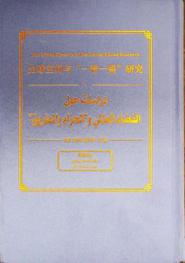
دراسات حول الفضاء العالمي و\الحزام والطريق\ : (مجلد الثقافة)
ينطلق هذا المجلد من العلاقة الهيكلية بين \"الفضاء\" و\"الثقافة\"، ويجمع بين مفهوم \"الفضاء\" في الجغرافيا ومفهوم \"السياق\" في الدراسات الثقافية وغيرهم من المفاهيم الأخرى، ويشرح نماذج ودلالات وأهداف مبادرة \"الحزام والطريق\" في سياق الحضارة الحديثة، ويصف صورة امتداد الحضارة على المحور التاريخي لـ \"الحزام والطريق\"، ويحلل الدلالة الثقافية في كل من اتجاه القيمة وبناء القوة الناعمة وإنشاء السياق الشرقي الخاصين بمبادرة \"الحزام والطريق\"، ويفسر علاقة الارتباط بين الثقافة الوطنية لـ \"الحزام والطريق\" والفضاء الوطني، ويكشف عن السرد عبر الفضاء للرموز الثقافية لـ \"الحزام والطريق\" ويوضح التعبير الرقمي والمرئي لواقع \"الحزام والطريق\"
Book

HOTAIR, a prognostic factor in esophageal squamous cell carcinoma, inhibits WIF‐1 expression and activates Wnt pathway
Long non‐coding RNAs (LncRNAs) have been recently found to be pervasively transcribed in the genome and critical regulators of the epigenome. HOTAIR, as a well‐known LncRNA, has been found to play important roles in several tumors. Herein, the clinical application value and biological functions of HOTAIR were focused and explored in esophageal squamous cell carcinoma (ESCC). It was found that there was a great upregulation of HOTAIR in ESCC compared to their adjacent normal esophageal tissues. Meanwhile, patients with high HOTAIR expression have a significantly poorer prognosis than those with low expression. Moreover, HOTAIR was further validated to promote migration and invasion of ESCC cells in vitro. Then some specific molecules with great significance were investigated after HOTAIR overexpression using microarray and quantitative real time‐polymerase chain reaction (qPCR). WIF‐1 playing an important role in Wnt/β‐catenin signaling pathway was selected and further tested by immunehistochemistry. Generally, inverse correlation between HOTAIR and WIF‐1 expression was demonstrated both in ESCC cells and tissues. Mechanistically, HOTAIR directly decreased WIF‐1 expression by promoting its histone H3K27 methylation in the promoter region and then activated the Wnt/β‐catenin signaling pathway. This newly identified HOTAIR/WIF‐1 axis clarified the molecular mechanism of ESCC cell metastasis and represented a novel therapeutic target in patients with ESCC. HOTAIR, a long non coding RNA, has been linked to the progression of several types of human cancer. In this study, we found that HOTAIR was not only significantly up‐regulated in tumor tissues, but also significantly associated with poor clinical outcome in patients with esophageal squamous cell carcinoma (ESCC). ESCC cells with HOTAIR overexpression displayed aberrant activated WNT signaling pathway by inhibiting the expression of WNT‐inhibitor factor 1, thereby promote the migration and invasion of ESCC cells. On the contrary, silencing of HOTAIR in ESCC cells led to decreased migration and invasion ability. Together, these results suggest that HOTAIR overexpression may serve as a novel prognostic biomarker and potential therapeutic target for the treatment of human ESCC.
Journal Article


Metabolic Reprogramming in Chloroplasts under Heat Stress in Plants
Increases in ambient temperatures have been a severe threat to crop production in many countries around the world under climate change. Chloroplasts serve as metabolic centers and play a key role in physiological adaptive processes to heat stress. In addition to expressing heat shock proteins that protect proteins from heat-induced damage, metabolic reprogramming occurs during adaptive physiological processes in chloroplasts. Heat stress leads to inhibition of plant photosynthetic activity by damaging key components functioning in a variety of metabolic processes, with concomitant reductions in biomass production and crop yield. In this review article, we will focus on events through extensive and transient metabolic reprogramming in response to heat stress, which included chlorophyll breakdown, generation of reactive oxygen species (ROS), antioxidant defense, protein turnover, and metabolic alterations with carbon assimilation. Such diverse metabolic reprogramming in chloroplasts is required for systemic acquired acclimation to heat stress in plants.
Journal Article

Nuclear-encoded synthesis of the D1 subunit of photosystem II increases photosynthetic efficiency and crop yield
In photosynthetic organisms, the photosystem II (PSII) complex is the primary target of thermal damage. Plants have evolved a repair process to prevent the accumulation of damaged PSII. The repair of PSII largely involves de novo synthesis of proteins, particularly the D1 subunit protein encoded by the chloroplast gene
psbA
. Here we report that the allotropic expression of the
psbA
complementary DNA driven by a heat-responsive promoter in the nuclear genome sufficiently protects PSII from severe loss of D1 protein and dramatically enhances survival rates of the transgenic plants of
Arabidopsis
, tobacco and rice under heat stress. Unexpectedly, we found that the nuclear origin supplementation of the D1 protein significantly stimulates transgenic plant growth by enhancing net CO
2
assimilation rates with increases in biomass and grain yield. These findings represent a breakthrough in bioengineering plants to achieve efficient photosynthesis and increase crop productivity under normal and heat-stress conditions.
Heat stress damages photosystems, especially photosystem II (PSII), thus affecting photosynthetic efficiency. To counteract the thermal damage, a new bioengineering strategy is introduced by expressing a PSII subunit D1 under the control of a heat-responsive promoter in the nuclear genome. The strategy has been tested and found to be effective in
Arabidopsis
, tobacco and rice.
Journal Article

METTL14 is Involved in TNF-α-Induced Inflammation in Colorectal Epithelial Cells via Autophagy Modulation
Ulcerative colitis (UC) is a chronic and relapsing inflammatory bowel disease (IBD) characterized by colorectal inflammation. The N6-methyladenosine (m6A) modification of RNA regulates gene expression through the modulation of RNA metabolism, thus influencing various physiological and pathological processes. The aim of this study was to investigate the biological function of m6A methyltransferase METTL14 in colorectal epithelial cell inflammation. Bioinformatics analysis indicated that METTL14 expression was decreased in UC and was associated with disease severity and immune infiltration. We also noted a downregulation of METTL14 expression and a decrease in the total m6A RNA levels in TNF-α-stimulated Caco-2 cells. Moreover, METTL14 knockdown promoted inflammation and inhibited autophagy in TNF-α-stimulated Caco-2 cells, as indicated by the upregulation of NF-κB signaling and pro-inflammatory cytokine expression as well as LC3B protein downregulation. Treatment with the autophagy activator Torin-1 ameliorated the pro-inflammatory effects of METTL14 silencing. Furthermore, METTL14 knockdown significantly reduced the expression of ATG5. ATG5 overexpression could nullify the pro-inflammatory effect of METTL14 knockdown in TNF-α-stimulated Caco-2 cells. Mechanistically, METTL14 knockdown promoted ATG5 mRNA degradation, and luciferase analysis identified ATG5 as a target of m6A modification by METTL14. Taken together, silencing METTL14 promoted inflammation in Caco-2 cells via the downregulation of ATG5. Our findings revealed the importance of the m6A modification in colonic inflammation and autophagy, indicating that targeting METTL14 might be a potential therapeutic strategy for anti-inflammatory treatment in UC.
Journal Article

Efficacy and safety of low-dose esketamine for painless gastrointestinal endoscopy in adults: a systematic evaluation and meta-analysis
Object: The benefits of low-dose esketamine for painless gastrointestinal endoscopy remain unclear. As such, the present study aimed to investigate the efficacy and safety of low-dose esketamine for this procedure. Methods: Seven common databases were searched for clinical studies investigating low-dose esketamine for painless gastrointestinal endoscopy. Subsequently, a meta-analysis was performed to synthesize and analyze the data extracted from studies fulfilling the inclusion criteria. Results: Meta-analysis revealed that, compared with propofol, low-dose esketamine in combination with propofol significantly reduced recovery time by 0.56 min (mean difference [MD] −0.56%, 95% confidence interval (CI) −1.08 to −0.05, p = 0.03), induction time by 9.84 s (MD −9.84, 95% CI −12.93 to −6.75, p < 0.00001), propofol dosage by 51.05 mg (MD −51.05, 95% CI −81.53 to −20.57, p = 0.01), and increased mean arterial pressure by 6.23 mmHg (MD 6.23, 95% CI 1.37 to 11.08, p = 0.01). Meanwhile, low-dose esketamine reduced injection pain by 63% (relative risk [RR] 0.37, 95% CI 0.28 to 0.49, p < 0.00001), involuntary movements by 40% (RR 0.60, 95% Cl 0.42 to 0.85, p < 0.005), choking by 42% (RR 0.58, 95% Cl 0.38 to 0.88, p = 0.01), bradycardia by 68% (RR 0.32, 95% Cl 0.18 to 0.58, p = 0.0002), hypotension by 71% (RR 0.29, 95% Cl 0.21 to 0.40, p < 0.00001), respiratory depression by 63% (RR 0.37, 95% 0.26 to 0.51, p < 0.00001), additional cases of propofol by 53% (RR 0.47, 95% Cl 0.29 to 0.77, p = 0.002), and increased hypertension by 1000% (RR 11.00, 95% Cl 1.45 to 83.28, p = 0.02). There were no significant differences in mean heart rate, mean oximetry saturation, delirium, dizziness, vomiting, tachycardia, and hypoxemia. Subgroup analyses revealed that, compared with other dose groups, 0.25 mg/kg esketamine afforded additional benefits in recovery and induction time, mean arterial pressure, involuntary movements, hypoxemia, and respiratory depression. Conclusion: Low-dose esketamine was found to be safe and effective for providing anesthesia during gastrointestinal endoscopy, with 0.25 mg/kg identified as the optimal dose within the dosage ranges examined. However, caution should be exercised when administering this drug to patients with inadequate preoperative blood pressure control.
Journal Article

Effect of outdoor activity on myopia onset and progression in school-aged children in northeast china: the sujiatun eye care study
Background
Due to its high prevalence and associated sight-threatening pathologies, myopia has emerged as a major health issue in East Asia. The purpose was to test the impact on myopia development of a school-based intervention program aimed at increasing the time student spent outdoors.
Methods
A total of 3051 students of two primary (grades 1-5, aged 6-11) and two junior high schools (grades 7-8, aged 12-14) in both urban and rural Northeast China were enrolled. The intervention group (n = 1735) unlike the control group (n = 1316) was allowed two additional 20-min recess programs outside the classroom. A detailed questionnaire was administered to parents and children. Uncorrected visual acuity (UCVA) was measured using an E Standard Logarithm Vision Acuity Chart (GB11533-2011) at baseline, 6-month and 1-year intervals. A random subsample (n = 391) participated in the clinic visits and underwent cycloplegia at the beginning and after 1 year.
Results
The mean UCVA for the entire intervention group was significantly better than the entire control group after 1 year (P < 0.001). In the subgroup study, new onset of myopia and changes in refractive error towards myopia were direction during the study period was significantly lower in the intervention group than in the control group (3.70 % vs. 8.50 %, P = 0.048; -0.10 ± 0.65 D/year vs. -0.27 ± 0.52 D/year, P = 0.005). Changes in axial length and IOP were also significantly lower following the intervention group (0.16 ± 0.30 mm/year vs. 0.21 ± 0.21 mm/year, P = 0.034; -0.05 ± 2.78 mmHg/year vs. 0.67 ± 2.21 mmHg/year, P = 0.006).
Conclusions
Increasing outdoor activities prevented myopia onset and development, as well as axial growth and elevated IOP in children.
Trial registration
Current controlled trials
NCT02271373
.
Journal Article

The application of time-to-event analysis in machine learning prognostic models
Unlike conventional classification paradigms, survival analysis confronts the intricacies engendered by partially observed data, often stemming from censoring. Within the realm of clinical inquiries, patient records manifest in distinct categories: those that remain uncensored, thereby divulging precise event timings, and those that exist as right-censored, withholding event timings beyond the study’s temporal scope. Careful consideration of censoring and time-to-event analysis principles is warranted.
Journal Article

Saccharomyces boulardii Administration Changes Gut Microbiota and Attenuates D-Galactosamine-Induced Liver Injury
Growing evidence has shown that gut microbiome is a key factor involved in liver health. Therefore, gut microbiota modulation with probiotic bacteria, such as
Saccharomyces boulardii
, constitutes a promising therapy for hepatosis. In this study, we aimed to investigate the protective effects of
S. boulardii
on D-Galactosamine-induced liver injury in mice. Liver function test and histopathological analysis both suggested that the liver injury can be effectively attenuated by
S. boulardii
administration. In the meantime,
S. boulardii
induced dramatic changes in the gut microbial composition. At the phylum level, we found that
S. boulardii
significantly increased in the relative abundance of
Bacteroidetes
, and decreased the relative abundance of
Firmicutes
and
Proteobacteria
, which may explain the hepatic protective effects of
S. boulardii
. Taken together, our results demonstrated that
S. boulardii
administration could change the gut microbiota in mice and alleviate acute liver failure, indicating a potential protective and therapeutic role of
S. boulardii
.
Journal Article