
Catalogue Search | MBRL


Are you sure you want to remove the book from the shelf?

{{itemTitle}}
2,624
result(s) for
"Hume, David"
Sort by:


The Many Alternative Faces of Macrophage Activation
Monocytes and macrophages provide the first line of defense against pathogens. They also initiate acquired immunity by processing and presenting antigens and provide the downstream effector functions. Analysis of large gene expression datasets from multiple cells and tissues reveals sets of genes that are co-regulated with the transcription factors that regulate them. In macrophages, the gene clusters include lineage-specific genes, interferon-responsive genes, early inflammatory genes, and genes required for endocytosis and lysosome function. Macrophages enter tissues and alter their function to deal with a wide range of challenges related to development and organogenesis, tissue injury, malignancy, sterile, or pathogenic inflammatory stimuli. These stimuli alter the gene expression to produce \"activated macrophages\" that are better equipped to eliminate the cause of their influx and to restore homeostasis. Activation or polarization states of macrophages have been classified as \"classical\" and \"alternative\" or M1 and M2. These proposed states of cells are not supported by large-scale transcriptomic data, including macrophage-associated signatures from large cancer tissue datasets, where the supposed markers do not correlate with other. Individual macrophage cells differ markedly from each other, and change their functions in response to doses and combinations of agonists and time. The most studied macrophage activation response is the transcriptional cascade initiated by the TLR4 agonist lipopolysaccharide. This response is reviewed herein. The network topology is conserved across species, but genes within the transcriptional network evolve rapidly and differ between mouse and human. There is also considerable divergence in the sets of target genes between mouse strains, between individuals, and in other species such as pigs. The deluge of complex information related to macrophage activation can be accessed with new analytical tools and new databases that provide access for the non-expert.
Journal Article

التاريخ الطبيعي للدين
أي امتياز نبيل لعقل الإنسان أن يحصل على معرفة الكائن الأعلى، ويتمكن من استنتاج المبدأ اسامي بخالقه الأعلى من الأعمال المرئية في الطبيعة ؟ لكن لنعكس وجه العملة، وندرس معظم الأمم ومعظم العصور، ونفحص المبادئ الدينية، التي سادت في العالم. في الواقع، لن نقتنع إلا بأنها أحلام أناس مرضى أكثر من أي شيء آخر، أو ربما سوف نعتبرها نزوات مرحة لقرود في هيئة بشر أكثر منها توكيدات دوغمائية إيجابية حدية لكائن ما، يبجل نفسه باسم الكائن العاقل. ربما كان هذا الكتاب شمعة تضيء هذا الليل الذي خلقه التطرف باسم الدين. فمعرفة الشيء خير وسيلة للانتفاع به، والتاريخ أحد مفاتيح حقيقة الأشياء التي ورثناها من الماضي البعيد.ديفد هيوم واحد من هؤلاء الذين أماطوا اللثام عن قضية الإيمان الذي شغل الناس في الماضي ويشغلهم في الحاضر، وربما سيشغلهم في المستقبل.
Book

Network analysis of transcriptomic diversity amongst resident tissue macrophages and dendritic cells in the mouse mononuclear phagocyte system
The mononuclear phagocyte system (MPS) is a family of cells including progenitors, circulating blood monocytes, resident tissue macrophages, and dendritic cells (DCs) present in every tissue in the body. To test the relationships between markers and transcriptomic diversity in the MPS, we collected from National Center for Biotechnology Information Gene Expression Omnibus (NCBI-GEO) a total of 466 quality RNA sequencing (RNA-seq) data sets generated from mouse MPS cells isolated from bone marrow, blood, and multiple tissues. The primary data were randomly downsized to a depth of 10 million reads and requantified. The resulting data set was clustered using the network analysis tool BioLayout. A sample-to-sample matrix revealed that MPS populations could be separated based upon tissue of origin. Cells identified as classical DC subsets, cDC1s and cDC2s, and lacking Fcgr1 (encoding the protein CD64) were contained within the MPS cluster, no more distinct than other MPS cells. A gene-to-gene correlation matrix identified large generic coexpression clusters associated with MPS maturation and innate immune function. Smaller coexpression gene clusters, including the transcription factors that drive them, showed higher expression within defined isolated cells, including monocytes, macrophages, and DCs isolated from specific tissues. They include a cluster containing Lyve1 that implies a function in endothelial cell (EC) homeostasis, a cluster of transcripts enriched in intestinal macrophages, and a generic lymphoid tissue cDC cluster associated with Ccr7. However, transcripts encoding Adgre1, Itgax, Itgam, Clec9a, Cd163, Mertk, Mrc1, Retnla, and H2-a/e (encoding class II major histocompatibility complex [MHC] proteins) and many other proposed macrophage subset and DC lineage markers each had idiosyncratic expression profiles. Coexpression of immediate early genes (for example, Egr1, Fos, Dusp1) and inflammatory cytokines and chemokines (tumour necrosis factor [Tnf], Il1b, Ccl3/4) indicated that all tissue disaggregation and separation protocols activate MPS cells. Tissue-specific expression clusters indicated that all cell isolation procedures also co-purify other unrelated cell types that may interact with MPS cells in vivo. Comparative analysis of RNA-seq and single-cell RNA-seq (scRNA-seq) data from the same lung cell populations indicated that MPS heterogeneity implied by global cluster analysis may be even greater at a single-cell level. This analysis highlights the power of large data sets to identify the diversity of MPS cellular phenotypes and the limited predictive value of surface markers to define lineages, functions, or subpopulations.
Journal Article

الانتحار وخلود الروح
يبحث الكتاب في الانتحار من وجهة نظر فلسفية، فهل هو انتهاك لأمر الله أم لا ؟ وهل حياتي ملك لي ويحق لي أن أنهيها في أي وقت أم لا ؟ وهل من الممكن أن يكون الانتحار أحيانا فضيلة ؟ يحاول الكتاب أيضا أن يتدارس موضوع خلود الروح من وجهة نظر فلسفية، فهل هي خالدة أم تفنى بموت الإنسان ؟
Book

Effects of Eimeria tenella infection on chicken caecal microbiome diversity, exploring variation associated with severity of pathology
Eimeria species cause the intestinal disease coccidiosis, most notably in poultry. While the direct impact of coccidiosis on animal health and welfare is clear, its influence on the enteric microbiota and by-stander effects on chicken health and production remains largely unknown, with the possible exception of Clostridium perfringens (necrotic enteritis). This study evaluated the composition and structure of the caecal microbiome in the presence or absence of a defined Eimeria tenella challenge infection in Cobb500 broiler chickens using 16S rRNA amplicon sequencing. The severity of clinical coccidiosis in individual chickens was quantified by caecal lesion scoring and microbial changes associated with different lesion scores identified. Following E. tenella infection the diversity of taxa within the caecal microbiome remained largely stable. However, infection induced significant changes in the abundance of some microbial taxa. The greatest changes were detected in birds displaying severe caecal pathology; taxa belonging to the order Enterobacteriaceae were increased, while taxa from Bacillales and Lactobacillales were decreased with the changes correlated with lesion severity. Significantly different profiles were also detected in infected birds which remained asymptomatic (lesion score 0), with taxa belonging to the genera Bacteroides decreased and Lactobacillus increased. Many differential taxa from the order Clostridiales were identified, with some increasing and others decreasing in abundance in Eimeria-infected animals. The results support the view that caecal microbiome dysbiosis associated with Eimeria infection contributes to disease pathology, and could be a target for intervention to mitigate the impact of coccidiosis on poultry productivity and welfare. This work highlights that E. tenella infection has a significant impact on the abundance of some caecal bacteria with notable differences detected between lesion score categories emphasising the importance of accounting for differences in caecal lesions when investigating the relationship between E. tenella and the poultry intestinal microbiome.
Journal Article
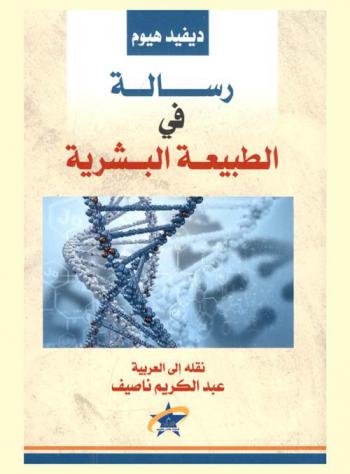
رسالة في الطبيعة البشرية
يتحدث هذا الكتاب عن النفس البشرية هذا العالم الأكبر هو الذي يقودك إليه الفيلسوف الإنكليزي ليجعلك تعرف خفاياه وأسراره إنها النفس الإنسانية التي تستحوذ على اهتمام هذا الفيلسوف الكبير فيسلط الضوء عليها ليجعل الإنسان ينظر إلى داخله ويفهم نفسه ذلك العالم الغني الواسع الذي عجز الإنسان وما زال عاجزا عن فهمه والإحاطة به إحاطة كاملة.
Book

Graphia: A platform for the graph-based visualisation and analysis of high dimensional data
Graphia is an open-source platform created for the graph-based analysis of the huge amounts of quantitative and qualitative data currently being generated from the study of genomes, genes, proteins metabolites and cells. Core to Graphia’s functionality is support for the calculation of correlation matrices from any tabular matrix of continuous or discrete values, whereupon the software is designed to rapidly visualise the often very large graphs that result in 2D or 3D space. Following graph construction, an extensive range of measurement algorithms, routines for graph transformation, and options for the visualisation of node and edge attributes are available, for graph exploration and analysis. Combined, these provide a powerful solution for the interpretation of high-dimensional data from many sources, or data already in the form of a network or equivalent adjacency matrix. Several use cases of Graphia are described, to showcase its wide range of applications in the analysis biological data. Graphia runs on all major desktop operating systems, is extensible through the deployment of plugins and is freely available to download from https://graphia.app/ .
Journal Article


Preparation and coherent manipulation of pure quantum states of a single molecular ion
By exploiting a co-trapped Ca
+
ion, a single CaH
+
ion is prepared in pure quantum states, which are coherently manipulated, using a protocol that could easily be extended to other molecular ion species.
One-laser molecular manipulation
Over the past decade, researchers have refined the art of cooling, trapping and manipulating atoms to perform precision measurements and to use them as quantum bits, or qubits. However, performing the same operations on molecules remains a challenge because their more complicated electronic structure makes them difficult to manipulate. Current methods involve complex procedures with many lasers. But trapped molecules and molecular ions could open exciting possibilities for quantum information processing and precise measurements of fundamental constants. Here the authors establish a general protocol, exploiting a co-trapped atom to help to prepare and coherently manipulate single molecular ions using only one laser. The operations are demonstrated using a CaH
+
molecular ion, but could be extended to other species. The authors expect that their techniques will enable trapping and manipulation of symmetric molecules such as H
2+
.
Laser cooling and trapping of atoms and atomic ions has led to advances including the observation of exotic phases of matter
1
,
2
, the development of precision sensors
3
and state-of-the-art atomic clocks
4
. The same level of control in molecules could also lead to important developments such as controlled chemical reactions and sensitive probes of fundamental theories
5
, but the vibrational and rotational degrees of freedom in molecules pose a challenge for controlling their quantum mechanical states. Here we use quantum-logic spectroscopy
6
, which maps quantum information between two ion species, to prepare and non-destructively detect quantum mechanical states in molecular ions
7
. We develop a general technique for optical pumping and preparation of the molecule into a pure initial state. This enables us to observe high-resolution spectra in a single ion (CaH
+
) and coherent phenomena such as Rabi flopping and Ramsey fringes. The protocol requires a single, far-off-resonant laser that is not specific to the molecule, so many other molecular ions, including polyatomic species, could be treated using the same methods in the same apparatus by changing the molecular source. Combined with the long interrogation times afforded by ion traps, a broad range of molecular ions could be studied with unprecedented control and precision. Our technique thus represents a critical step towards applications such as precision molecular spectroscopy, stringent tests of fundamental physics, quantum computing and precision control of molecular dynamics
8
.
Journal Article