
Catalogue Search | MBRL


Are you sure you want to remove the book from the shelf?

{{itemTitle}}
81
result(s) for
"Huneman, Philippe"
Sort by:

How the Modern Synthesis Came to Ecology
Ecology in principle is tied to evolution, since communities and ecosystems result from evolution and ecological conditions determine fitness values (and ultimately evolution by natural selection). Yet the two disciplines of evolution and ecology were not unified in the twentieth-century. The architects of the Modern Synthesis, and especially Julian Huxley, constantly pushed for such integration, but the major ideas of the Synthesis—namely, the privileged role of selection and the key role of gene frequencies in evolution—did not directly or immediately translate into ecological science. In this paper I consider five stages through which the Synthesis was integrated into ecology and distinguish between various ways in which a possible integration was gained. I start with Elton's animal ecology (1927), then consider successively Ford's ecological genetics in the 1940s, the major textbook Principles of animal ecology edited by Allee et al. (1949), and the debates over the role of competition in population regulation in the 1950s, ending with Hutchinson's niche concept (1959) and McArthur and Wilson's Principles of Island Biogeography (1967) viewed as a formal transposition of Modern Synthesis explanatory schemes. I will emphasize the key role of founders of the Synthesis at each stage of this very nonlinear history.
Journal Article
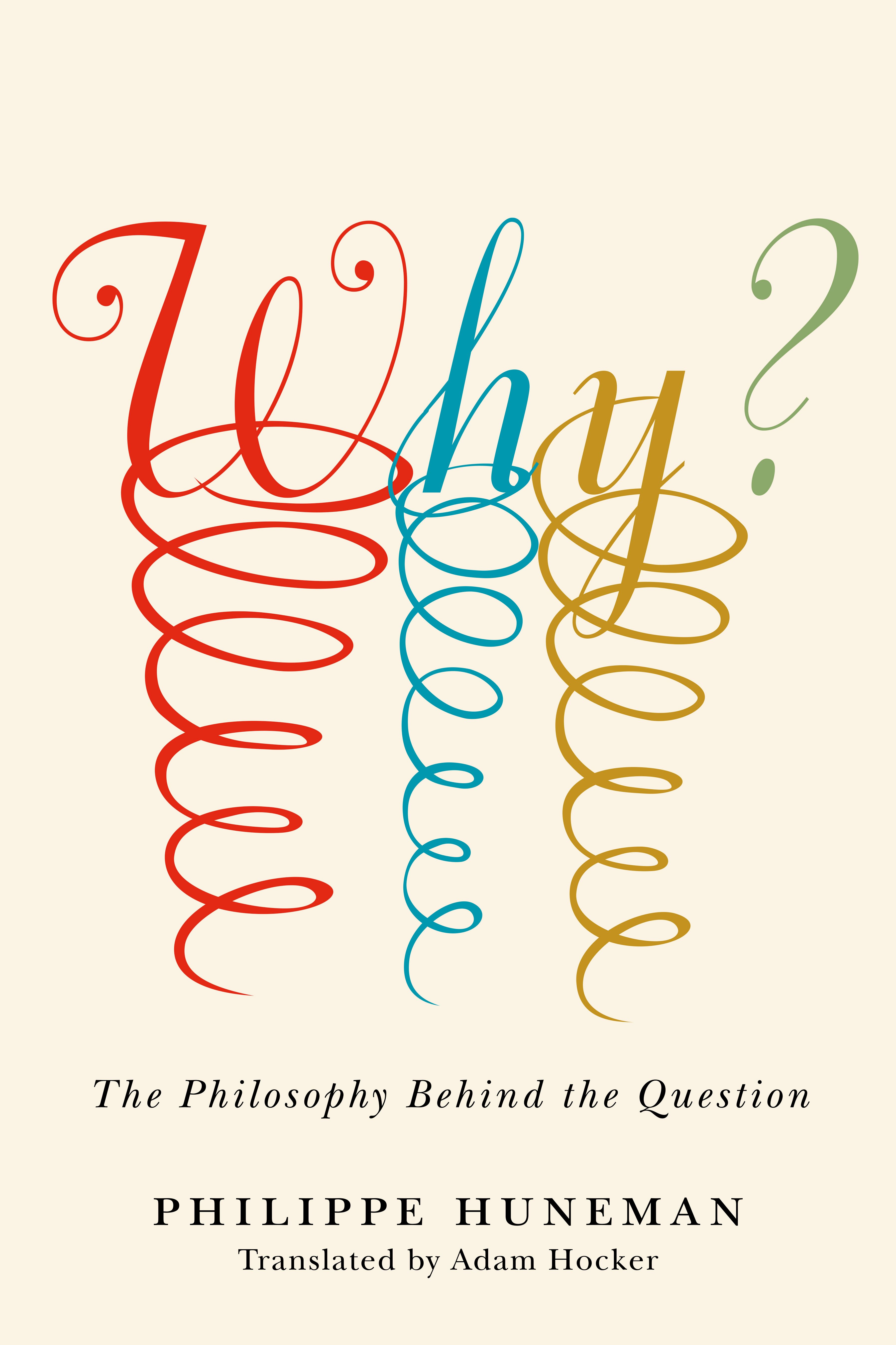
Why?
A philosopher explores the many dimensions of a beguilingly simple question. Why did triceratops have horns? Why did World War I occur? Why does Romeo love Juliet? And, most importantly, why ask why? Through an analysis of these questions and others, philosopher Philippe Huneman describes the different meanings of \"why,\" and how those meanings can, and should (or should not), be conflated. As Huneman outlines, there are three basic meanings of why: the cause of an event, the reason of a belief, and the reason why I do what I do (the purpose). Each of these meanings, in turn, impacts how we approach knowledge in a wide array of disciplines: science, history, psychology, and metaphysics. Exhibiting a rare combination of conversational ease and intellectual rigor, Huneman teases out the hidden dimensions of questions as seemingly simple as \"Why did Mickey Mouse open the refrigerator?\" or as seemingly unanswerable as \"Why am I me?\" In doing so, he provides an extraordinary tour of canonical and contemporary philosophical thought, from Plato and Aristotle, through Descartes and Spinoza, to Elizabeth Anscombe and Ruth Millikan, and beyond. Of course, no proper reckoning with the question \"why?\" can afford not to acknowledge its limits, which are the limits, and the ends, of reason itself. Huneman thus concludes with a provocative elaboration of what Kant called the \"natural need for metaphysics,\" the unallayed instinct we have to ask the question even when we know there can be no unequivocal answer.
eBook

Towards a Dynamic Interaction Network of Life to unify and expand the evolutionary theory
The classic Darwinian theory and the Synthetic evolutionary theory and their linear models, while invaluable to study the origins and evolution of species, are not primarily designed to model the evolution of organisations, typically that of ecosystems, nor that of processes. How could evolutionary theory better explain the evolution of biological complexity and diversity? Inclusive network-based analyses of dynamic systems could retrace interactions between (related or unrelated) components. This theoretical shift from a Tree of Life to a Dynamic Interaction Network of Life, which is supported by diverse molecular, cellular, microbiological, organismal, ecological and evolutionary studies, would further unify evolutionary biology.
Journal Article
The Modern Synthesis: Theoretical or Institutional Event?
This paper surveys questions about the nature of the Modern Synthesis as a historical event : was it rather theoretical than institutional? When and where did it actually happen? Who was involved? It argues that all answers to these questions are interrelated, and that systematic sets of answers define specific perspectives on the Modern Synthesis that are all complementary.
Journal Article

REVIEW: Predictive ecology in a changing world
In a rapidly changing world, ecology has the potential to move from empirical and conceptual stages to application and management issues. It is now possible to make large‐scale predictions up to continental or global scales, ranging from the future distribution of biological diversity to changes in ecosystem functioning and services. With these recent developments, ecology has a historical opportunity to become a major actor in the development of a sustainable human society. With this opportunity, however, also comes an important responsibility in developing appropriate predictive models, correctly interpreting their outcomes and communicating their limitations. There is also a danger that predictions grow faster than our understanding of ecological systems, resulting in a gap between the scientists generating the predictions and stakeholders using them (conservation biologists, environmental managers, journalists, policymakers). Here, we use the context provided by the current surge of ecological predictions on the future of biodiversity to clarify what prediction means, and to pinpoint the challenges that should be addressed in order to improve predictive ecological models and the way they are understood and used. Synthesis and applications. Ecologists face several challenges to ensure the healthy development of an operational predictive ecological science: (i) clarity on the distinction between explanatory and anticipatory predictions; (ii) developing new theories at the interface between explanatory and anticipatory predictions; (iii) open data to test and validate predictions; (iv) making predictions operational; and (v) developing a genuine ethics of prediction.
Journal Article

Diversifying the picture of explanations in biological sciences: ways of combining topology with mechanisms
Besides mechanistic explanations of phenomena, which have been seriously investigated in the last decade, biology and ecology also include explanations that pinpoint specific mathematical properties as explanatory of the explanandum under focus. Among these structural explanations, one finds topological explanations, and recent science pervasively relies on them. This reliance is especially due to the necessity to model large sets of data with no practical possibility to track the proper activities of all the numerous entities. The paper first defines topological explanations and then explains why topological explanations and mechanisms are different in principle. Then it shows that they are pervasive both in the study of networks—whose importance has been increasingly acknowledged at each level of the biological hierarchy—and in contexts where the notion of selective neutrality is crucial; this allows me to capture the difference between mechanisms and topological explanations in terms of practical modelling practices. The rest of the paper investigates how in practice mechanisms and topologies are combined. They may be articulated in theoretical structures and explanatory strategies, first through a relation of constraint, second in interlevel theories (Sect. 3), or they may condition each other (Sect. 4). Finally, I explore how a particular model can integrate mechanistic informations, by focusing on the recent practice of merging networks in ecology and its consequences upon multiscale modelling (Sect. 5).
Journal Article

The Chicago school of ecology’s evolutionary superorganism and the clements-wright connection
“Organicism” often refers to the idea that ecosystems or communities are, or are like, organisms. Often implicit in early twentieth century, it has been theorized by Clements, relying on physiological and developmental concepts. I investigate the fate of this idea in major attempts of a theoretical synthesis of ecology in the first part of the twentieth century. I first consider
Bioecology
(1939), by Clements and Shelford, which elaborates clementsian organicism as a general framework for plant and animal ecology. Then I investigate the major animal ecology treatise of the Chicago school ecologists C. Allee, T. Park, O. Park, K. Schmidt and A. Emerson,
Principles of animal ecology
(1949). I show how they shifted organicism from physiology to evolution, synthesizing inspiration from both Clements and Sewall Wright, got their inspiration in evolutionary biology, and built a systematic correspondence between cells, organisms and communities. I claim that the focus on populations allowed them to apply Darwinian insights at the level of communities. Finally I argue that this theoretical synthesis fell apart in the next decade because of the rise of density-dependent accounts of population regulation.
Journal Article

The edinburgh critical history of nineteenth-century philosophy
This volume begins with the rise of German Idealism and Romanticism, traces the developments of naturalism, positivism, and materialism and of later-century attempts to combine idealist and naturalist modes of thought.
Written by a team of leading international scholars this crucial period of philosophy is examined from the novel perspective of themes and lines of thought which cut across authors, disciplines, and national boundaries. This fresh approach will open up new ways for specialists and students to conceptualise the history of 19th-century thought within philosophy, politics, religious studies and literature.
eBook

Outlines of a theory of structural explanations
This paper argues that in some explanations mathematics are playing an explanatory rather than a representational role, and that this feature unifies many types of non-causal or non-mechanistic explanations that some philosophers of science have been recently exploring under various names (mathematical, topological, etc.). After showing how mathematics can play either a representational or an explanatory role by considering two alternative explanations of a same biological pattern—\"Bergmann's rule\"—I offer an example of an explanation where the bulk of the explanatory job is done by a mathematical theorem, and where mechanisms involved in the target systems are not explanatorily relevant. Then I account for the way mathematical properties may function in an explanatory way within an explanation by arguing that some mathematical propositions involving variables non directly referring to the target system features constitute constraints to which a whole class of systems should comply, provided they are describable by a mathematical object concerned by those propositions. According to such \"constraint account\", those mathematical facts are directly entailing the explanandum (often a limit regime, a robustness property or a steady state), as a consequence of such constraints. I call those explanations \"structural\", because here properties of mathematical structures are accounting for the explanandum; various kinds of mathematical structures (algebraic, graph-theoretical, etc.) thereby define various types of structural explanations.
Journal Article