
Catalogue Search | MBRL


Are you sure you want to remove the book from the shelf?

{{itemTitle}}
92
result(s) for
"Hung, Ying-Yu"
Sort by:


Advancing high-performance visible light communication with long-wavelength InGaN-based micro-LEDs
This study showcases a method for achieving high-performance yellow and red micro-LEDs through precise control of indium content within quantum wells. By employing a hybrid quantum well structure with our six core technologies, we can accomplish outstanding external quantum efficiency (EQE) and robust stripe bandwidth. The resulting 30 μm × 8 micro-LED arrays exhibit maximum EQE values of 11.56% and 5.47% for yellow and red variants, respectively. Notably, the yellow micro-LED arrays achieve data rates exceeding 1 Gbit/s for non-return-to-zero on–off keying (NRZ-OOK) format and 1.5 Gbit/s for orthogonal frequency-division multiplexing (OFDM) format. These findings underscore the significant potential of long-wavelength InGaN-based micro-LEDs, positioning them as highly promising candidates for both full-color microdisplays and visible light communication applications.
Journal Article

InGaN blue resonant cavity micro-LED with RGY quantum dot layer for broad gamut, efficient displays
The technology of RGBY micro resonant cavity light emitting diodes (micro-RCLEDs) based on quantum dots (QDs) is considered one of the most promising approaches for full-color displays. In this work, we propose a novel structure combining a high color conversion efficiency (CCE) QD photoresist (QDPR) color conversion layer (CCL) with blue light micro RCLEDs, incorporating an ultra-thin yellow color filter. The additional TiO2 particles inside the QDPR CCL can scatter light and disperse QDs, thus reducing the self-aggregation phenomenon and enhancing the eventual illumination uniformity. Considering the blue light leakage, the influences of adding different color filters are investigated by illumination design software. Finally, the introduction of low-temperature atomic layer deposition (ALD) passivation protection technology at the top of the CCL can enhance the device's reliability. The introduction of RGBY four-color subpixels provides a viable path for developing low-energy consumption, high uniformity, and efficient color conversion displays.
Journal Article

Ameliorating Uniformity and Color Conversion Efficiency in Quantum Dot-Based Micro-LED Displays through Blue–UV Hybrid Structures
Quantum dot (QD)-based RGB micro light-emitting diode (μ-LED) technology shows immense potential for achieving full-color displays. In this study, we propose a novel structural design that combines blue and quantum well (QW)-intermixing ultraviolet (UV)-hybrid μ-LEDs to achieve high color-conversion efficiency (CCE). For the first time, the impact of various combinations of QD and TiO2 concentrations, as well as thickness variations on photoluminescence efficiency (PLQY), has been systematically examined through simulation. High-efficiency color-conversion layer (CCL) have been successfully fabricated as a result of these simulations, leading to significant savings in time and material costs. By incorporating scattering particles of TiO2 in the CCL, we successfully scatter light and disperse QDs, effectively reducing self-aggregation and greatly improving illumination uniformity. Additionally, this design significantly enhances light absorption within the QD films. To enhance device reliability, we introduce a passivation protection layer using low-temperature atomic layer deposition (ALD) technology on the CCL surface. Moreover, we achieve impressive CCE values of 96.25% and 92.91% for the red and green CCLs, respectively, by integrating a modified distributed Bragg reflector (DBR) to suppress light leakage. Our hybrid structure design, in combination with an optical simulation system, not only facilitates rapid acquisition of optimal parameters for highly uniform and efficient color conversion in μ-LED displays but also expands the color gamut to achieve 128.2% in the National Television Standards Committee (NTSC) space and 95.8% in the Rec. 2020 standard. In essence, this research outlines a promising avenue towards the development of bespoke, high-performance μ-LED displays.
Journal Article

Innovative Stacked Yellow and Blue Mini-LED Chip for White Lamp Applications
This study introduces a novel approach for fabricating vertically stacked mini-LED arrays, integrating InGaN yellow and blue epitaxial layers with a stress buffer layer to enhance optoelectronic characteristics and structural stability. This method significantly simplifies the LED design by reducing the need for RGB configurations, thus lowering costs and system complexity. Employing vertical stacking integration technology, the design achieves high-density, efficient white light production suitable for multifunctional applications, including automotive lighting and outdoor signage. Experimental results demonstrate the exceptional performance of the stacked yellow and blue mini-LEDs in terms of luminous efficiency, wavelength precision, and thermal stability. The study also explores the performance of these LEDs under varying temperature conditions and their long-term reliability, indicating that InGaN-based yellow LEDs offer superior performance over traditional AlGaInP yellow LEDs, particularly in high-temperature environments. This technology promises significant advancements in the design and application of lighting systems, with potential implications for both automotive and general illumination markets.
Journal Article
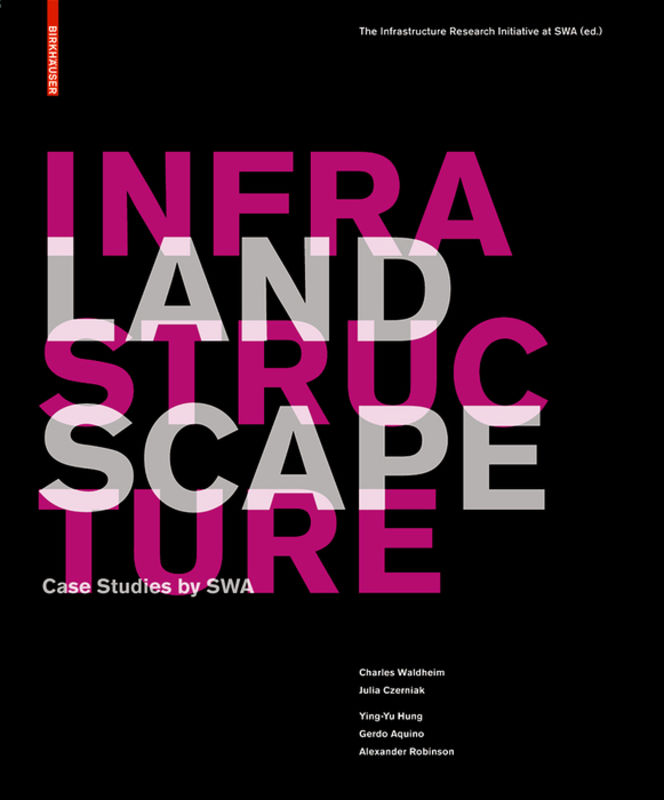
Landscape Infrastructure
Infrastructure is a much discussed topic within the field of landscape architecture. It regards the entire urban and rural space as a network that calls for an integrated planning and urban design approach. Natural and man-made infrastructures are viewed as forming a single, overarching whole. The book examines this robust and ecologically sustainable approach with essays by well-known experts in the field. It also documents 14 international case studies by SWA landscape architects and urban designers, among them the technologically innovative roof domes for Renzo Piano's California Academy of Science in San Francisco, the restoration of the Buffalo Bayou in Houston, and several master plans for ecological corridors in China and Korea. Other projects develop smart re-use concepts for railroad tracks that no longer serve their original purpose, such as Kyung-Chun railway in Seoul or Katy Trail in Dallas. All projects are described extensively with technical diagrams and plans. The publication offers ideas for reinventing, repurposing, and repositioning infrastructure as a viable medium for addressing issues of ecology, transit, urbanism, and habitat.
eBook
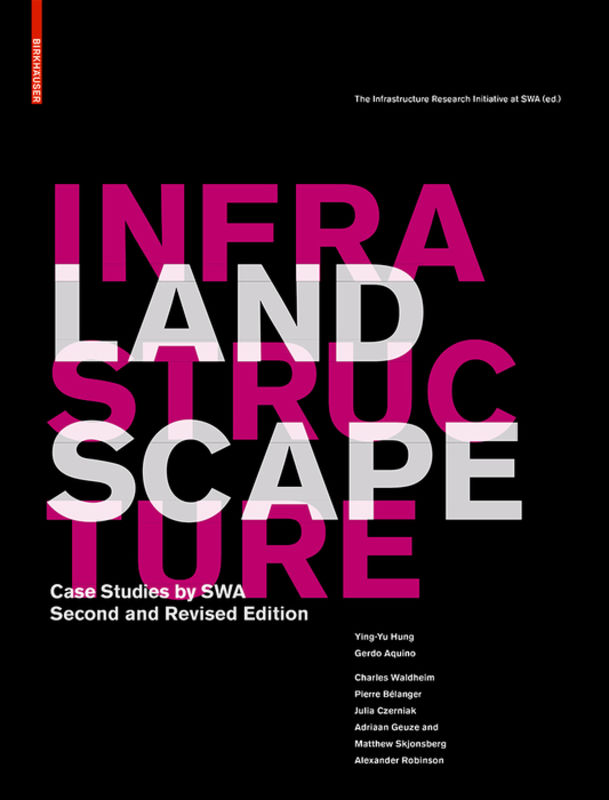
Landscape Infrastructure
Now available as revised edition: The successful title on integrated ecological landscape planning Infrastructure, as we know it, no longer belongs in the exclusive realm of engineers and transportation planners. In the context of rapidly changing cities and towns, infrastructure is experiencing a paradigm shift where multiple-use programming and the integration of latent ecologies is a primary consideration. Defining contemporary infrastructure requires a multi-disciplinary team of landscape architects, engineers, architects and planners to fully realize the benefits to our cultural and natural systems. This book examines the potential of landscape as infrastructure via essays by notable authors and supporting case studies by SWA landscape architects and urban designers, among them the technologically innovative roof domes for Renzo Piano’s California Academy of Science in San Francisco, the restoration of the Buffalo Bayou in Houston, and several master plans for ecological corridors in China and Korea. Other projects develop smart re-use concepts for railroad tracks that no longer serve their original purpose, such as Kyung-Chun railway in Seoul or Katy Trail in Dallas. All case studies are described extensively with technical diagrams and plans for repositioning infrastructure as a viable medium for addressing issues of ecology, transit, urbanism, performance, and habitat.
eBook

