
Catalogue Search | MBRL


Are you sure you want to remove the book from the shelf?

{{itemTitle}}
3
result(s) for
"Hunter, Mary, author"
Sort by:

The face of medicine : visualising medical masculinities in late nineteenth-century Paris
\"The Face of medicine examines the overlapping worlds of art and medicine in late nineteenth-century France. It sheds new light on the relevance of the visual in medical and scientific cultures and on the relationship between artistic and medical practices and imagery. By analysing previously unstudied multi-disciplinary sources, this original study rethinks the politics of medical representations and their social impact. Hunter argues that artworks and medical collections played a key role in forming the public face of medicine. Through a focused examination of paintings from the 1886 and 1887 Paris Salons that portray famous men from the medical and scientific elite - Louis Pasteur, Jules-âEmile Pâean and Jean-Martin Charcot - along with the images and objects that these men made for personal and occupational purposes, she explores how the masculinities of eminent medical men were visualised. ... [The Face of medicine] will appeal to all those interested in the cultural and visual history of medicine - academics and students in art history, visual culture, gender studies, French history, museum studies, and the medical humanities.\"--Back cover.
Book

The Culture of Opera Buffa in Mozart's Vienna
Mozart's comic operas are among the masterworks of Western civilization, and yet the musical environment in which Mozart and his librettist Lorenzo da Ponte wrote these now-popular operas has received little critical attention. In this richly detailed book, Mary Hunter offers a sweeping, synthetic view of opera buffa in the lively theatrical world of late-eighteenth-century Vienna. Opera buffa (Italian-language comic opera) persistently entertained audiences at a time when Joseph was striving for a German national theater. Hunter attributes opera buffa's success to its ability to provide \"sheer\" pleasure and hence explores how the genre functioned as entertainment. She argues that opera buffa, like mainstream film today, projects a social world both recognizable and distinct from reality. It raises important issues while containing them in the \"merely entertaining\" frame of the occasion, as well as presenting them as a series of easily identifiable dramatic and musical conventions.
Exploring nearly eighty comic operas, Hunter shows how the arias and ensembles convey a multifaceted picture of the repertory's social values and habits. In a concluding chapter, she discussesCos\" fan tutteas a work profoundly concerned with the conventions of its repertory and with the larger idea of convention itself and reveals the ways Mozart and da Ponte pointedly converse with their immediate contemporaries.
eBook
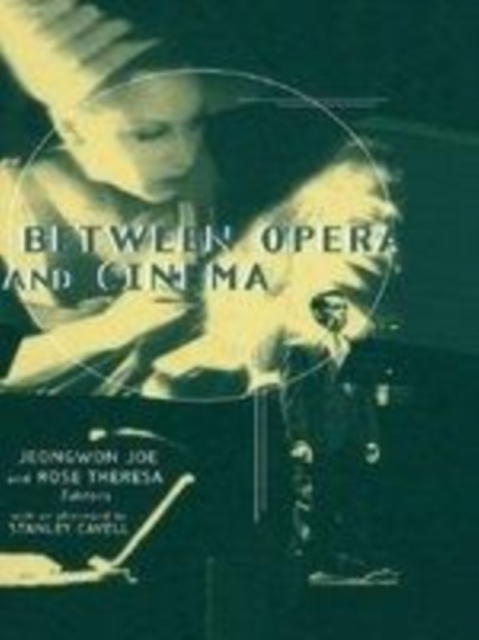
Between Opera and Cinema
Leading scholars of opera and film explore the many ways these two seemingly unrelated genres have come together from the silent-film era to today.
Rose Theresa teaches at the University at Stony brook. Jeongwon Joe teaches at the University of Nevada at Reno.
eBook