
Catalogue Search | MBRL


Are you sure you want to remove the book from the shelf?

{{itemTitle}}
83
result(s) for
"Hurd, Elizabeth Shakman"
Sort by:
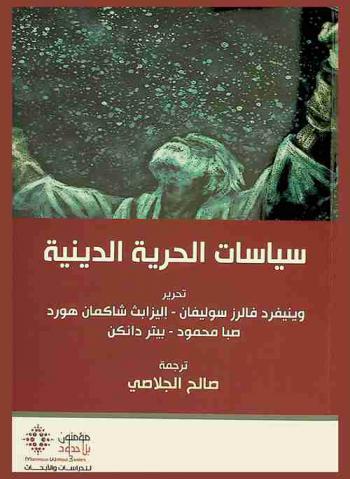

The politics of secularism in international relations (princeton studies in international history and politics)
Conflicts involving religion have returned to the forefront of international relations. And yet political scientists and policymakers have continued to assume that religion has long been privatized in the West. This secularist assumption ignores the contestation surrounding the category of the \"secular\" in international politics. The Politics of Secularism in International Relations shows why this thinking is flawed, and provides a powerful alternative. Elizabeth Shakman Hurd argues that secularist divisions between religion and politics are not fixed, as commonly assumed, but socially and historically constructed. Examining the philosophical and historical legacy of the secularist traditions that shape European and American approaches to global politics, she shows why this matters for contemporary international relations, and in particular for two critical relationships: the United States and Iran, and the European Union and Turkey.
eBook

Thinking about Religion, Law, and Politics in Latin America
Charles Taylor’s A Secular Age is both important and insufficient to the study of religion, law, and politics in Latin America. While aspects of the North Atlantic experience of secularity have become globalized, shaping legal systems and other forms of collective governance around the world, local and regional histories and experiences often depart significantly from Taylor’s account of secularity and conception of religion. Scholars of religion and politics in the region need to consider those aspects of local and regional history, such as indigenous and Afro-descendent histories and experiences, that challenge or may be indifferent to globalized Euro-American experiences of secularity and religion. To do so requires grappling with the global effects of the history charted by Taylor while also moving beyond it to account for practices, histories, and ways of life that work outside or against “secularity 3” and the presumptions about religion that it presupposes and produces.
Journal Article

The Political Authority of Secularism in International Relations
Secularism is an important source of political authority in International Relations theory and practice. Secularists identify something called ‘religion’ and separate it from the domains of the state, the economy and science. This separation facilitates a consensus which is sustained by a powerful yet historically contingent set of beliefs, including secularism as the realization of God’s will, secularism as the natural evolution toward universal morality and secularism as a normal consequence of economic modernization. Despite these aspirations, secularism is unequipped to serve as a universal model of public life, either domestically or internationally. The creation of the category of religion and its demarcation from politics is a highly politicized decision that is not subject to a final settlement, and the pretense of a final settlement exacerbates international conflict rather than diminishing it. The religion/politics negotiation is a fluid site of authority with complex relations to the state system, the global economy, international ethics and other more heavily theorized locations of power in international relations.
Journal Article


International politics after secularism
At the height of the influence of the secularisation thesis religion was understood to be absent from affairs of state and the law, including international politics and international law. As the critique of secularisation gained momentum this master narrative fell apart, and a new consensus began to take shape. The notion that religion had been ignored and should be ‘brought back in’ to International Relations took centre stage among many academics and practitioners. The assumption is that restoring religion in the right way will help address the problems associated with having ignored religion in IR, paving the way for the marginalisation of violent religion and globalisation of religious freedom. This article undertakes a critical analysis of this restorative narrative and the religious and political world it is creating. It then proposes a different approach to the intersection of religion and world politics after secularism. This approach draws attention to the authority of transnational actors such as the United States, United Nations, and European Union to shape the public administration of religious affairs globally. Channels through which this is accomplished include the promotion of religious freedom, humanitarian intervention, foreign aid, nation building and democratisation, counterterrorism and peace-building efforts, and the pronouncements of supra-national courts.
Journal Article


Debates within a Single Church: Secularism and IR Theory
» How does religion relate to International Relations Theory? « is a question circulating in International Relations. This essay considers the possibility that there is no universal definition of religion. This means that, in an important sense, the preceding question makes no sense. If the categories of religion and politics are the products of complex cultural, historical, religious and political negotiations, then what we need to ask is how do these categories become authoritative in particular times and places, and with what political consequences? To define the secular and the religious is a project with political implications. Religion participates with political authority in ever-changing formations that fail to align neatly with secular modernist assumptions. This essay takes a closer look at these assumptions.
Journal Article

ALEVIS UNDER LAW: THE POLITICS OF RELIGIOUS FREEDOM IN TURKEY
Proponents of minority rights are calling for urgent measures to protect the Copts in Egypt, the Ahmadiyya in Pakistan, and the Baha'i in Iran to secure religious diversity, shield minority populations from discriminatory practices, and prevent the outbreak of religious violence. State governments, international organizations, nongovernmental organizations, and international tribunals promote religious liberalization as the antidote to the violence and discord that is often attributed to these divisions. Enshrined in international agreements and promoted by a small army of experts and authorities, legal protections for religious minorities are heralded as the solution to the challenges of living with social and religious diversity. This article examines how the complexities and ambivalences of ordinary religious belonging are translated and transformed through the process of becoming legalized and governmentalized. It documents the risks of adopting religion as a category to draw together individuals and communities as corporate bodies that are depicted as in need of legal protection to achieve their freedom. The argument is developed through an extended case study of the legal status of the Alevis in Turkey, a community and a category formally constituted as a single whole as part of the Turkish nation-building project. It evaluates two legal constructions of Alevism by the Turkish state and the European Court of Human Rights. While premised on differing assumptions about Alevism, both erase the indeterminacy and open-endedness surrounding Alevism as a lived tradition embedded in a broader field of social and cultural practices, while bolstering the role of the state in defining and overseeing Turkish religiosities.
Journal Article
Negotiating Europe: the politics of religion and the prospects for Turkish accession
This article examines the cultural basis of European opposition to Turkish accession to the European Union (EU). Most observers depict the cultural and religious dimensions of the European debate over Turkish accession as a disagreement between those who see Europe as a Christian ‘club’ and those open to a more religiously pluralistic European identity. However, polls suggest that cultural and religiously based doubts about Turkish accession resonate with a much larger proportion of the European population than those who publicly defend the idea of an exclusivist ‘Christian’ Europe. Both secularists and Christian exclusivists (‘traditionalists’) express hesitations about Turkish membership:
Journal Article