
Catalogue Search | MBRL


Are you sure you want to remove the book from the shelf?

{{itemTitle}}
5
result(s) for
"Hurst-Harosh"
Sort by:

New identities and flexible languages
In postcolonial African countries, as elsewhere, linguistic complexity has led to a strong research tradition focusing on multilingual urban centres as sites of linguistic mixing, and the study and description of what have been variously described as urban vernaculars, emerging lingua franca, or 'mixed languages'. These urban vernaculars are also sometimes correlated with languages of the 'youth', including named linguistic practices such as Sheng, Tsotsitaal, Nouchi and Camfranglais. The line between vernacular and youth style has often been blurry in the literature, and it is important to separate youth practices from vernaculars when considering the types of identities that different language practices are tied to.
This chapter clarifies the difference between youth language and vernacular (urban) languages in African cities, the identities associated with them, and will furthermore consider whether either of these phenomena can be classed as 'mixed' languages in the way understood by literature in the global north, particularly considering the interface with pidgin and creole studies. The chapter will make the case that while youth and urban language overlap in a number of ways, they are different phenomena. While urban vernaculars are a result of contact and used to transcend ethnic language distinctions, youth language is the product of deliberate manipulation.
In postcolonial African countries, as elsewhere, linguistic complexity has led to a strong research tradition focusing on multilingual urban centres as sites of linguistic mixing, and the study and description of what have been variously described as urban vernaculars, emerging lingua franca, or 'mixed languages'. The notion of youth languages as differentiation is reproduced in a number of studies of African Urban Youth Languages (AYLs) including Kiessling and Mous, who utilise Halliday's concept of 'antilanguage' to describe AYLs. However, authors such as Ndlovu emphasise how AYLs are used more widely by youth and not related to criminal activity. In this chapter, the author have emphasised the need for a distinction between urban vernaculars on the one hand, arising from contact, and which can bridge ethnic language distinctions, and AYLs on the other, which involve deliberate manipulation and language play, in order for youth to distinguish themselves.
Book Chapter

1 - Global and Local Hybridity in African Youth Language Practices
This article investigates and describes youth language practices in Africa in the era of globalisation. It opens up debate over the impacts of globalisation on youth linguistic identities in Africa. Further, it suggests some aspects of youth participation in linguistic change in Africa and provides some examples of how youth linguistic cultures are practised in everyday interactions. The authors show the intersection of cultures in everyday discourse and in youth language vocabulary, and the incorporation of global (popular) culture in African youth language practices through bricolage to achieve hybridity. The ways in which the global intersects with the local and how the youth in Africa recontextualise the global and create local traditions of youth culture and identity are discussed and exemplified. The article concludes by arguing that, while global brands impact on youth language and practices, they are interpreted and applied locally; youth culture in Africa is enriched by global symbols and cultural artefacts and figures, not impoverished by them; the global does not displace the local, but rather complements it. The youth in Africa, in their spaces, are therefore active creators and contributors towards linguistic and cultural change and through this change they are agents of Africa’s globalisation. Fridah Kanana Erastus, Kenyatta University, Kenya. Email: kanana.fridah@ku.ac.ke & Ellen Hurst-Harosh, University of Cape Town, South Africa. Email: ellen.hurst@uct.ac.za
Journal Article
Global and Local Hybridity in African Youth Language Practices
This article investigates and describes youth language practices in Africa in the era of globalisation. It opens up debate over the impacts of globalisation on youth linguistic identities in Africa. Further, it suggests some aspects of youth participation in linguistic change in Africa and provides some examples of how youth linguistic cultures are practised in everyday interactions. The authors show the intersection of cultures in everyday discourse and in youth language vocabulary, and the incorporation of global (popular) culture in African youth language practices through bricolage to achieve hybridity. The ways in which the global intersects with the local and how the youth in Africa recontextualise the global and create local traditions of youth culture and identity are discussed and exemplified. The article concludes by arguing that, while global brands impact on youth language and practices, they are interpreted and applied locally; youth culture in Africa is enriched by global symbols and cultural artefacts and figures, not impoverished by them; the global does not displace the local, but rather complements it. The youth in Africa, in their spaces, are therefore active creators and contributors towards linguistic and cultural change and through this change they are agents of Africa’s globalisation.
Cet article examine et décrit les pratiques linguistiques des jeunes en Afrique à l'ère de la mondialisation. Il ouvre le débat sur les impacts de la mondialisation sur les identités linguistiques des jeunes en Afrique. En outre, il suggère certains aspects de la participation des jeunes au changement, linguistique en Afrique et fournit quelques exemples de la pratique des cultures linguistiques des jeunes dans leurs interactions quotidiennes. Les auteures montrent la rencontre des cultures dans le discours de tous les jours et dans le vocabulaire linguistique des jeunes, et l'incorporation de la culture mondiale (populaire) dans les pratiques linguistiques des jeunes africains, parvenant ainsi à l'hybridité. Les moyens par lesquels le mondial et le local se croisent et la manière dont les jeunes en Afrique recontextualisent le global et créent des traditions locales de culture et d'identité sont discutés et illustrés. L’article conclut que les marques mondiales ont bien un impact sur le langage et les pratiques des jeunes, mais elles sont interprétées et appliquées localement ; la culture des jeunes en Afrique est enrichie, et non appauvrie, par des symboles, objets et figures culturels mondiaux ; au lieu de remplacer le local, le global le complète plutôt. Les jeunes en Afrique, dans leurs espaces, sont donc des créateurs et des contributeurs actifs au changement linguistique et culturel et, à travers ce changement, sont des agents de la mondialisation de l’Afrique.
Journal Article
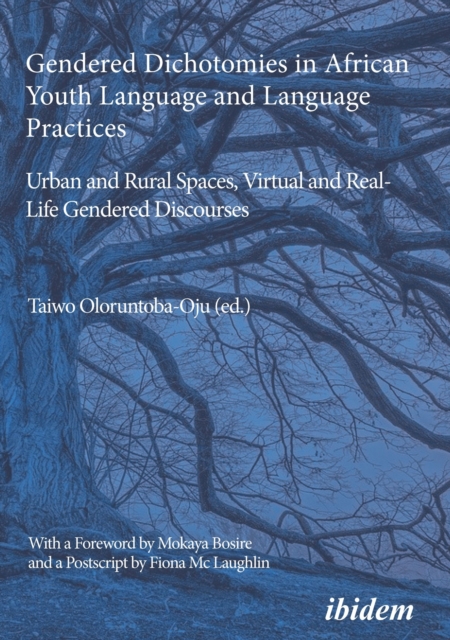
Gendered Dichotomies in African Youth Language and Language Practices: Urban and Rural Spaces, Virtual and Real-Life Gendered Discourses
Youth language data provides interesting perspectives on gender dynamics and gendered usage in society. However, the gender perspective has notreceived the deserved focus in youth language studies in Africa.This is partly due to the general perception that youth languages and classic youth language practices, such as slangand anti-language, are male-oriented. This collected volume focuses on gender dynamics and gendered usage in African youthlanguages and youth language practices, against the backdrop of urbanity as well as rurality. With representations from different parts of Africa, the volume examines sundry youth usage in different contexts and domains. While avoiding strict binarizations and potentially flawed dichotomies, the contributing scholars observe some of the motivationsfor different gender performatives and how these manifest in a variety of language forms and through predominated categories of use. Data samples were obtained through sociolinguistic and anthropological instruments, ranging from questionnaires and structured interviews to street-based observations and corpus analyses. On the whole, the volume engages the literature and debate on language, youth, and especially on gendering dynamics in African youth language practices.
eBook