
Catalogue Search | MBRL


Are you sure you want to remove the book from the shelf?

{{itemTitle}}
86
result(s) for
"Huskinson, Janet"
Sort by:
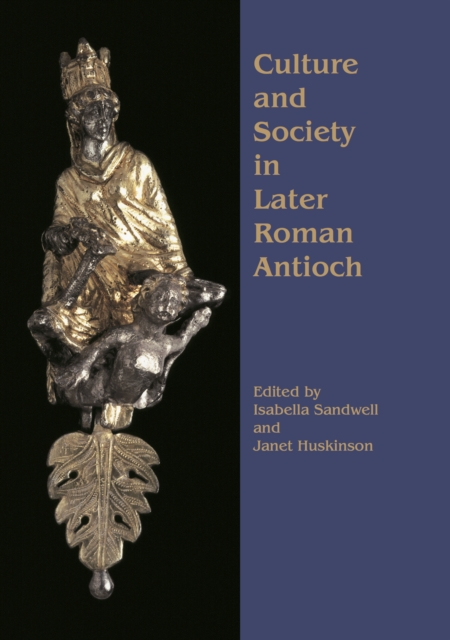
Culture and Society in Later Roman Antioch
This collection of papers brings together a broad range of new research and new material on Antioch in the late Roman period (the 2nd to the 7th centuries AD), from the writings of the orator Libanius and the preacher John Chrysostom to the extensive mosaics found in the city and its suburbs. The authors consider the lively issues of identity and ethnicity in this truly multi-cultural and multi-religious city, the effects of Romanization and Christianization on the city and surrounding region, and the central place of the city in the Roman world. These papers were presented at a colloquium in London, in December 2001.
eBook
Culture and society in later Roman Antioch: papers from a colloquium, London, 15th December 2001
This collection of papers brings together a broad range of new research and new material on Antioch in the late Roman period (the 2nd to the 7th centuries AD), from the writings of the orator Libanius and the preacher John Chrysostom to the extensive mosaics found in the city and its suburbs. The authors consider the lively issues of identity and ethnicity in this truly multi-cultural and multi-religious city, the effects of Romanization and Christianization on the city and surrounding region, and the central place of the city in the Roman world. These papers were presented at a colloquium in London, in December 2001.
eBook


THEATRE, PERFORMANCE AND THEATRICALITY IN SOME MOSAIC PAVEMENTS FROM ANTIOCH
This paper reconsiders four pavements from houses in or around Antioch on the Orontes which are generally recognised to have had some association with plays or the theatre. The ‘Red Pavement’ and the mosaic of ‘Iphigencia’ have been taken to illustrate the texts of particular plays by Euripides; scenes in the ‘House of Dionysus and Ariadne’ show satyrs in theatrical costume; and a triclinium mosaic from the House of Menander portrays the playwright himself. It views them in the light of some current interpretative approaches based on ‘theatricality’ and ‘performance’ and the decoration of houses. Through detailed analysis of each case it shows how their images provide further evidence of the cultural life of Antioch and for the interests and aspirations of elite patrons.
Journal Article


Surveying the Scene
Perhaps the most famous artefacts to survive from Roman Antioch are its floor-mosaics. These are regularly cited in all kinds of art-historical and archaeological enquiries, and no study of the city would seem complete without some discussion of them. Undoubtedly their attractiveness and sheer number make them such a popular source of reference, but an even more important factor has been their accessible publication. The earliest discussions tended to emphasise their art-historical value, in terms which have tended to dominate later debates, yet the pavements’ function as high-profile decoration in houses of the well-to-do means that they have a lot
Book Chapter
THEATRE, PERFORMANCE AND THEATRICALITY IN SOME MOSAIC PAVEMENTS FROM ANTIOCH
This paper reconsiders four pavements from houses in or around Antioch on the Orontes which are generally recognised to have had some association with plays or the theatre. The 'Red Pavement' and the mosaic of 'Iphigeneia' have been taken to illustrate the texts of particular plays by Euripides; scenes in the 'House of Dionysus and Ariadne' show satyrs in theatrical costume; and a triclinium mosaic from the House of Menander portrays the playwright himself. It views them in the light of some current interpretative approaches based on 'theatricality' and 'performance' and the decoration of houses. Through detailed analysis of each case it shows how their images provide further evidence of the cultural life of Antioch and for the interests and aspirations of elite patrons.
Journal Article