
Catalogue Search | MBRL


Are you sure you want to remove the book from the shelf?

{{itemTitle}}
2
result(s) for
"Idowu, Samuel O., editor"
Sort by:

The future of the UN sustainable development goals : business perspectives for global development in 2030
This book provides a business-oriented analysis of the United Nations (UN) Sustainable Development Goals (SDG). In order to assess their impact on businesses and corporations, the book addresses all 17 goals and a broad range of industries. Gathering contributions from Africa, Europe and Asia, it presents both critical reviews and case studies. In turn, the book seeks to predict likely developments during the next decade. To do so, it examines evidence from todays business world and how companies and corporations have been adopting the SDGs since their release. In this regard, it discusses the changes that will be required and how the agenda will affect the continents development path. An underlying theme throughout the book is the role of monetary value and investment for sustainable development: whether through financing, enhanced turnaround resulting from a more educated population, or more socially innovative entrepreneurs.
Book
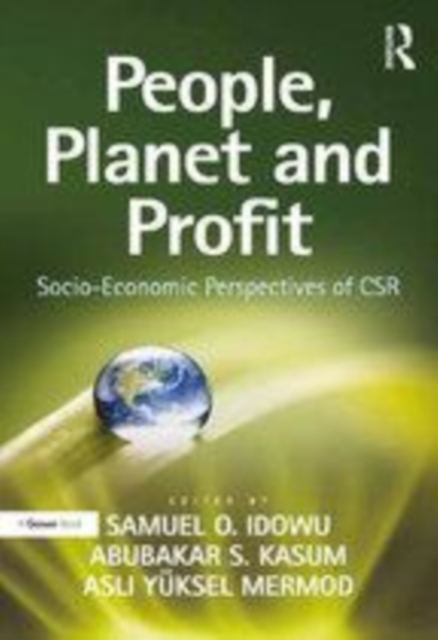
People, Planet and Profit
It is no longer the case that it's only society which benefits from CSR actions. A corporation actually helps itself when operating sustainably and does well because of its triple bottom line actions. The editors of People, Planet and Profit believe that whilst Corporate Social Responsibility is by now a familiar concept to academics or practitioners, insufficient attention has been paid to the end product of CSR in practice, which they define in terms of social and economic developmental effect. The contributions in this edited volume explain the developmental aspect of CSR from a conceptual perspective and provide empirical evidence of the impact of CSR delivery on stakeholders in different corners of the World. The emphasis is on what corporations take from and give back to their stakeholders whilst trying to behave in a corporately responsible fashion. Stakeholders, including employees, customers, host communities, governments and NGOs have diverse interests and expectations of CSR. This gives rise to questions about whether the activities corporations support are the ones today's stakeholders need; whether the CSR programmes being delivered are adequate; and about the relationship between the corporations' view of what constitutes CSR and that of the supposed beneficiaries. This book offers thoughtful answers to these questions and assesses the outcomes of corporate activities both in developed and developing countries and regions, in terms of economic progress and social and political advancement.
eBook