
Catalogue Search | MBRL


Are you sure you want to remove the book from the shelf?

{{itemTitle}}
107
result(s) for
"Ilcan, Suzan"
Sort by:


The precarious lives of Syrians : migration, citizenship, and temporary protection in Turkey
Turkey now hosts the largest number of Syrian refugees in the world, more than 3.6 million of the 12.7 million displaced by the Syrian Civil War. Many of them are subject to an unpredictable temporary protection, forcing them to live under vulnerable and insecure conditions.
The Precarious Lives of Syrians examines the three dimensions of the architecture of precarity: Syrian migrants' legal status, the spaces in which they live and work, and their movements within and outside Turkey. The difficulties they face include restricted access to education and healthcare, struggles to secure employment, language barriers, identity-based discrimination, and unlawful deportations. Feyzi Baban, Suzan Ilcan, and Kim Rygiel show that Syrians confront their precarious conditions by engaging in cultural production and community-building activities, and by undertaking perilous journeys to Europe, allowing them to claim spaces and citizenship while asserting their rights to belong, to stay, and to escape. The authors draw on migration policies, legal and scholarly materials, and five years of extensive field research with local, national, and international humanitarian organizations, and with Syrians from all walks of life.
The Precarious Lives of Syrians offers a thoughtful and compelling analysis of migration precarity in our contemporary context.
eBook

The Border Harms of Human Displacement: Harsh Landscapes and Human Rights Violations
Building on the work of critical migration and border studies, particularly the scholarship on the suffering of displaced people through border-related violence, the article focuses on bordering practices and human rights violations relating to the Syrian civil war. It advances the argument that during peoples’ fragmented journeys to seek safety and protection within and outside of Syria, which are often punctuated by stops and starts, they encounter one or more of three kinds of bordering practices—hardening of borders, expansion of borders, and pushbacks—that can injure them and violate international human rights and often the principle of non-refoulement. The article refers to these encounters as the “border harms of human displacement”. The analysis emphasizes the experiences of people on the move and the cruelties and spatial violence they endure. The latter include lengthy periods of walking and running, travel across hazardous lands and seas, family separation, state restrictions, and mistreatment by border authorities. Yet, in response to such difficulties, they continue to assert their agency by negotiating bordering practices and harsh landscapes.
Journal Article
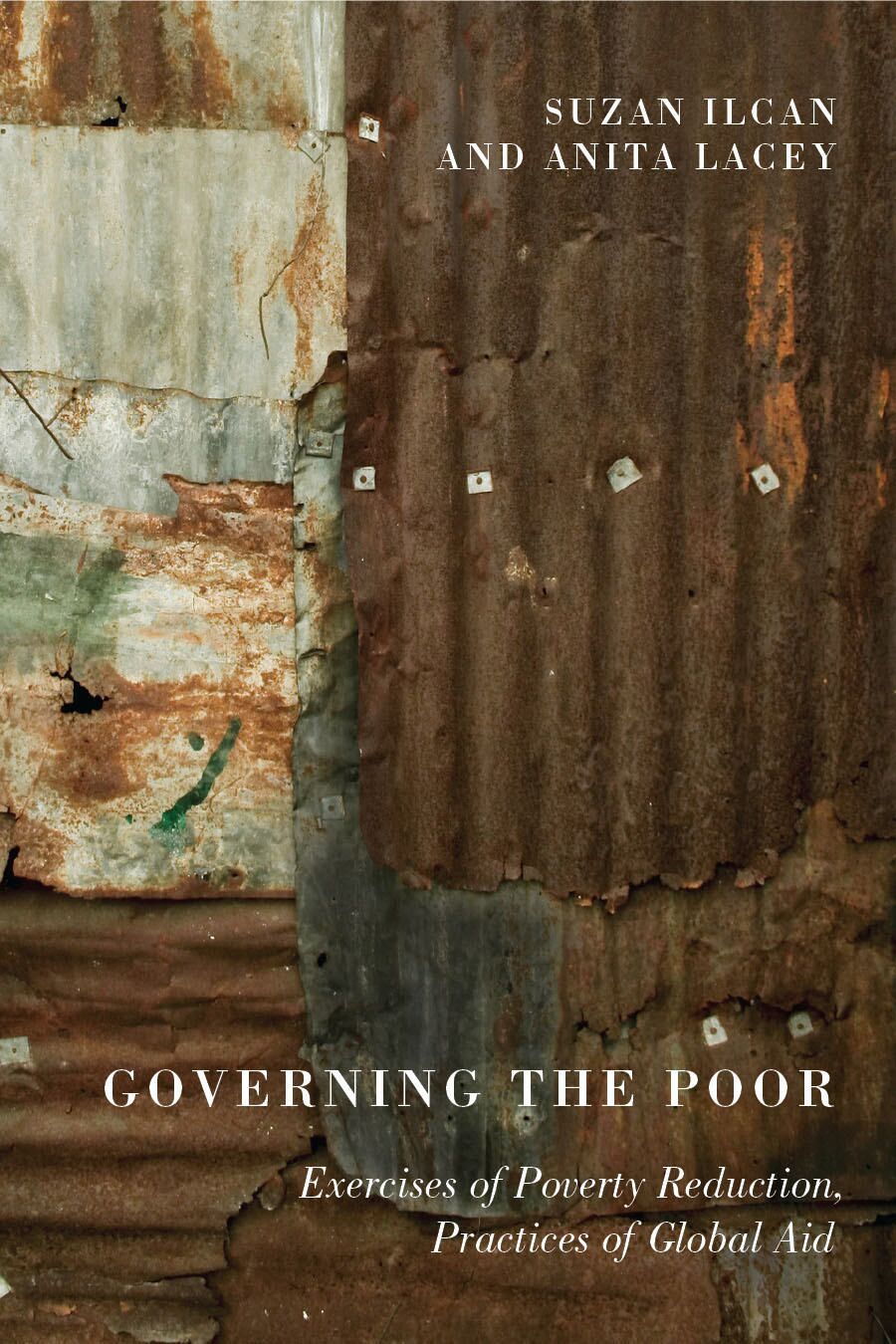
Governing the Poor
Every day, we are barraged by statistics, images, and emotional messages that present poverty as a problem to be quantified, managed, and solved. Global generations present the poor as a heterogeneous group and stress globalized solutions to the problem of poverty. Governing the Poor exposes the ways in which such generalized descriptions and quantifications marginalize the poor and their experiences.
eBook
Mobilities, Knowledge, and Social Justice
The mobility of people, objects, information, ideas, services, and capital has reached levels unprecedented in human history. Such forms of mobility are manifested in continued advances in communication and transportation capacities, in the growing use of digital and biometric technologies, in the movements of Indigenous, migrant, and women's groups, and in the expansion of global capitalism into remote parts of the world. Mobilities, Knowledge, and Social Justice demonstrates how knowledge is mobilized and how people shape, and are shaped by, matters of mobility. Richly detailed and illuminating essays reveal the ways in which issues of mobility are at the centre of debates, ranging from practices of belonging to war and border security measures, from gender, race, and class matters to governance and international trade, and from citizenship and immigration policies to human rights. Contributors analyze how particular forms of mobility generate specific types of knowledge and give rise to claims for social justice. This collection reconsiders mobility as a key term in the social sciences and humanities by delineating new ways of understanding how mobility informs and shapes lives as well as social, cultural, and political relations within, across, and beyond states. Contributors include Rob Aitken (Alberta), Tanya Basok (Windsor), Janine Brodie (Alberta), William Coleman (Waterloo), Ronjon Paul Datta (Alberta), Karl Froschauer (Simon Fraser), Daniel Gorman (Waterloo), Amanda Grzyb (Western), Suzan Ilcan (Waterloo), Eleonore Kofman (Middlesex), Anita Lacey (Auckland), Theresa McCarthy (Buffalo), Daniel J. Paré (Ottawa), Nicola Piper (Sydney), Parvati Raghuram (Open), Kim Rygiel (Wilfrid Laurier), Leslie Regan Shade (Toronto), Sandra Smeltzer (Western ), Daiva Stasiulis (Carleton), Myra Tawfik (Windsor), and Lloyd Wong (Calgary).
eBook

The Politics of Protection
This article focuses on the politics of refugee protection, with attention given to issues of the right to food and food insecurity in two protracted refugee camps: Osire in Namibia and Nakivale in Uganda. In our analysis, we identify a key tension at the heart of the United Nations High Commissioner for Refugees and its partners’ understanding and practices of protection: between a minimalist understanding of human rights (the right to live or survive) and a more expansive one that guarantees the full and widest array of human rights, including socio-economic ones. This tension, when combined with dwindling state donor funding for humanitarian work, a market-driven system of refugee food provision, and restrictive encampment policies and practices, has dire consequences for refugees living in camps. We stress that the right to adequate and sustainable food is a core international protection issue for refugees that is often reduced to a matter of ‘assistance’ in both the scholarship and practices concerning refugee protection. We argue for a more expansive and critical understanding of the right to food and food security as this has greater implications for the United Nations High Commissioner for Refugees and its protection mandate in the context of defining the responsibilities that governments and international organisations have towards refugees.
Journal Article

Mobilities, Knowledge, and Social Justice
The mobility of people, objects, information, ideas, services, and capital has reached levels unprecedented in human history. Such forms of mobility are manifested in continued advances in communication and transportation capacities, in the growing use of digital and biometric technologies, in the movements of Indigenous, migrant, and women's groups, and in the expansion of global capitalism into remote parts of the world.Mobilities, Knowledge, and Social Justice demonstrates how knowledge is mobilized and how people shape, and are shaped by, matters of mobility. Richly detailed and illuminating essays reveal the ways in which issues of mobility are at the centre of debates, ranging from practices of belonging to war and border security measures, from gender, race, and class matters to governance and international trade, and from citizenship and immigration policies to human rights. Contributors analyze how particular forms of mobility generate specific types of knowledge and give rise to claims for social justice.This collection reconsiders mobility as a key term in the social sciences and humanities by delineating new ways of understanding how mobility informs and shapes lives as well as social, cultural, and political relations within, across, and beyond states.Contributors include Rob Aitken (Alberta), Tanya Basok (Windsor), Janine Brodie (Alberta), William Coleman (Waterloo), Ronjon Paul Datta (Alberta), Karl Froschauer (Simon Fraser), Daniel Gorman (Waterloo), Amanda Grzyb (Western), Suzan Ilcan (Waterloo), Eleonore Kofman (Middlesex), Anita Lacey (Auckland), Theresa McCarthy (Buffalo), Daniel J. Paré (Ottawa), Nicola Piper (Sydney), Parvati Raghuram (Open), Kim Rygiel (Wilfrid Laurier), Leslie Regan Shade (Toronto), Sandra Smeltzer (Western ), Daiva Stasiulis (Carleton), Myra Tawfik (Windsor), and Lloyd Wong (Calgary).
eBook
Postmodernism and the Ethical Subject
Writing across the disciplines of sociology, literature, film, anthropology, and museology, the contributors examine the way in which radical postmodern shifts around knowledge and value have mobilized new relations between ourselves and others and transformed a range of cultural practices. This volume includes philosophical reflections and essays on museums and memory, visual culture, and relations with the other. Postmodernism and the Ethical Subject examines the altered frameworks that simultaneously help us to meet the contemporary challenge and raise the ethical stakes of our historical moment.
eBook

Networks of Social Justice: Transnational Activism and Social Change
Transnational activism is broad in scope and scale and underscores forms of activism and struggles that operate within, across, and beyond the state. We understand the term transnational activism to designate a range of synchronized cross-border activities, campaigns, and movements on the part of networks of activists working counter to various state actors, international actors, or international institutions. It includes a diverse array of participants engaging in activist networksfrom those working in local and regional groups to those associated with national and international organizations with the aim of bringing about social, economic, and political change across borders.
Journal Article