
Catalogue Search | MBRL


Are you sure you want to remove the book from the shelf?

{{itemTitle}}
163
result(s) for
"Insoll, Timothy"
Sort by:


Archaeology, Ritual, Religion
The archaeology of religion is a much neglected area, yet religious sites and artefacts constitute a major area of archaeological evidence. Timothy Insoll presents an introductory statement on the archaeology of religion, examining what archaeology can tell us about religion, the problems of defining and theorizing religion in archaeology, and the methodology, or how to 'do', the archaeology of religion. This volume assesses religion and ritual through a range of examples from around the world and across time, including prehistoric religions, shamanism, African religions, death, landscape and even food. Insoll also discusses the history of research and varying theories in this field before looking to future research directions. This book will be a valuable guide for students and archaeologists, and initiate a major area of debate.
1. Introduction to the Theme 2. History of Research 3. Contemporary Approaches 4. The Case Studies 5. Prospects and Conclusion: Prospects, A Future Approach? Towards a Theory of Archaeology and Religion
Timothy Insoll is Lecturer in Archaeology at the School of Art History and Archaeology at the University of Manchester. His previous publications include The Archaeology of Islam (1999), Archaeology and World Religion (2001) and THe Archaeology of Islam in Sub-Saharan Africal (2003)
eBook


The archaeology of complexity and cosmopolitanism in medieval Ethiopia: an introduction
Archaeology increasingly attests the complex and cosmopolitan nature of societies in medieval Ethiopia (c. seventh to early eighteenth centuries AD). Without negating the existence of relations of dominance and periods of isolation, key emergent themes of such research are pluralism and interaction. Four religious traditions are relevant to this theme: Islam, Judaism, Christianity and Indigenous religions. This article introduces a special section of contributions on medieval Ethiopia and sets the scheme by highlighting the temporality of cosmopolitanism as episodic rather than continuous. The following articles address varied aspects of this cosmopolitanism, identifying issues of general relevance for studies of the archaeology of religion, as well as the need for further research in Ethiopia.
Journal Article
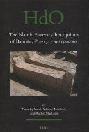
The Islamic Funerary Inscriptions of Bahrain : Pre-1317 AH/1900 AD
\"In The Islamic Funerary Inscriptions of Bahrain, Pre-1317 AH/1900 AD, the authors present a study of the funerary inscriptions based upon fieldwork completed in Bahrain between 2013-2015. A comprehensive illustrated catalogue of 150 gravestones in 26 locations is provided with transcription of the inscriptions into modern Arabic and translation into English. Subjects considered include: the history of Islamic burial, gravestone, and cemetery research on Bahrain, gravestone chronology, gravestone and cemetery types, stone sources and gravestone manufacture, the gravestone inscriptions, content, iconography and decoration, and the archaeology of the shrines and cemeteries in which some of the gravestones were found, contemporary practices relating to cemeteries, graves, and gravestones, the threats facing the gravestones, and management options for protecting and presenting the gravestones.\"--Provided by publisher.
Book

Material Explorations in African Archaeology
Material Explorations in African Archaeology examines materiality in African archaeology by exploring concepts of material agency and material engagement and entanglement in relation to their manifest presence in persons, animals, objects, substances, and contexts of the African past.
eBook

The Oxford handbook of Islamic archaeology
\"Born from the fields of Islamic art and architectural history, the archaeological study of the Islamic societies is a relatively young discipline. With its roots in the colonial periods of the late 19th and early 20th centuries, its rapid development since the 1980s warrants a reevaluation of where the field stands today. This Handbook represents for the first time a survey of Islamic archaeology on a global scale, describing its disciplinary development and offering candid critiques of the state of the field today in the Central Islamic Lands, the Islamic West, Sub-Saharan Africa, and Asia. The international contributors to the volume address such themes as the timing and process of Islamization, the problems of periodization and regionalism in material culture, cities and countryside, cultural hybridity, cultural and religious diversity, natural resource management, international trade in the later historical periods, and migration. Critical assessments of the ways in which archaeologists today engage with Islamic cultural heritage and local communities closes the volume, highlighting the ethical issues related to studying living cultures and religions. Richly illustrated, with extensive citations, it is the reference work on the debates that drive the field today\"-- Provided by publisher.
BOOK

Monitoring Islamic Archaeological Landscapes in Ethiopia Using Open Source Satellite Imagery
The African landscape is set to change dramatically in the coming years, and will have a detrimental impact on the inherent archaeological and cultural heritage elements if not monitored adequately. This paper explores how satellite imagery, in particular open source imagery (Google Earth, multispectral satellite imagery from Landsat and Sentinel-2), can be utilized to monitor and protect sites that are already known with particular reference to Islamic archaeological sites in Ethiopia. The four sites used are in different geographic and geomorphological areas: three on the Somali Plateau (Harlaa, Harar, and Sheikh Hussein), and one on the edge of the Afar Depression (Nora), and have varied histories. The results indicate that open source satellite imagery offers a mechanism for evaluating site status and conservation over time at a large scale, and can be used on data from other areas of Africa by heritage professionals in the African continent at no cost.
Journal Article

Marine Shell Working at Harlaa, Ethiopia, and the Implications for Red Sea Trade
Abstract
Twelve species of marine shell were transported in significant quantities from the Red Sea to the trade centre of Harlaa in eastern Ethiopia between the eleventh and early fifteenth centuries AD. Initially, it was thought that species such as the cowries were imported from the Indian Ocean. Subsequent research has found that all were available from the Red Sea and the Gulf of Aden, c. 120 km east of Harlaa. This suggests that a hitherto largely unrecognised source of marine shells was available, and the Red Sea might have supplied not only the Horn of Africa, but other markets, potentially including Egypt, and from there, elsewhere in North Africa and ultimately West Africa via trans-Saharan routes, as well as Nubia and further south on the Nile in the Sudan, the Arabian Peninsula, and the Arabian/Persian Gulf. This is explored with reference to the shell assemblage from Harlaa, and selected shell assemblages from elsewhere in the Horn of Africa, and trading centres on the Red Sea.
Journal Article

Local Ceramics from the Islamic Trade Center of Harlaa, Eastern Ethiopia
Locally made ceramics from Islamic sites in Ethiopia have been neglected in most archaeological studies, which tend to privilege imported Middle Eastern and Chinese/Southeast Asian ceramics. An assemblage of the local ceramics from the important trading site of Harlaa, in eastern Ethiopia (mid-sixth and fifteenth centuries AD), is the subject of this article. The study emphasizes the value of these ceramics as chronological markers, and for understanding regional and long-distance contacts, cultural innovations, processes of Islamization, and foodways.
Céramiques fabriquées localement trouvées sur les sites d’archéologie islamique en Éthiopie ont été largement négligées contrairement aux céramiques importées du Moyen-Orient, de Chine ou d’Asie du Sud-Est. Une échantillon de ces céramiques (milieu VIe et XVe siècles après JC) qui a été exhumé du site de commerce important de Harlaa, dans l'est de l'Ethiopie est le sujet de le présent article. Cette étude met l’accent sur la valeur de céramiques fabriquées localement comme marqueurs chronologiques, fournir des informations sur les échanges régionaux et de plus longue distance, innovations culturelles, processus d’islamisation et les circuits alimentaires.
Journal Article