
Catalogue Search | MBRL


Are you sure you want to remove the book from the shelf?

{{itemTitle}}
3,387
result(s) for
"Iqbal, Ahmad"
Sort by:


Fluorescent Pseudomonas -FAP2 and Bacillus licheniformis interact positively in biofilm mode enhancing plant growth and photosynthetic attributes
Compatible interaction between commonly used plant growth promoting rhizobacteria (PGPR) in biofilm mode
in vitro
and in the rhizosphere is expected to provide better understanding for the development of effective consortium. With the above hypothesis, the present study evaluated two characterized PGPR (
Pseudomonas fluorescens
FAP2 and
Bacillus licheniformis
B642) for their biofilm-related functions using standard protocols. The interaction between the FAP2 and B642 in planktonic mode was studied by plate spot/overlay method and competitive growth assessment. Biofilm development on a microtitre plate and a glass surface was studied by standard methods. Biofilm formation was characterized by SEM. Rhizosphere and rhizoplane colonization of wheat seedlings by both isolates individually and by co-inoculation was studied by determining CFU/g of soil/root samples. Biofilm development on the root surface was further analyzed by SEM. Both isolates demonstrated multiple plant growth promoting (PGP) traits (production of IAA, siderophore, and ammonia; phosphate solubilization) and biofilm-related functions such as production of EPS, alginate, cell surface hydrophobicity and swarming motility. Both strains formed strong biofilms on a glass cover slip
in vitro
. Interaction between the two strains under the planktonic mode revealed no antagonism in terms of growth inhibition and competitive growth kinetics. Similarly, FAP2 and B642 strains formed a mixed biofilm on a glass cover slip as well as on seedling roots. Wheat rhizosphere and rhizoplane were colonized by both isolates as evidenced from their viable counts in single and co-inoculation. The effect of single and co inoculation revealed the significant enhancement of vegetative growth and photosynthetic parameters such as chlorophyll content, transpiration rate (E), internal CO
2
concentration (Ci), stomatal conductance (g
s
), and net photosynthetic rate (P
N
) and leaf water potential (LWP) as compared to uninoculated control. Indigenous
Pseudomonas fluorescens
FAP2 strain and
Bacillus licheniformis
B642 are compatible PGPR in both planktonic and biofilm modes of growth and threfore could be developed effective consortium of PGPR. Further indepth investigation is required to understand molecular mechanism of the interaction in biofilm mode of growth under natural condition.
Journal Article

Insight into Acinetobacter baumannii : pathogenesis, global resistance, mechanisms of resistance, treatment options, and alternative modalities
, once considered a low-category pathogen, has emerged as an obstinate infectious agent. The scientific community is paying more attention to this pathogen due to its stubbornness to last resort antimicrobials, including carbapenems, colistin, and tigecycline, its high prevalence of infections in the hospital setting, and significantly increased rate of community-acquired infections by this organism over the past decade. It has given the fear of pre-antibiotic era to the world. To further enhance our understanding about this pathogen, in this review, we discuss its taxonomy, pathogenesis, current treatment options, global resistance rates, mechanisms of its resistance against various groups of antimicrobials, and future therapeutics.
Journal Article

Microglia: Friends or Foes in Glaucoma? A Developmental Perspective
Abstract
Glaucoma is the most prevalent form of optic neuropathy where a progressive degeneration of retinal ganglion cells (RGCs) leads to irreversible loss of vision. The mechanism underlying glaucomatous degeneration remains poorly understood. However, evidence suggests that microglia, which regulate RGC numbers and synaptic integrity during development and provide homeostatic support in adults, may contribute to the disease process. Hence, microglia represent a valid cellular target for therapeutic approaches in glaucoma. Here, we provide an overview of the role of microglia in RGC development and degeneration in the backdrop of neurogenesis and neurodegeneration in the central nervous system and discuss how pathological recapitulation of microglia-mediated developmental mechanisms may help initiate or exacerbate glaucomatous degeneration.
Graphical Abstract
Graphical Abstract
Journal Article

Fractals as Julia Sets for a New Complex Function via a Viscosity Approximation Type Iterative Methods
In this article, we examine and investigate various variants of Julia set patterns for complex exponential functions W(z)=αezn+βzm+logct, and T(z)=αezn+βzm+γ (which are analytic except at z=0) where n≥2, m,n∈N, α,β,γ∈C,c∈C∖0 and t∈R,t≥1, by employing a viscosity approximation-type iterative method. We employ the proposed iterative method to establish an escape criterion for visualizing Julia sets. We provide graphical illustrations of Julia sets that emphasize their sensitivity to different iteration parameters. We present graphical illustrations of Julia sets; the color, size, and shape of the images change with variations in the iteration parameters. With fixed input parameters, we observe the intriguing behavior of Julia sets for different values of n and m. We hope that the conclusions of this study will inspire researchers with an interest in fractal geometry.
Journal Article
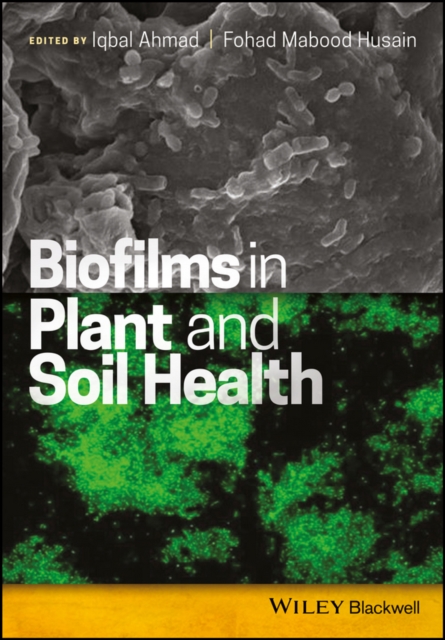
Biofilms in Plant and Soil Health
Biofilms are predominant mode of life for microbes under natural conditions. The three-dimensional structure of the biofilm provides enhanced protection from physical, chemical and biological stress conditions to associated microbial communities. These complex and highly structured microbial communities play a vital role in maintaining the health of plants, soils and waters. Biofilm associated with plants may be pathogenic or beneficial based on the nature of their interactions. Pathogenic or undesirable biofilm requires control in many situations, including soil, plants, food and water.
eBook

Antibacterial Effect of Silver Nanoparticles Synthesized Using Murraya koenigii (L.) against Multidrug-Resistant Pathogens
Development of multidrug resistance among pathogens has become a global problem for chemotherapy of bacterial infections. Extended-spectrum β-lactamase- (ESβL-) producing enteric bacteria and methicillin-resistant Staphylococcus aureus (MRSA) are the two major groups of problematic MDR bacteria that have evolved rapidly in the recent past. In this study, the aqueous extract of Murraya koenigii leaves was used for synthesis of silver nanoparticles. The synthesized MK-AgNPs were characterized using UV-vis spectroscopy, FTIR, XRD, SEM, and TEM, and their antibacterial potential was evaluated on multiple ESβL-producing enteric bacteria and MRSA. The nanoparticles were predominantly found to be spheroidal with particle size distribution in the range of 5–20 nm. There was 60.86% silver content in MK-AgNPs. Evaluation of antibacterial activity by the disc-diffusion assay revealed that MK-AgNPs effectively inhibited the growth of test pathogens with varying sized zones of inhibition. The MICs of MK-AgNPs against both MRSA and methicillin-sensitive S. aureus (MSSA) strains were 32 μg/ml, while for ESβL-producing E. coli, it ranged from 32 to 64 μg/ml. The control strain of E. coli (ECS) was relatively more sensitive with an MIC of 16 μg/ml. The MBCs were in accordance with the respective MICs. Analysis of growth kinetics revealed that the growth of all tested S. aureus strains was inhibited (∼90%) in presence of 32 μg/ml of MK-AgNPs. The sensitive strain of E. coli (ECS) showed least resistance to MK-AgNPs with >81% inhibition at 16 μg/ml. The present investigation revealed an encouraging result on in vitro efficacy of green synthesized MK-AgNPs and needed further in vivo assessment for its therapeutic efficacy against MDR bacteria.
Journal Article

Isolation, functional characterization and efficacy of biofilm-forming rhizobacteria under abiotic stress conditions
Abiotic stresses such as salinity, drought and excessive heat are associated with significant loss of crop productivity globally, and require effective strategies for their reduction or tolerance. Biofilm-forming rhizobacteria, which harbor multifarious plant growth promoting traits and tolerance to abiotic stress, are believed to benefit plant health and production even under environmental stresses. The primary objective of this study was to investigate indigenous biofilm-forming rhizobacteria (Pseudomonas spp., Bacillus sp., Pantoea sp., Brevibacterium sp. and Acinetobacter sp.) for their functional diversity relevant to plant growth promoting activities, biofilm development and tolerance to abiotic stress conditions. The most promising isolates among FAP1, FAP2, FAP3, FAP4, FAP5, FAP10, FAB1, FAB3 and FAA1 were selected. Rhizobacteria exhibited high tolerance to salinity (1.5 M NaCl) and drought stress (up to 55% PEG-6000) conditions in vitro. The isolates demonstrated varying levels of PGP activities (IAA production and phosphate solubilization), biofilm development, and production of alginate and exopolysaccharides in the presence of salinity, drought stress and elevated temperature. Further efficacy of the isolates was demonstrated by inoculating to wheat (Triticum aestivum L.) plants in greenhouse conditions under both normal and drought stress for up to 30 days inoculation. The plant growth potential of the isolates was in the order of FAP3 > FAB3 > FAB1 > FAP10 > FAP5 > FAP4 > FAA1 > FAP2 > FAP1. The present study resulted in successful selection of promising PGPR as identified by 16S rRNA gene sequence analysis. Field study is needed to evaluate their relative performance in both ‘normal’ and stressed environments in order to be exploited for plant stress management.
Journal Article

Vaping among young adults in Singapore: a qualitative study of motivations, challenges and antivaping intervention perceptions
IntroductionThe increasing use of electronic cigarettes among young adults in Southeast Asia is concerning. This study explores the motivations and challenges faced by young adults in quitting vaping and their perceptions of current public health messages and interventions in Singapore, which has stringent antivaping laws and active public health campaigns.MethodsA qualitative descriptive study was conducted involving in-depth interviews with 15 participants aged 18–35. Thematic analysis was performed by two independent researchers trained in qualitative methods.ResultsParticipants identified negative health outcomes and legal risks as major motivations for quitting vaping. Challenges included nicotine addiction, psychological dependency and entrenched vaping routines. The study revealed general scepticism towards current antivaping messages, which were seen as too generic and lacking credibility. Participants recommended that public health messages be more specific, transparent and engaging, incorporating independent research and visual aids to highlight vaping risks. They also suggested regulating e-cigarette sales instead of implementing blanket bans, ensuring anonymity for those seeking help and providing comprehensive nicotine cessation support. Additionally, the use of real-life testimonials and influencers was proposed to improve message relatability and effectiveness.ConclusionThis study provides valuable insights into the motivations and barriers of quitting vaping among young adults. Enhancing the transparency and specificity of antivaping messages, along with more tailored and supportive interventions, could increase their effectiveness and offer guidance for other Southeast Asian countries facing similar issues.
Journal Article

Photostability and Photostabilization of Drugs and Drug Products
Photostability studies of drugs and drug products are an integral part of the product development process in the pharmaceutical industry. These studies are carried out to ensure quality, efficacy, and safety of the formulated products during manufacture, storage, and use. This review deals with the concept of photostability and related aspects and the literature available in the field. It highlights the role of the photochemistry in the photostability studies, describes the functional groups important for the photoreactivity of drugs, explains photophysical processes, and deals with the kinetics of photochemical reactions. The various modes of photodegradation of drugs with examples of selected compounds are presented. The biological consequences of the effect of light on the drug degradation are described. The photostability testing of drugs and drug products and the requirements under ICH guideline are discussed. Some information on the packaging requirements for the formulated products is provided. The various methods used for the photostabilization of solid and liquid dosage forms are also discussed.
Journal Article