
Catalogue Search | MBRL


Are you sure you want to remove the book from the shelf?

{{itemTitle}}
10
result(s) for
"Israel, Jonathan, author"
Sort by:

The expanding blaze : how the American Revolution ignited the world, 1775-1848
\" A major intellectual history of the American Revolution and its influence on later revolutions in Europe and the Americas, the Expanding Blaze is a sweeping history of how the American Revolution inspired revolutions throughout Europe and the Atlantic world in the eighteenth and nineteenth centuries. Jonathan Israel, one of the world's leading historians of the Enlightenment, shows how the radical ideas of American founders such as Paine, Jefferson, Franklin, Madison, and Monroe set the pattern for democratic revolutions, movements, and constitutions in France, Britain, Ireland, the Netherlands, Belgium, Poland, Greece, Canada, Haiti, Brazil, and Spanish America. The Expanding Blaze reminds us that the American Revolution was an astonishingly radical event--and that it didn't end with the transformation and independence of America. Rather, the revolution continued to reverberate in Europe and the Americas for the next three-quarters of a century. This comprehensive history of the revolution's international influence traces how American efforts to implement Radical Enlightenment ideas--including the destruction of the old regime and the promotion of democratic republicanism, self-government, and liberty--helped drive revolutions abroad, as foreign leaders explicitly followed the American example and espoused American democratic values. The first major new intellectual history of the age of democratic revolution in decades, The Expanding Blaze returns the American Revolution to its global context.\"-- Provided by publisher.
Book

Enlightenment contested : philosophy, modernity, and the emancipation of man, 1670-1752
The author presents the first major reassessment of the Western Enlightenment for a generation. Continuing the story he began in Radical Enlightenment, and now focusing his attention on the first half of the 18th century, he returns to the original sources to offer a new perspective on the nature and development of the most important currents in modern thought. The author traces many of the core principles of Western modernity to their roots in the social, political, and philosophical ferment of this period: the primacy of reason, democracy, racial equality, feminism, religious toleration, sexual emancipation, and freedom of expression. He emphasizes the dual character of the Enlightenment and the bitter struggle between, on the one hand, a generally dominant, anti-democratic mainstream, supporting the monarchy, aristocracy, and ecclesiastical authority, and on the other a largely repressed democratic, republican, and ‘materialist’ radical fringe. He also contends that the supposedly separate French, British, German, Dutch, and Italian enlightenments interacted to such a degree that their study in isolation gives a hopelessly distorted picture.
eBook

Historical dictionary of the Enlightenment
\"Historical Dictionary of the Enlightenment, Second Edition contains a chronology, an introduction, and an extensive bibliography. The dictionary section has more than 300 cross-referenced entries. This book is an excellent resource for students, researchers, and anyone wanting to know more about the Enlightenment\"-- Provided by publisher.
Book
The expansion of tolerance
This volume about religious tolerance in early modern Brazil comprises two articles. Jonathan Israel, in his contribution, argues that Dutch tolerance in Brazil was unprecedented in the seventeenth century. Catholics and particularly Jews were given freedom of conscience and freedom of private worship in accordance with Dutch guide-lines. Stuart Schwartz, in his article, demonstrates that religious toleration in Dutch Brazil was not exclusively the domain of the Dutch. The Portuguese also widely approved of tolerance at grassroots level, accepting an individual's preference to follow his own path to salvation. This title is available in the OAPEN Library - http://www.oapen.org.
eBook

Spinoza, life and legacy
\"The boldest and most unsettling of the major early modern philosophers, Spinoza, had a much greater, if often concealed, impact on the international intellectual scene and on the early Enlightenment than philosophers, historians, and political theorists have conventionally tended to recognize. Europe-wide efforts to prevent the reading public and university students learning about Spinoza, the man and his work, in the years immediately after his death in 1677, dominated much of his early reception owing to the revolutionary implications of his thought for philosophy, religion, practical ethics and lifestyle, Bible criticism, and political theory. Nevertheless, contrary to what has sometimes been maintained, his general impact was immediate, very widespread, and profound. One of the main objectives of the book is to show how early and how deeply Leibniz, Bayle, Arnauld, Henry More, Anne Conway, Richard Baxter, Robert Boyle, Henry Oldenburg, Pierre-Daniel Huet, Richard Simon, and Nicholas Steno, among many others, were affected by and led to wrestle with his principal ideas\"-- Provided by publisher.
Book
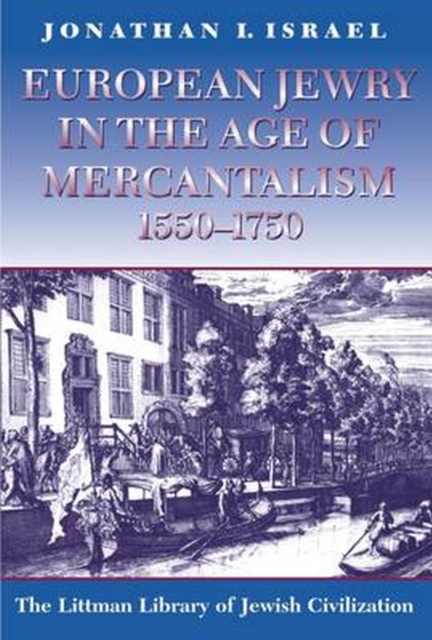
European Jewry in the Age of Mercantilism, 1550-1750
This survey history of Jewish life and culture in early modern Europe is the first to focus on the sixteenth and seventeenth centuries as a radically new phase in Jewish history. The book lays particular emphasis on the reversal of trends in western and central Europe in the late sixteenth century, which was followed by a rapid increase in Jewish numbers and activity, and far-reaching reorganization of Jewish society and institutions. A major consequence of these changes was a much expanded and more varied Jewish role in European civilization as a whole.
The first edition of this book was the joint winner of the Wolfson Literary Prize for History in 1986. For this third edition, the book has been updated and includes a new introduction.
eBook

Revolutionary ideas : an intellectual history of the French Revolution from the Rights of Man to Robespierre
The chapters in this book include: 'Revolution of the Press (1788-90)'; 'From Estates-General to National Assembly (April-June 1789)'; 'Deadlock (November 1790-July 1791)'; 'The Revolutionary Summer of 1792'; and much more.
Book
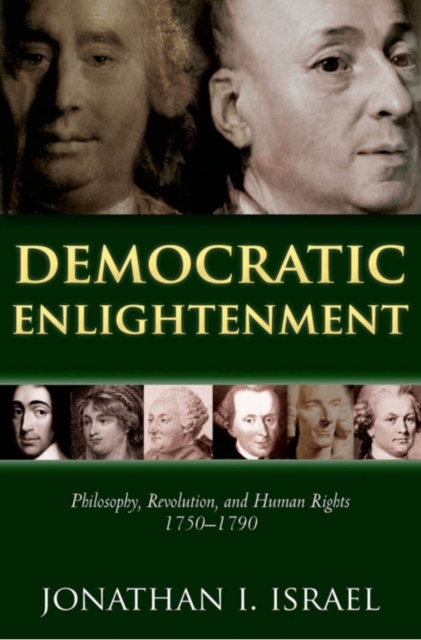
Democratic enlightenment : philosophy, revolution, and human rights 1750-1790
Jonathan Israel's radical new account of the late Enlightenment highlights forgotten currents and figures. Running counter to mainstream thinking, he demonstrates how a group of philosophe-revolutionnaires provided the intellectual powerhouse of the French Revolution, and how their ideas connect with modern Western democracy.
eBook

Beyond Imported Magic
The essays in this volume study the creation, adaptation, and use of science and technology in Latin America. They challenge the view that scientific ideas and technology travel unchanged from the global North to the global South -- the view of technology as \"imported magic.\" They describe not only alternate pathways for innovation, invention, and discovery but also how ideas and technologies circulate in Latin American contexts and transnationally. The contributors' explorations of these issues, and their examination of specific Latin American experiences with science and technology, offer a broader, more nuanced understanding of how science, technology, politics, and power interact in the past and present.The essays in this book use methods from history and the social sciences to investigate forms of local creation and use of technologies; the circulation of ideas, people, and artifacts in local and global networks; and hybrid technologies and forms of knowledge production. They address such topics as the work of female forensic geneticists in Colombia; the pioneering Argentinean use of fingerprinting technology in the late nineteenth century; the design, use, and meaning of the XO Laptops created and distributed by the One Laptop per Child Program; and the development of nuclear energy in Argentina, Mexico, and Chile.ContributorsPedro Ignacio Alonso, Morgan G. Ames, Javiera Barandiarán, João Biehl, Anita Say Chan, Amy Cox Hall, Henrique Cukierman, Ana Delgado, Rafael Dias, Adriana Díaz del Castillo H., Mariano Fressoli, Jonathan Hagood, Christina Holmes, Matthieu Hubert, Noela Invernizzi, Michael Lemon, Ivan da Costa Marques, Gisela Mateos, Eden Medina, María Fernanda Olarte Sierra, Hugo Palmarola, Tania Pérez-Bustos, Julia Rodriguez, Israel Rodríguez-Giralt, Edna Suárez Díaz, Hernán Thomas, Manuel Tironi, Dominique Vinck
eBook
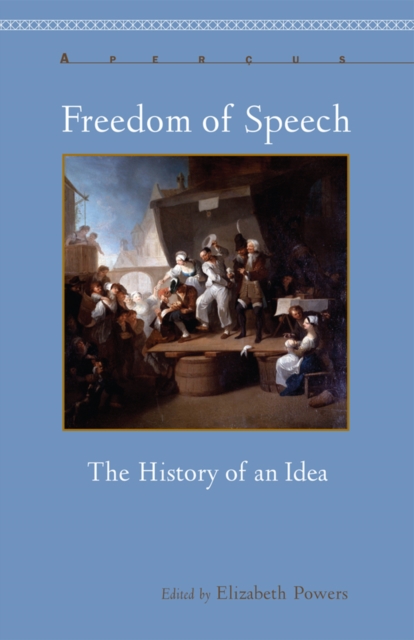
Freedom of speech
The essays in this volume portray the debates concerning freedom of speech in eighteenth-century France and Britain as well as in Austria, Denmark, Russia, and Spain and its American territories. Representing the views of both moderate and radical eighteenth-century thinkers, these essays by eminent scholars discover that twenty-fi rst-century controversies regarding the extent of permissible speech have their origins in the eighteenth century. The economic integration of Europe and its offshoots over the past three centuries into a distinctive cultural product, “the West,” has given rise to a triumphant Enlightenment narrative of universalism and tolerance that masks these divisions and the disparate national contributions to freedom of speech and other liberal rights.
eBook