
Catalogue Search | MBRL


Are you sure you want to remove the book from the shelf?

{{itemTitle}}
81
result(s) for
"Ivo Blom"
Sort by:

Picturesque Pictures: Italian Early Non-fiction Films within Modern Aesthetic Visions
Within early non-fiction film, the Italian travel or scenic films of the 1910s may be considered the most picturesque. They are remarkable for their presentation of landscapes and cityscapes, their co-existence of modernity and nostalgia, their accent on beauty – at times at the expense of geographic veracity and indexicality – and their focus on the transformed gaze through the use of special masks, split-screens, and other devices. The transmedial roots for this aestheticization can be found both in art (painting) and popular culture (postcards, magic lanterns, etc.). While the author was one of the firsts to write on this subject decades ago, today there is a need for radical revision and a deeper approach. This is due to the influx of recent literature first by Jennifer Peterson’s book Education in the School of Dreams (2013) and her scholarly articles. Secondly, Blom’s co-presentation on Italian early nonfiction at the 2018 workshop A Dive into the Collections of the Eye Filmmuseum: Italian Silent Cinema at the Intersection of the Arts led to the recognition that revision was needed. Finally, the films themselves call for new approaches while they are being preserved and disseminated by, foremost, the film archives of Bologna, Amsterdam, and Turin.
Journal Article
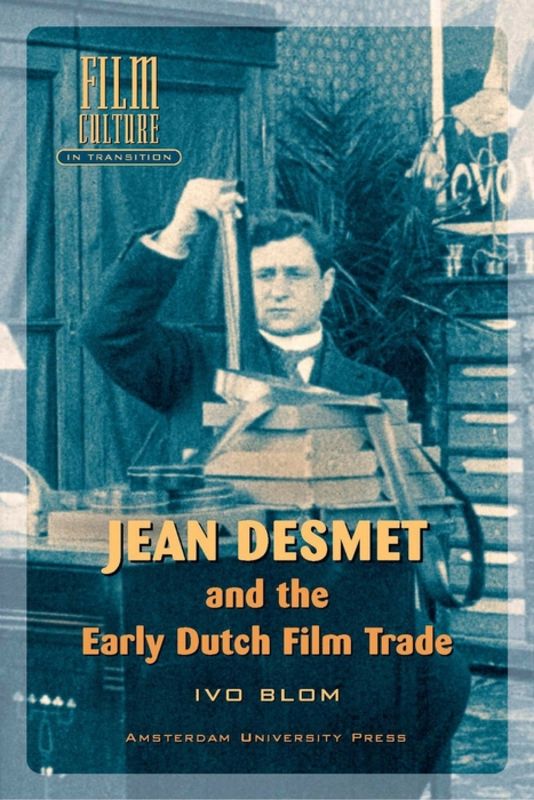
Jean Desmet and the Early Dutch Film Trade
Since 1957 the Film Museum in Amsterdam has been in possession of the Desmet Collection which contains the estate of the Dutch cinema owner and film distributor Jean Desmet (1875-1956). The collection comprises almost nine hundred European and American films in all genres, a collection of publicity material and a dauntingly large business archive. These three sources form the basis of this first comprehensive reconstruction of Desmet's career: from his nomadic beginnings as a traveling showman, working the seasonal fairgrounds of the Netherlands and Belgium, to his successful switch to permanent cinema operation and film distribution. The history of Desmet's career offers not simply an abstract of an individual character and his personal ambitions and motivations, but also epitomizes transformations in the world of cinema as an industry. Between 1907 and 1916 the world of cinema experienced radical structural change which Desmet not only witnessed but also helped to bring about. Given the insufficiencies of Dutch film production, Desmet became a link between film production abroad and film exhibition in the Netherlands. Desmet is not merely representative of the rise of the permanent movie house and the coming of the film distributor. This book shows how his fortunes also encapsulate a series of structural changes within the new culture of permanent cinema and film distribution. In film distribution these changes embraced the introduction of film rental, the advent of the long feature film, the introduction of the monopoly distribution system and the periodic transformation of the products on offer. In the business of cinema operation change involved specialization, the creation of fixed theater venues, the development of a theater hierarchy, expansions of scale, the introduction of trade journals and the gradual legitimization of cinema as a popular cultural institution. These transformations were not confined to the Netherlands but were also taking place in the rest of Europe. Indeed, they were first set in motion by other European countries, and in order fully to understand Desmet it is necessary to situate him in his larger European context. In this original and wide-ranging study Ivo Blom uses the career of Jean Desmet as a means of exploring the history of cinema from the ground-level position of film distribution and exhibition. His copiously illustrated and scrupulously documented exposition swells into an epic narrative that offers a richer, more rounded -indeed 'truer' - account of early urban cinema culture than is possible from the confined perspective of production-based film histories.
De levensloop van de Nederlandse bioscoopeigenaar en filmdistributeur Jean Desmet (1875-1956) biedt niet alleen inzicht in een excentrieke persoonlijkheid, maar staat ook model voor de veranderingen in de filmwereld als geheel. Door buitenlandse filmproducties voor vertoning naar Nederland te brengen leverde Desmet een substantiële bijdrage aan de radicale veranderingen die tussen 1907 en 1916 plaatsvonden in de filmindustrie. Het Filmmuseum in Amsterdam is sinds 1957 in het bezit van de Desmet-verzameling waarin de nalatenschap van deze excentrieke filmliefhebber bewaard is gebleven. Dit materiaal vormde het uitgangspunt van deze originele studie waarin Ivo Blom aan de hand van Desmet's levensverhaal de geschiedenis van de filmdistributie en -vertoning vertelt. Zijn rijk geïllustreerde en grondig gedocumenteerde uiteenzetting is uitgegroeid tot een episch verhaal dat - meer dan een productie-georienteerde geschiedenis - een rijk en afgerond beeld schetst van de vroege stadse filmcultuur.
eBook
Of Artists and Models. Italian Silent Cinema between Narrative Convention and Artistic Practice
The paper presents the author’s research on the representation of painters and sculptors, their models and their art works in Italian silent cinema of the 1910s and early 1920s. This research deals with both the combination of optical (painterly) vs. haptical (sculptural) cinema. It also problematizes art versus the real, as well as art conceived from cinema’s own perspective, that is within the conventions of European and American cinema. In addition to research in these filmic conventions the author compares how the theme manifests itself within different genres, such as comedy, crime and adventure films, diva films and strong men films. Examples are : Il trionfo della forza (The Triumph of Strength, 1913), La signora Fricot è gelosa (Madam Fricot is Jelous, 1913), Il fuoco (The Fire, Giovanni Pastrone, 1915), Il fauno (The Faun, Febo Mari, 1917), Il processo Clemenceau (The Clemenceau Affair, Alfredo De Antoni, 1917) and L’atleta fantasma (The Ghost Athlete, Raimondo Scotti, 1919). I will relate this pioneering study to recent studies on the representation of art and artists in Hollywood cinema, such as Katharina Sykora’s As You Desire me. Das Bildnis im Film (2003), Susan Felleman’s Art in the Cinematic Imagination (2006) and Steven Jacobs’s Framing Pictures. Film and the Visual Arts (2011), and older studies by Thomas Elsaesser, Angela Dalle Vacche, Felleman and the author.
Journal Article


Jean Desmet and the Early Dutch Film Trade. Film Culture in Transition
The career of Jean Desmet as a means of exploring the history of cinema.
eBook

Diva Intermedial
Media critics are still taken with the modernist myth of medium specificity through their emphasis on medial differences. Starting from a digital visual media perspective, however, Jay Bolter and Richard Grusin argue that the cultural significance of visual media instead lies in their tributes and references to, and their remodelling of, previous media.¹ So as photography seeks to reinterpret painting, cinema does with painting, photography, and theatre. Studies into intermediality take this one step further. In her 2005 article, ‘Intermediality, Intertextuality and Remediation: A Literary Perspective on Intermediality’, Irina Rajewsky refers to Sybille Kramer’s concent of media-recognition (Medienerkennenis), to Jens
Book Chapter

North and South: Two Early Texts about Cinema-Going by Louis Couperus
This paper reprints and puts into historical context two contrasting reports of cinema-going by the Dutch writer, dandy and Italophile, Louis Couperus. While Couperus in 1911 wrote in denigrating terms about visiting an Italian cinema, five years later he praised Italian film shows in comparison with Dutch cinema-going. The two texts indicate Couperus' strong opinions on cultural differences between northern and southern Europe, but also show how quickly ideas on movie-going changed over this time.
Journal Article