
Catalogue Search | MBRL


Are you sure you want to remove the book from the shelf?

{{itemTitle}}
77
result(s) for
"JIN, LIXIAN"
Sort by:


Diagnostic efficacy of sentinel lymph node in breast cancer under percutaneous contrast‐enhanced ultrasound: An updated meta‐analysis
Background To investigate the diagnostic efficacy of sentinel lymph nodes (SLN) in breast cancer by percutaneous contrast‐enhanced ultrasound (CEUS) through pooled analysis of relevant studies published before June 2021. Methods We conducted a systematic review and meta‐analysis of relevant studies by searching the electronic databases of PubMed, Embase, Cochrane Library, Chinese National Knowledge Infrastructure, Wanfang and VIP and the studies were screened according to their inclusion and exclusion criteria. Sensitivity (SEN), specificity (SPE), positive likelihood ratio (+LR), negative likelihood ratio (−LR) and diagnostic odds ratio (DOR) were calculated by Meta‐disc 1.4 software and the summary receiver operating characteristic (SROC) curve and area under the curve of ROC (AUC) were constructed. Results Twenty‐two publications evaluating the diagnostic efficacy of SLN in breast cancer under percutaneous CEUS were included in the meta‐analysis. The diagnostic sensitivity, specificity were 0.86 (95% CI: 0.83–0.88) and 0.89 (95% CI: 0.87–0.91) for SLN in breast cancer detected by percutaneous CEUS respectively using a random effect model. The +LR and –LR were combined in a random effect model due to significant statistical heterogeneity (p < 0.05). The pooled +LR, −LR were 7.06 (95% CI: 4.34–11.50), and 0.17 (95% CI: 0.12–0.24), respectively. The combined DOR was 53.32 (95% CI: 29.74–95.61) for SLN diagnosis in breast cancer by percutaneous CEUS under a random effect model. The AUC was 0.94 which indicated that CEUS had high diagnostic efficacy of SLN in patients with breast cancer. Conclusions CEUS is a noninvasive method for the detection SLN in patients of breast cancer with relative high prediction efficacy. The SROC was constructed by using the Moses' Model. The area under the ROC (AUC) was 0.94, which indicated that CEUS had high diagnostic efficacy of sentinel lymph node metastasis in patients with breast cancer.
Journal Article


Knowledge exchange: a review and research agenda for environmental management
There is increasing emphasis on the need for effective ways of sharing knowledge to enhance environmental management and sustainability. Knowledge exchange (KE) are processes that generate, share and/or use knowledge through various methods appropriate to the context, purpose, and participants involved. KE includes concepts such as sharing, generation, coproduction, comanagement, and brokerage of knowledge. This paper elicits the expert knowledge of academics involved in research and practice of KE from different disciplines and backgrounds to review research themes, identify gaps and questions, and develop a research agenda for furthering understanding about KE. Results include 80 research questions prefaced by a review of research themes. Key conclusions are: (1) there is a diverse range of questions relating to KE that require attention; (2) there is a particular need for research on understanding the process of KE and how KE can be evaluated; and (3) given the strong interdependency of research questions, an integrated approach to understanding KE is required. To improve understanding of KE, action research methodologies and embedding evaluation as a normal part of KE research and practice need to be encouraged. This will foster more adaptive approaches to learning about KE and enhance effectiveness of environmental management.
Journal Article

Pasireotide treatment significantly reduces tumor volume in patients with Cushing’s disease: results from a Phase 3 study
PurposeIn the multinational, randomized, double-blind, Phase 3 B2305 study of patients with Cushing’s disease (CD; ClinicalTrials.gov identifier NCT00434148), pasireotide substantially decreased urinary-free cortisol (UFC) levels, decreased mean corticotroph tumor volume, and improved clinical signs of disease. The current post hoc analysis further assesses the effects of pasireotide on corticotroph pituitary tumor volume.MethodsPatients enrolled in the B2305 study had persistent or recurrent CD or newly diagnosed CD but were not surgical candidates. Enrollees were randomized to receive subcutaneous pasireotide, either 600-μg or 900-μg twice daily. Tumor volume was assessed independently at months 6 and 12 by 2 blinded radiologists and compared with baseline value and UFC response.ResultsOf 162 patients enrolled in the trial, 53 had measurable tumor volume data and were included in the post hoc analysis. Reductions in tumor volume were both dose and time dependent. Tumor volume reduction was more frequently observed at month 6 in the 900-μg group (75%) than in the 600-μg group (44%). Similarly, at month 12 (n = 32), tumor volume reduction was observed more frequently in the 900-µg group (89%) than in the 600-µg group (50%). Control of UFC levels was not required for reduction of tumor volume. No relationship was noted between baseline tumor size and change in tumor size.ConclusionsMeasurable decreases in pituitary tumor volume were observed in a large proportion of patients with CD and measurable tumor volume who were enrolled in the trial and treated with subcutaneous pasireotide; this decrease was not correlated with UFC control.ClinicalTrials.gov identifierNCT00434148.
Journal Article

Metaphor analysis: a comparative study of Chinese pre-school children's attitude towards English learning in Shanghai and Mudanjiang
This study focuses on the experiences and feelings of pre-school children in two different regions about English learning to identify attitudinal differences in these attitudes between remote and urban areas. The research adopted the elicited metaphor analysis (EMA) to investigate the interest and preferences for English learning of 160 Chinese children, ages 4 to 6 (80 males and 80 females), in Shanghai (a major metropolitan city) and Mudanjiang (a small border city in north eastern China). The results showed that children in a remote area had a superior interest and attitude towards English learning than did their peers in an urban area. They gained perception by interacting with their surroundings and making full use of their senses and materials nearby. Moreover, children's English learning is influenced by Chinese culture and reflects local cultural characteristics. This study suggests that children should be exposed to the English language environment to obtain the core experiences for future English learning, even though the environment may not be suitable. The findings relate directly to teacher training and textbook compilation.
Journal Article
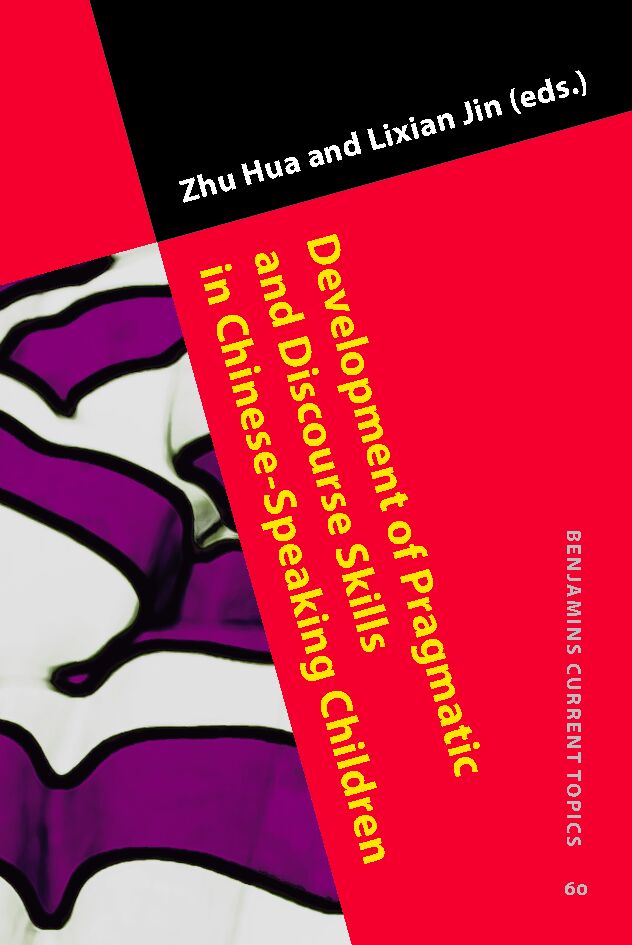
Development of Pragmatic and Discourse Skills in Chinese-Speaking Children
This chapter explores 3 to 6 year old Chinese children's comprehension of a picture storybook The Very Hungry Caterpillar. The results show: (1) Chinese children's understanding of images, actions and characters' states improves with age; (2) Children develop their understanding of images first, followed by actions and then characters' states; (3) It is easier for children to understand images prominent in pictures than those not prominent in pictures or containing culture-specific information with which children are not familiar, actions represented directly through the relationship of different images than those actions which require making a connection with preceding and following pictures, and characters' states represented by visible information such as size and colour than those less visible or age-appropriate.
eBook

Reaching for the Gold Standard: Metaphors and Good University Teachers
This article considers “good” teachers in the context of current developments in universities in China to reach a “gold standard” of considerably higher and more challenging levels of teaching and learning. We outline this context and consider concepts of good teachers in classical Chinese traditions and more recent Western thinking as a possible dialogue within and between cultures of learning. Using cognitive and cultural linguistic perspectives, we analyze metaphorical concepts of “gold” in “the gold standard” as related to teachers. We report our applied metaphor research which analyzes Chinese students’ expectations, values and beliefs about good university language teachers; this presents a rich picture beyond developing knowledge, skills and understanding to include strong social and moral characteristics. Other aspects which recognize the complexity of “good” teachers show a student appreciation of teachers’ tireless effort, devotion and selfless sacrifice: these aspects are absent in many discussions of good teachers. The participant-centered picture from elicited metaphor analysis is part of students’ “cultures of learning,” but this should be developed culturally for the gold standard through further teacher development and student engagement. In line with interaction in cultures of learning, we indicate some classroom ways to extend students’ thinking through scaffolding teacher-student interaction based on textbook activities.
Journal Article

Nivolumab plus ipilimumab versus nivolumab in microsatellite instability-high metastatic colorectal cancer (CheckMate 8HW): a randomised, open-label, phase 3 trial
CheckMate 8HW prespecified dual primary endpoints, assessed in patients with centrally confirmed microsatellite instability-high or mismatch repair-deficient status: progression-free survival with nivolumab plus ipilimumab compared with chemotherapy as first-line therapy and progression-free survival with nivolumab plus ipilimumab compared with nivolumab alone, regardless of previous systemic treatment for metastatic disease. In our previous report, nivolumab plus ipilimumab showed superior progression-free survival versus chemotherapy in first-line microsatellite instability-high or mismatch repair-deficient metastatic colorectal cancer in the CheckMate 8HW trial. Here, we report results from the prespecified interim analysis for the other primary endpoint of progression-free survival for nivolumab plus ipilimumab versus nivolumab across all treatment lines.
CheckMate 8HW is a randomised, open-label, international, phase 3 trial at 128 hospitals and cancer centres across 23 countries. Immunotherapy-naive adults with unresectable or metastatic colorectal cancer across different lines of therapy and microsatellite instability-high or mismatch repair-deficient status per local testing were randomly assigned (2:2:1) to nivolumab plus ipilimumab (nivolumab 240 mg, ipilimumab 1 mg/kg, every 3 weeks for four doses; then nivolumab 480 mg every 4 weeks; all intravenously), nivolumab (240 mg every 2 weeks for six doses, then 480 mg every 4 weeks; all intravenously), or chemotherapy with or without targeted therapies. The dual independent primary endpoints were progression-free survival by blinded independent central review with nivolumab plus ipilimumab versus chemotherapy (first line) and progression-free survival by blinded independent central review with nivolumab plus ipilimumab versus nivolumab (all lines) in patients with centrally confirmed microsatellite instability-high or mismatch repair-deficient metastatic colorectal cancer. This study is registered with ClinicalTrials.gov (NCT04008030).
Between Aug 16, 2019, and April 10, 2023, 707 patients were randomly assigned to nivolumab plus ipilimumab (n=354) or nivolumab alone (n=353). 296 (84%) of 354 patients in the nivolumab plus ipilimumab group and 286 (81%) of 353 patients in the nivolumab group were centrally confirmed to have microsatellite instability-high or mismatch repair-deficient status. At the data cutoff on Aug 28, 2024, median follow-up (from randomisation to data cutoff) was 47·0 months (IQR 38·4 to 53·2). Nivolumab plus ipilimumab treatment showed significant and clinically meaningful improvement in progression-free survival versus nivolumab (hazard ratio 0·62, 95% CI 0·48–0·81; p=0·0003). Median progression-free survival was not reached with nivolumab plus ipilimumab (95% CI 53·8 to not estimable) and was 39·3 months with nivolumab (22·1 to not estimable). Treatment-related adverse events of any grade occurred in 285 (81%) of 352 patients receiving nivolumab plus ipilimumab and in 249 (71%) of 351 patients receiving nivolumab; grade 3 or 4 treatment-related adverse events occurred in 78 (22%) and 50 (14%) patients, respectively. There were three treatment-related deaths: one event of myocarditis and pneumonitis each in the nivolumab plus ipilimumab group and one pneumonitis event in the nivolumab group.
Nivolumab plus ipilimumab showed superior progression-free survival versus nivolumab across all treatment lines, with a manageable safety profile, in patients with microsatellite instability-high or mismatch repair-deficient metastatic colorectal cancer. These results, together with the first-line results of superior progression-free survival with nivolumab plus ipilimumab versus chemotherapy, suggest nivolumab plus ipilimumab as a potential new standard of care for patients with microsatellite instability-high or mismatch repair-deficient metastatic colorectal cancer.
Bristol Myers Squibb and Ono Pharmaceutical.
Journal Article

The Doctoral Viva: Questions for, with and to Candidates (or supervisors)
This paper presents questions within a consideration of the nature of doctoral viva examinations from an international viewpoint. We argue that preparation for the viva should begin early - certainly not just immediately after the thesis submission. Key viva questions can be used in a preparatory process with supervisors over time to develop candidates’ thesis thinking and research capability. The paper gives guidance and advice for candidates (and for supervisors to help candidates) about how to prepare practically for the viva. More importantly this should help them to enter the mindset of examiners. This enables candidates to enter fully into discussion of a thesis confidently and enthusiastically, to share their research thinking in a focussed manner which takes broad issues into account. In a detailed Appendix, we share a repertoire of 60 examples of generic viva questions which are commonly asked in many international contexts, together with guidance about answers in brackets. Using these iteratively with supervisor help, candidates are encouraged to generate their own specific questions as part of a formative research process. Viva preparation guided by key questions can begin early as an inherent part of the research-and-writing process: questions are first for candidates, then developed with candidates, and then finally in a viva put to candidates. The questions are a framework for supervisors, too, who are often examiners themselves.
Journal Article