
Catalogue Search | MBRL


Are you sure you want to remove the book from the shelf?

{{itemTitle}}
2,442
result(s) for
"JUST, I"
Sort by:

أنا لا أحب مجرد سماع كلمة لا !
\"لا\" هي أكثر كلمة لا يحبها سالم وهو يحاول جاهدا أن يقنع أباه وأمه ومعلمته ليحولوا \"لا\" إلى ربما، أو سنرى وعلى الرغم من أنه لا ينجح في إقناعهم، فإنه لا يكف عن مجادلتهم حتى جاء اليوم الذي اقترحت فيه المعلمة على سالم أن يحاول الانضمام إلى نادي قل \"نعم\" لكلمة \"لا\"، إذا استطاع سالم أن يتعلم كيف صحيح فإنه يستطيع أن يضيف اسمه إلى لوحة النجوم في النادي، حين طبق يتقبل كلمة \"لا\" كجواب وكيف يعبر عن اختلافه مع أبيه وأمه ومعلمته بشكل سالم هذه المهارات تطبيقا صحيحا حصل على جوائز وعلى الكثير من المديح، فيبدو أنه بدأ يحب كلمة \"لا\"
Book


Je suis Super Nino !
Un beau matin, Nino trouve un masque qui lui donne de formidables pouvoirs. Il a très hâte de se lancer dans l'action! Mais personne ne le laisse mettre en pratique toutes les super idées qu'il a en tête. À la place, tout le monde lui dit des choses comme range ta vaisselle, habille-toi. Fais attention. Est-ce que Nino aura enfin la chance de montrer à quel point il peur être super ?Quatrième de couverture.
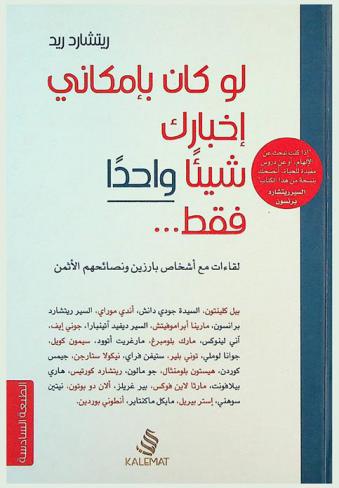
لو كان بإمكاني إخبارك شيئا واحدا فقط : لقاءات مع أشخاص بارزين ونصائحهم الأثمن
يمكن لنصيحة واحدة أن تبدل حياة ، وقد غيرت دنياي في غفيرة مناسبات. وعلى نطاق سنين اكتسبت شكرا عميقا للتعلم من الناس الأكثر حكمة وخبرة مني. لذلك قبل عشر سنين قطعت وعدا متواضعا على نفسي: متى ما قابلت واحدا بارزا سأطلب منه تقديم أجدر نصيحة عنده. ويظهر المسألة مستديما أحسن بالاهتمام من دعوة سيلفي إذا كان بإمكاني إخبارك بشيء فرد لاغي يجتاز عبر كامل أطياف المساعي والأحاسيس الإنسانية.
BOOK

Synovial tissue research: a state-of-the-art review
Key Points
Synovial tissue is the target tissue for autoimmune arthritides such as rheumatoid arthritis.
Synovial biopsy is a safe and well-tolerated procedure that is becoming more widely available.
There is a significant body of work from the past 30 years analysing the cellular and molecular changes in synovial tissue from patients with rheumatoid arthritis to identify specific biomarkers.
Technological advances in molecular and cellular analysis now provide new opportunities for defining new biomarkers and targets.
Advances in synovial tissue research have improved our understanding of inflammatory arthritides, particularly rheumatoid arthritis, and have identified potential biomarkers that could be used for diagnosis, disease stratification, and predicting disease course and treatment response.
The synovium is the major target tissue of inflammatory arthritides such as rheumatoid arthritis. The study of synovial tissue has advanced considerably throughout the past few decades from arthroplasty and blind needle biopsy to the use of arthroscopic and ultrasonographic technologies that enable easier visualization and improve the reliability of synovial biopsies. Rapid progress has been made in using synovial tissue to study disease pathogenesis, to stratify patients, to discover biomarkers and novel targets, and to validate therapies, and this progress has been facilitated by increasingly diverse and sophisticated analytical and technological approaches. In this Review, we describe these approaches, and summarize how their use in synovial tissue research has improved our understanding of rheumatoid arthritis and identified candidate biomarkers that could be used in disease diagnosis and stratification, as well as in predicting disease course and treatment response.
Journal Article
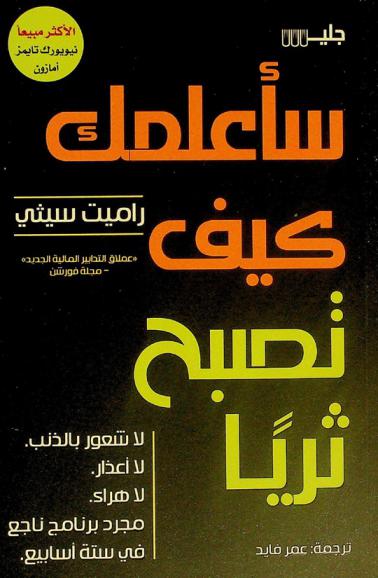
سأعلمك كيف تصبح ثريا : لا شعور بالذنب ولا أعذار ولا هراء، مجرد برنامج ناجع في ستة أسابيع
هو كتاب تفاعلي تم تصميم كل صفحة فيه للتأمل الذاتي والحلم والعصف الذهني الإبداعي. يوضح لك سيثي كيفية إعادة برمجة معتقداتك المالية من خلال التشكيك في الأساطير والعبارات المبتذلة - على سبيل المثال، \"اشترِ، لا تستأجر\" والتي قد لا تكون \"إن هذا الكتاب هو كتاب رائع. فهو يساعدك على فهم حياتك الغنية. تعلم كيف تصمم حياة غنية بناء على ما يسميه \"مقاييس المال\" فئات الإنفاق، مثل السفر، والراحة، والمكانة الاجتماعية، أو تحسين الذات-وكيفية التخطيط وفقا لذلك. هناك إرشادات توضح لك كيف تكون أكثر ثقة في المال والتحديات الفردية لجعل حياتك الغنية حقيقة يومية.
Book

Glucosylation of Rho proteins by Clostridium difficile toxin B
Toxin A and B, the major virulence factors of Clostridium difficile, are the causative agents of antibiotic-associated pseudomembranous colitis. In cultured cell lines their potent cytotoxicity results from their ability to induce disaggregation of the microfilament cytoskeleton. Toxin B acts on the low-molecular-mass GTPase RhoA, which is involved in the regulation of the actin cytosheleton. We report here that toxin B catalyses the incorporation of up to one mole of glucose per mole of RhoA at the amino acid threonine at position 37. The modification was identified and localized by tandem electrospray mass spectrometry. UDP-glucose selectively serves as cosubstrate for the monoglucosylation reaction catalysed by toxin B. Microinjection of RhoA previously glucosylated by toxin B into monolayer cells caused disaggregation of actin filaments, indicating a dominant-negative activity of glucosylated RhoA.
Journal Article

Supplementation-Induced Change in Muscle Carnosine is Paralleled by Changes in Muscle Metabolism, Protein Glycation and Reactive Carbonyl Species Sequestering
Carnosine is a performance-enhancing food supplement with a potential to modulate muscle energy metabolism and toxic metabolites disposal. In this study we explored interrelations between carnosine supplementation (2 g/day, 12 weeks) induced effects on carnosine muscle loading and parallel changes in (i) muscle energy metabolism, (ii) serum albumin glycation and (iii) reactive carbonyl species sequestering in twelve (M/F=10/2) sedentary, overweight-to-obese (BMI: 30.0±2.7 kg/m2) adults (40.1±6.2 years). Muscle carnosine concentration (Proton Magnetic Resonance Spectroscopy; 1H-MRS), dynamics of muscle energy metabolism (Phosphorus Magnetic Resonance Spectroscopy; 31P-MRS), body composition (Magnetic Resonance Imaging; MRI), resting energy expenditure (indirect calorimetry), glucose tolerance (oGTT), habitual physical activity (accelerometers), serum carnosine and carnosinase-1 content/activity (ELISA), albumin glycation, urinary carnosine and carnosine-propanal concentration (mass spectrometry) were measured. Supplementation-induced increase in muscle carnosine was paralleled by improved dynamics of muscle post-exercise phosphocreatine recovery, decreased serum albumin glycation and enhanced urinary carnosine-propanal excretion (all p<0.05). Magnitude of supplementation-induced muscle carnosine accumulation was higher in individuals with lower baseline muscle carnosine, who had lower BMI, higher physical activity level, lower resting intramuscular pH, but similar muscle mass and dietary protein preference. Level of supplementation-induced increase in muscle carnosine correlated with reduction of protein glycation, increase in reactive carbonyl species sequestering, and acceleration of muscle post-exercise phosphocreatine recovery.
Journal Article

The N-terminal 34 kDa fragment of Helicobacter pylori vacuolating cytotoxin targets mitochondria and induces cytochrome c release
The pathogenic bacterium
Helicobacter pylori
produces the cytotoxin VacA, which is implicated in the genesis of gastric epithelial lesions. By transfect ing HEp‐2 cells with DNAs encoding either the N‐terminal (p34) or the C‐terminal (p58) fragment of VacA, p34 was found localized specifically to mitochondria, whereas p58 was cytosolic. Incubated
in vitro
with purified mitochondria, VacA and p34 but not p58 translocated into the mitochondria. Microinjection of DNAs encoding VacA–GFP and p34–GFP, but not GFP–VacA or GFP–p34, induced cell death by apoptosis. Transient transfection of HeLa cells with p34–GFP or VacA–GFP induced the release of cytochrome
c
from mitochondria and activated the executioner caspase 3, as determined by the cleavage of poly(ADP–ribose) polymerase (PARP). PARP cleavage was antagonized specifically by co‐transfection of DNA encoding Bcl‐2, known to block mitochondria‐dependent apoptotic signals. The relevance of these observations to the
in vivo
mechanism of VacA action was supported by the fact that purified activated VacA applied externally to cells induced cytochrome
c
release into the cytosol.
Journal Article