
Catalogue Search | MBRL


Are you sure you want to remove the book from the shelf?

{{itemTitle}}
3
result(s) for
"Jalali, Ali Ahmad, author"
Sort by:

A Military History of Afghanistan : From the Great Game to the Global War on Terror
The first comprehensive history of the last two-plus centuries of warfare and international conflict in land-locked Afghanistan, from the Anglo-Afghan wars of the 1800s through the region's early 20th-century struggles to modernize, its last monarchy (1933-1973), the Soviet Union's so-called \"Vietnam War\" in the 1980s, and America's \"War on Terror,\" which began in 2001 and continues into the present. By an insider native Afghan author whose careers have encompassed military, government, and academic service.
Book
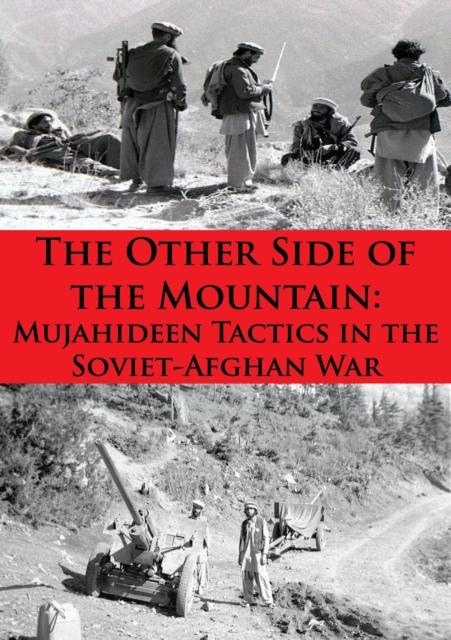
The Other Side Of The Mountain: Mujahideen Tactics In The Soviet-Afghan War Illustrated Edition
Illustrated with over a hundred maps. When the Soviet Union invaded Afghanistan in 1979, few experts believed that the fledgling Mujahideen resistance movement had a chance of withstanding the modern, mechanized, technologically-advanced Soviet Army. Most stated that resistance was futile and that the Soviet Union had deliberately expanded their empire to the south. The Soviet Union had come to stay. Although some historians looked at the British experience fighting the Afghan mountain tribesmen, most experts discounted any parallels since the Soviet Union possessed an unprecedented advantage in fire power, technology and military might. Although Arab leaders and the West supplied arms and material to the Mujahideen, they did so with the hope of creating a permanent, bleeding ulcer on the Soviet flank, not defeating the Soviet Union. They did not predict that the Soviet Union would voluntarily withdraw from Afghanistan in 1989. There have been few studies of guerrilla warfare from the guerrilla's perspective. To capture this perspective and the tactical experience of the Mujahideen, the United States Marine Corps commissioned this study and sent two retired combat veterans to interview Mujahideen. The authors were well received and generously assisted by various Mujahideen who willingly talked about their long, bitter war. The authors have produced a unique book which tells the guerrillas' story as interpreted by military professionals. This is a book about small-unit guerrilla combat. This is a book about death and survival, adaptation and perseverance.
eBook
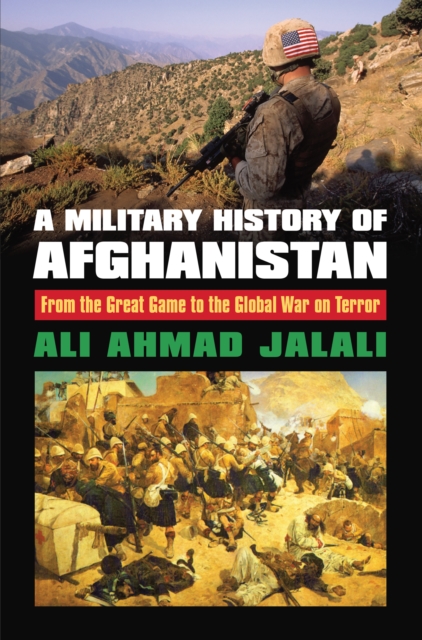
A Military History of Afghanistan
The history of Afghanistan is largely military history. From the
Persians and Greeks of antiquity to the British, Soviet, and
American powers in modern times, outsiders have led military
conquests into the mountains and plains of Afghanistan, leaving
their indelible marks on this ancient land at the juncture of
Europe, Asia, and the Middle East. In this book Ali Ahmad Jalali, a
former interior minister of Afghanistan, taps a deep understanding
of his country's distant and recent past to explore Afghanistan's
military history during the last two hundred years.
With an introductory chapter highlighting the major military
developments from early times to the foundation of the modern
Afghan state, Jalali's account focuses primarily on the era of
British conquest and Anglo-Afghan wars; the Soviet invasion; the
civil war and the rise of the Taliban; and the subsequent U.S.
invasion. Looking beyond persistent stereotypes and
generalizations-e.g., the \"graveyard of empires\"designation
emerging from the Anglo-Afghan wars of the 19th century and the
Soviet experience of the 1980s-Jalali offers a nuanced and
comprehensive portrayal of the way of war pursued by both state and
non-state actors in Afghanistan against different domestic and
foreign enemies, under changing social, political, and
technological conditions. He reveals how the structure of states,
tribes, and social communities in Afghanistan, along with the scope
of their controlled space, has shaped their modes of fighting
throughout history. In particular, his account shows how dynastic
wars and foreign conquests differ in principle, strategy, and
method from wars initiated by non-state actors including tribal and
community militias against foreign invasions or repressive
governments.
Written by a professional soldier, politician, and noted scholar
with a keen analytical grasp of his country's military and
political history, this magisterial work offers unique insight into
the military history of Afghanistan-and thus, into Afghanistan
itself.
eBook