
Catalogue Search | MBRL


Are you sure you want to remove the book from the shelf?

{{itemTitle}}
72
result(s) for
"Jawad, Haifaa"
Sort by:

Women, Islam and resistance in the Arab world
No detailed description available for \"Women, Islam, and Resistance in the Arab World\".
eBook

The Effect of Algal Extract of Spirulina Platensis, Cladophora Glomerata on Some Positive and Negative Bacterial Isolates of Gram Stain
This study examines the efficacy of the algal alcoholic extract isolated from Cladophora Spirulina platensis and glomerata and testing their efficacy against positive bacteria of Gram stain Staphylococcus aureus and the negative bacteria for Escherichia coli and Klebislla sp. The organic solvent ethanol was used at 95%. The efficacy of the extract was tested against some strains of positive and negative bacteria of Gram stain. The results of the extract showed that the positive bacteria of Gram stain has sensitivity towards the extract higher than the negative bacteria. The highest inhibitory efficacy against Staphylococcus aureus by inhibitive diameter zone of 20 mm and less inhibitive against negative bacteria E.coli by inhibitive diameter of 16 mm.
Journal Article

Evaluation of the water quality Before and after the Al-Diwaniyah Textile Factory in Iraq
The study aimed to evaluate the quality of entering and leaving water to the textile factory in Diwaniyah and water of AL- Diwaniyah River for the period October 2017 to January 2018, Thirteen sites were selected (three sites) on AL-Diwaniyah River and (ten sites) within Al-Diwaniyah textile factory. The evaluation of water quality includes14 parameters as confirmed on spatial and temporal changes of these parameters in Thirteen sites (S1,S2,S3, S4,S5, S6,S7,S8,S9,S10,S11,S12 and S13). These Thirteen sites are divided into four groups, the first group (water of AL-Diwaniyah river), includes (site 1,site12 and site 13). The second group ((Water prepared for textile industries), includes (site 2 and site 3). The third group (industrial processing water), included (site 4, site 5 and site 6). The fourth group is the treatment unit (Outflow water) that includes (site 7, site 8, site 9, site 10, site 11 and site 12). site 1 (AL-Diwaniyah river water), site 2 (soft water), site 3 (boilers water), site 4 (Water for textile preparations), site 5 (completion water), site 6 (water of printing and dyeing), site 7 (water of primary collection basin), Site 8 (Waters of the sedimentation Basin), site 9 (chemical treatment water), Site 10 (Biological Treatment Ventilated Water), Site 11 (water of Filters), site 12(Final assembly basin (river basin) and site 13 (AL-Diwaniyah river water after distance from the dumping of textile industrial waste). the study includes physical tests, which include Electrical Conductivity (EC), Total Dissolved Solids(TDS), and conducting chemical tests that included pH, Total Hardness (T.H), Calcium (Ca), Magnesium (Mg), Total Alkalinity (T.A), Chlorides(Cl), Sulphates (SO4), Phosphates (PO4) and Nitrates (NO3), as well as heavy metals Chromium (Cr), Nickel (Ni) and Cobalt (Co), For 13 sites inside and outside AL- Diwaniyah textile factory and AL- Diwaniyah River. The results of physical and chemical analysis show the following means of: Electrical Conductivity (2277.75 μs /cm in site 13 to 3991.75 μs /cm in site 11)., Total Dissolved solids TDS (759.75 mg / l in site 2 to 1790.75 mg / l in site 11)., pH (7.94 at site 2 to 9.29 at site 4), Total Hardness (313.25 mg / L at site 1 to 574mg / L at site 9), Calcium (166.25 mg / L at site 1 to 375 mg / L at site 9), Magnesium (21.23 mg / L at site 11 to 70.63 mg / L at site 8), Total Alkalinity (288.75 mg/ l at site 5 to 596.25 mg/ L at site 10), Chlorides (174.75 mg / L at site 2 to 483.5 mg / L at site 4), Sulphate (363 mg / L at site 2 to 521.75 mg / L at site 1). Phosphate (0.29 μg/l at site 3 to 1.315 μg /l at site 6)., Nitrate (21.6 μg /l at site 3 to 37.05 μg /l at site 11) The highest mean of Cr, Ni and Co were (0.145, 0.1745, 0.043 mg / L) at site 9 and the lowest mean of Cr, Ni and Co were (0.00125, 0,061475 mg / L) at site 2 and 13, respectively but CO were (N.D) at site1, 2 and 3. The water quality index values of the water inside and outgoing water from AL- Diwaniyah textile factory generally ranged from (fair to marginal). where the sites located on AL- Diwaniya River (group 1), the site 1 and site 13 got on (fair) were (69.20,67.93), respectively while site 12 got on (marginal) was (51.41)., While sites within the factory (group 2,3 and 4) from (site 2 to site 12) lowest value was (47.82) at site 4 and the highest value was (64.47) at site 2 so the water quality in these sites were (marginal).
Journal Article
Towards Building a British Islam
Despite the current negative image of Islam in Europe there has been a steady growth of converts to Islam over the past few decades.British converts are a highly diverse group, with different social, economic and educational backgrounds.
eBook
Muslim Women and Sport
Examining the global experiences, challenges and achievements of Muslim women participating in physical activities and sport, this important new study makes a profound contribution to our understanding of both contemporary Islam and the complexity and diversity of women’s lives in the modern world.
The book presents an overview of current research into constructs of gender, the role of religion and the importance of situation, and looks closely at what Islam has to say about women’s participation in sport and what Muslim women themselves have to say about their participation in sport. It highlights the challenges and opportunities for women in sport in both Muslim and non-Muslim countries, utilizing a series of extensive case-studies in various countries which invite the readers to conduct cross-cultural comparisons. Material on Iraq, Palestine and Bosnia and Herzegovina provides rare insights into the impact of war on sporting activities for women. The book also seeks to make important recommendations for improving access to sport for girls and women from Muslim communities.
Muslim Women and Sport confronts many deeply held stereotypes and crosses those commonly quoted boundaries between ‘Islam and the West’ and between ‘East and West’. It makes fascinating reading for anyone with an interest in the interrelationships between sport, religion, gender, culture and policy.
Tansin Benn is an Associate Professor in the School of Education, University of Birmingham, UK.
Gertrud Pfister is Professor in the Department of Exercise and Sport Sciences, University of Copenhagen, Denmark.
Haifaa Jawad is Senior Lecturer in Islamic and Middle Eastern Studies, Department of Theology and Religion, University of Birmingham, UK.
Introduction – Muslim Women and Sport Part 1: Underlying Contexts 1. The Values of Physical Activity, Sport and Physical Education in the Lives of Young Women 2. Islam, Women and Sport 3. Muslim Women and Sport in Diasporas: Theories, Discourses and Practices – Analyzing the Case of Denmark Part 2: National Perspectives 4. Women in Sports Leadership in Bahrain 5. \"Balancing between the cultures …\" – Sports and Physical Activities of Muslim Girls and Women in Germany 6. Physical Activities and Sport for Women in Iran 7. The Sultanate of Oman and the Position of Girls and Women in Physical 8. Women and Sport in Syria 9. Struggling for Empowerment – Sport Participation of Women and Girls in Turkey Part 3: Case Studies 10. Palestinian Women’s National Football Team Aims High – Case Study to Explore the Interaction of Religion, Culture, Politics and Sports 11. Challenges Facing South African Muslim Secondary School Girls’ Participation in Physical Activities, Physical Education and Sport. 12. Religion and the State – The Story of a Turkish Elite Athlete 13. A Case Study on United Arab Emirates: Women, Disability and Sport Part 4: Narratives 14. Experiences of War in Bosnia and Herzegovina and the Effects on Physical Activities of Girls and Women 15. Women in Sport in North Africa: Voices of Moroccan Athletes 16. Womens’ Narratives of Sport and War in Iraq. Conclusion
eBook
Muslim women in the United Kingdom and beyond
The book explores ways in which Muslim women are portrayed, alongside their experiences of being Muslim and part of a predominantly western culture. It engages with Muslim women living predominantly in the United Kingdom, with contributions from other countries such as Australia, America and Sweden. Religious prejudice is a major theme that permeates the book, providing empirical evidence of ways in which islamophobia and visible symbols, such as the hijab, influence life experiences and perceptions of Muslim women negatively. Accounts of the impact of discrimination on life chances and opportunities are vivid. The book recounts ways in which the women cope in challenging diasporic contexts and concludes with recommendations for positive change. The text will be particularly valuable to anyone interested in issues of gender, religion and ethnicity, including students, employers, politicians and professionals.
eBook

Muslim Women in the United Kingdom and Beyond
The book explores experiences of Muslim women living predominantly in the United Kingdom, with contributions from other countries such as Australia, America and Sweden. Permeating themes include the impact of islamophobia and religious prejudice on the lives of Muslim living in diasporic situations.
eBook

A Study of School Attendance and Exclusions in Secondary Schools in England
This study explores the links between school attendance, exclusions, and subsequent academic attainment at age 16 in mainstream schools in England. For this research, school attendance is defined as school-aged children attending school regularly. School exclusion is the removal of school-aged children from school either for fixed terms or permanently. Academic attainment for this research refers to the final exam results at the end of Key Stages 2, 3, and 4. Three different approaches were used. A detailed longitudinal approach, modelling the course of one age cohort of 554,145 pupils from the National Pupil Database (NPD), through their entire schooling to the age of 16 in different analytical steps using cross-tabulations, ‘effect’ sizes, correlations, and regression models. The analysis draws on secondary data in which indicators from the NPD were included to explain the outcomes. The main outcomes were the school attendance rate, exclusion pattern, and academic attainment for Key Stage 4. A systematic review was conducted of the evidence published over the last 20 years on school attendance interventions that have targeted disadvantaged pupils. This began by rating the obtained evidence from the included studies, following a well-developed sieve to judge the quality of evidence. The subsequent descriptive analysis includes a description of the included studies. The included interventions were also described in terms of their implementation protocols and categorised into financial interventions, counselling and mentoring, out of school educational programmes, health, school reforms, parental involvement, and school engagement for the disadvantaged children. Following this, the evidence obtained from these studies was complemented through semi-structured interviews with 10 primary and secondary school teachers that have lengthy experience of dealing with school attendance challenges. The robust analysis of the NPD showed that eligibility for Free School Meals (FSM), a measure of poverty, is the main predictor of school attendance, exclusions, and academic attainment. Prior academic attainment (KS2 and KS3 Maths and English attainment) are more strongly associated with academic attainment at KS4 (GCSEs results) than school attendance. The interview results confirmed this finding. The review results suggest that financial interventions that support parents of disadvantaged children with regular stipends could promote school attendance among the disadvantaged. The findings of this study entail a number of implications for policy and practice. Addressing the needs of disadvantaged groups of pupils through effective interventions, including regular cash payments to parents or carers, could promote the school attendance of these pupils and inspire their families to become more engaged with their children’s education, thereby enhancing their academic attainment. In terms of school exclusions, the current school data seems ineffective in illustrating the issue of school exclusions. Therefore, school exclusions data should be developed in a way that enables researchers to investigate the possible gaps in how schools conceive and implement exclusions.
Dissertation
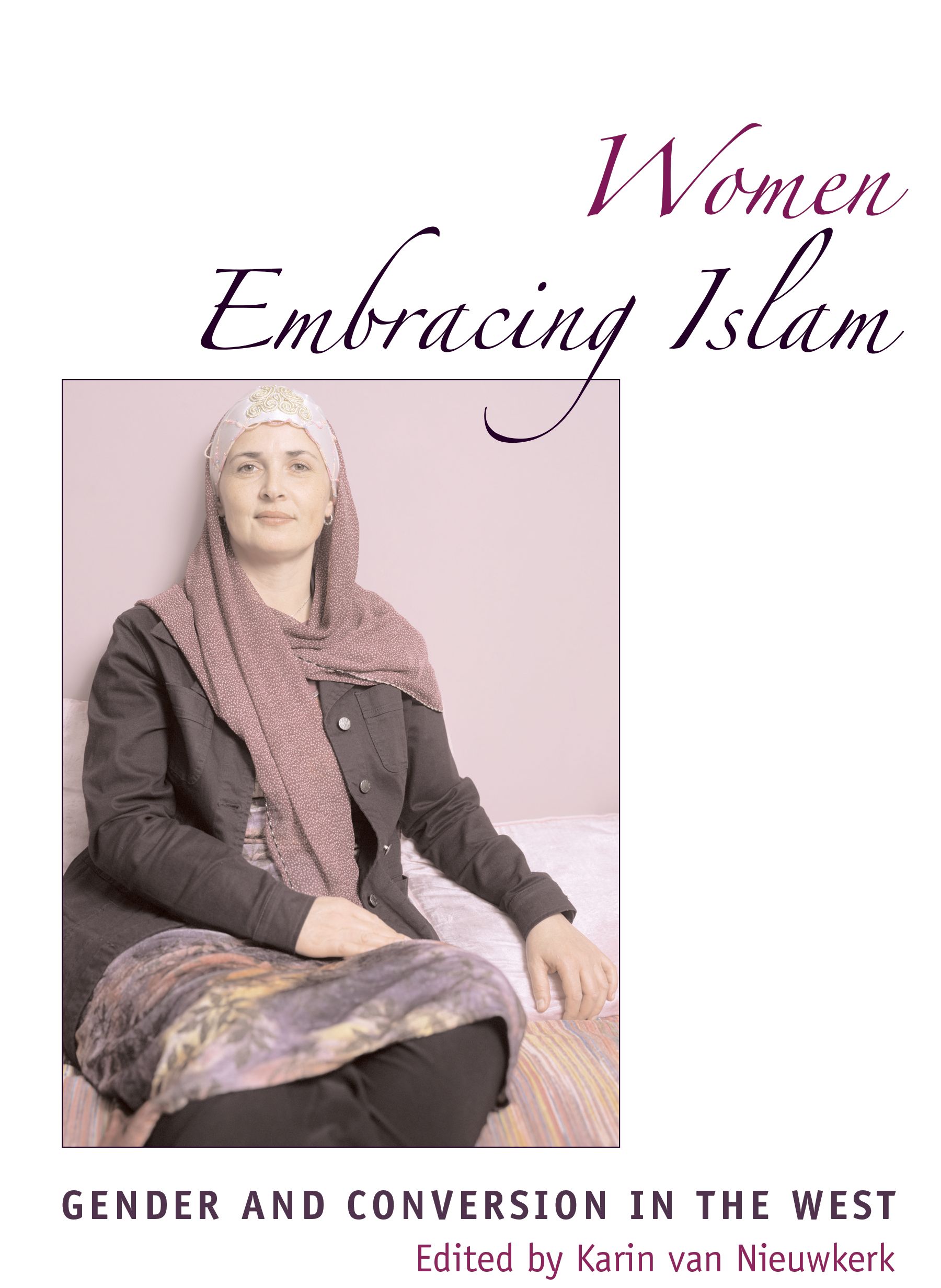
Women Embracing Islam
Many Westerners view Islam as a religion that restricts and subordinates women in both private and public life. Yet a surprising number of women in Western Europe and America are converting to Islam. What attracts these women to a belief system that is markedly different from both Western Christianity and Western secularism? What benefits do they gain by converting, and what are the costs? How do Western women converts live their new Islamic faith, and how does their conversion affect their families and communities? How do women converts transmit Islamic values to their children? These are some of the questions that Women Embracing Islam seeks to answer. In this vanguard study of gender and conversion to Islam, leading historians, sociologists, anthropologists, and theologians investigate why non-Muslim women in the United States, several European countries, and South Africa are converting to Islam. Drawing on extensive interviews with female converts, the authors explore the life experiences that lead Western women to adopt Islam, as well as the appeal that various forms of Islam, as well as the Nation of Islam, have for women. The authors find that while no single set of factors can explain why Western women are embracing Islamic faith traditions, some common motivations emerge. These include an attraction to Islam's high regard for family and community, its strict moral and ethical standards, and the rationality and spirituality of its theology, as well as a disillusionment with Christianity and with the unrestrained sexuality of so much of Western culture.
eBook