
Catalogue Search | MBRL


Are you sure you want to remove the book from the shelf?

{{itemTitle}}
12,632
result(s) for
"Jenkins, Mark"
Sort by:

National Geographic 125 years : legendary photographs, adventures, and discoveries that changed the world
\"Featuring show-stopping imagery and thrilling behind-the-scenes tales, National Geographic 125 Years captures the heart of National Geographic's fascinating history, from its earliest days as a scientific club to its growth into one of the world's largest geographic organizations. The book reveals how much we've come to know about our fascinating world through the pages and unforgettable imagery of National Geographic, and taps key voices from the forefront of ocean and space exploration, climate science, archaeology, mountaineering, and many other disciplines to peer with us over the horizon and see where we are heading in the future. Organized thematically, chapters focus on major accomplishments in each of the three realms of Earth, Sea, and Sky (featured on the National Geographic flag). Author Mark Collins Jenkins will present the subject matter chronologically, focusing on great leaps forward that dramatically changed our understanding of the planet, from summiting Everest to landing on the moon to discovering Titanic. Sidebars will feature famous names including Jared Diamond, Sylvia Earle, Buzz Aldrin, Bob Ballard, Jane Goodall and more, contributing thoughts about big questions of exploration, key frontiers in research, and enduring mysteries. We'll ask beloved characters like Zahi Hawass whether or not there's anything left to be discovered in the Valley of the Kings; Paul Sereno if we'll be able to create a dinosaur from DNA; Jared Diamond when society faces the next \"collapse;\" and many more questions designed to be relevant for many years to come. The focus throughout the book will be on the impact the National Geographic Society has made on the world and how it has reported and reflected a dramatically changing planet, not an insider's account of internal affairs. Special galleries between each of the sections will focus on storytelling techniques pioneered by National Geographic, including photography, television, and digital reportage. These will offer behind-the-scenes glimpses at the process of telling the greatest stories on earth\"-- Provided by publisher.
Book

Temporal changes in cecal luminal and mucosal microbiota of broiler chickens with clinical coccidiosis (Eimeria maxima)
Coccidiosis is a gastrointestinal disease caused by Eimeria parasites which leads to major economic losses in the poultry industry worldwide. Eimeria infection may alter the gut microbiota, which has been associated with chicken health and performance. This study aimed to determine the effects of Eimeria maxima infection on the luminal and mucosal microbiota of the cecum (CeL and CeM) at multiple time points post-infection (days 3, 5, 7, 10, and 14). Infection decreased Shannon diversity at d 3 ( P = 0.03), increased observed features (ASVs) at d 5 ( P < 0.01), and increased Shannon diversity at d 10 ( P = 0.04) in the CeL microbiota compared to the control. In CeM microbiota, infection increased observed features at d 5 ( P = 0.03), but later decreased observed features at d 14 ( P = 0.01). Relative abundance of potential butyrate-producing bacteria such as [ Ruminococcus ] torques group in CeL and Butyricicoccus in CeM were decreased in infected birds, and some metabolic pathways related to butyrate production were predicted to be decreased. These findings show E. maxima may affect cecal microbiota alpha diversity in a time-dependent manner and reduce abundance of bacteria potentially important to gut health.
Journal Article

Engaging change : a people-centred approach to business transformation
\"Any significant organizational level change initiative is dependent on the engagement of the people working in that organization. Without engagement, change will falter and ultimately fail. Engaging Change goes behind the scenes of change management to help managers, consultants and practitioners understand why some things work and why others don't. Engaging Change addresses current challenges such as how to understand the environmental context driving the need for change; how to initiate and sustain momentum throughout the change programme; how to institutionalize structural and behavioural change; and how to create compelling visions. With case studies from Sony, Nestlâe, Redcats (who own La Redoute, for example) and the British Army, the text provides practice-based insights into the realities of leading sustainable change\"-- Provided by publisher.
Book
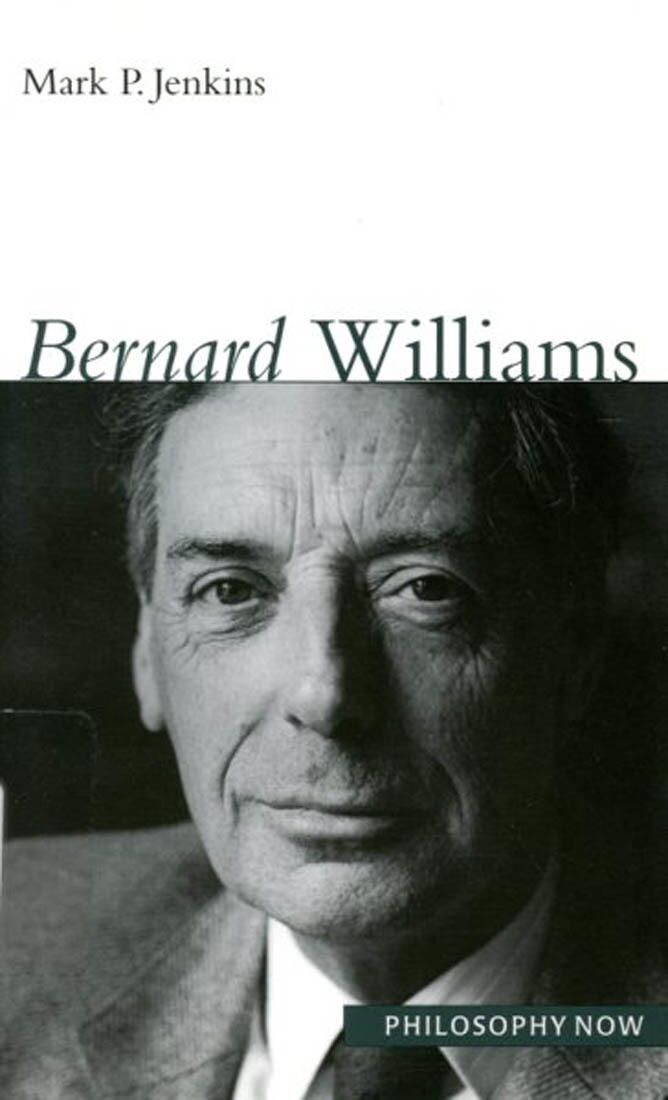
Bernard Williams
From his earliest work - on personal identity - to his last - on the value of truthfulness - Bernard Williams' ideas and arguments have been sometimes controversial, often influential, and always worth studying. Mark Jenkins provides a comprehensive account of Williams' many significant contributions to contemporary philosophy and his relation to the work of other philosophers, including prominent forerunners such as Hume and Nietzsche and contemporary thinkers such as, Nagel, McDowell, MacIntyre, and Taylor. Topics considered include personal identity, various critiques of moral theory, practical reasoning and moral motivation, truth and objectivity, and the relevance of ancient Greece to modern life. While Williams' work is fragmentary and resistant to familiar labels, Jenkins reveals the recurring themes and connections within his writings, and the philosophical underpinnings to his work.
eBook


A ballistic graphene superconducting microwave circuit
Josephson junctions (JJ) are a fundamental component of microwave quantum circuits, such as tunable cavities, qubits, and parametric amplifiers. Recently developed encapsulated graphene JJs, with supercurrents extending over micron distance scales, have exciting potential applications as a new building block for quantum circuits. Despite this, the microwave performance of this technology has not been explored. Here, we demonstrate a microwave circuit based on a ballistic graphene JJ embedded in a superconducting cavity. We directly observe a gate-tunable Josephson inductance through the resonance frequency of the device and, using a detailed RF model, we extract this inductance quantitatively. We also observe the microwave losses of the device, and translate this into sub-gap resistances of the junction at μeV energy scales, not accessible in DC measurements. The microwave performance we observe here suggests that graphene Josephson junctions are a feasible platform for implementing coherent quantum circuits.
Encapsulated graphene Josephson junctions are promising for microwave quantum circuits but so far haven’t been explored. Here, Schmidt and Jenkins et al. observe a gate-tunable Josephson inductance in a microwave circuit based on a ballistic graphene Josephson junction embedded in a superconducting cavity.
Journal Article

Dynamically expressed genes provide candidate viability biomarkers in a model coccidian
Eimeria parasites cause enteric disease in livestock and the closely related Cyclospora cayetanensis causes human disease. Oocysts of these coccidian parasites undergo maturation (sporulation) before becoming infectious. Here, we assessed transcription in maturing oocysts of Eimeria acervulina , a widespread chicken parasite, predicted gene functions, and determined which of these genes also occur in C . cayetanensis . RNA-Sequencing yielded ~2 billion paired-end reads, 92% of which mapped to the E . acervulina genome. The ~6,900 annotated genes underwent temporally-coordinated patterns of gene expression. Fifty-three genes each contributed >1,000 transcripts per million (TPM) throughout the study interval, including cation-transporting ATPases, an oocyst wall protein, a palmitoyltransferase, membrane proteins, and hypothetical proteins. These genes were enriched for 285 gene ontology (GO) terms and 13 genes were ascribed to 17 KEGG pathways, defining housekeeping processes and functions important throughout sporulation. Expression differed in mature and immature oocysts for 40% (2,928) of all genes; of these, nearly two-thirds (1,843) increased their expression over time. Eight genes expressed most in immature oocysts, encoding proteins promoting oocyst maturation and development, were assigned to 37 GO terms and 5 KEGG pathways. Fifty-six genes underwent significant upregulation in mature oocysts, each contributing at least 1,000 TPM. Of these, 40 were annotated by 215 GO assignments and 9 were associated with 18 KEGG pathways, encoding products involved in respiration, carbon fixation, energy utilization, invasion, motility, and stress and detoxification responses. Sporulation orchestrates coordinated changes in the expression of many genes, most especially those governing metabolic activity. Establishing the long-term fate of these transcripts in sporulated oocysts and in senescent and deceased oocysts will further elucidate the biology of coccidian development, and may provide tools to assay infectiousness of parasite cohorts. Moreover, because many of these genes have homologues in C . cayetanensis , they may prove useful as biomarkers for risk.
Journal Article

Underwhere
\"Welcome to the world of Jacob Cody, a boy with a huge imagination. After moving into his grandpa's house following his passing, Jake discovers a secret treasure map Grandpa left just for him--a guide to an incredible new world of fun and adventure, a place anyone with dreams and imagination can visit. Come along on the lighthearted exploration of this strange and awesome place, filled with new friends and thrills, all in the magical world of Underwhere\"--ONIX annotation.
Book

Observation and stabilization of photonic Fock states in a hot radio-frequency resonator
Detecting weak radio-frequency electromagnetic fields plays a crucial role in a wide range of fields, from radio astronomy to nuclear magnetic resonance imaging. In quantum optics, the ultimate limit of a weak field is a single photon. Detecting and manipulating single photons at megahertz frequencies presents a challenge because, even at cryogenic temperatures, thermal fluctuations are appreciable. Using a gigahertz superconducting qubit, we observed the quantization of a megahertz radio-frequency resonator, cooled it to the ground state, and stabilized Fock states. Releasing the resonator from our control, we observed its rethermalization with nanosecond resolution. Extending circuit quantum electrodynamics to the megahertz regime, we have enabled the exploration of thermodynamics at the quantum scale and allowed interfacing quantum circuits with megahertz systems such as spin systems or macroscopic mechanical oscillators.
Journal Article