
Catalogue Search | MBRL


Are you sure you want to remove the book from the shelf?

{{itemTitle}}
67
result(s) for
"Jensen, Frances E."
Sort by:
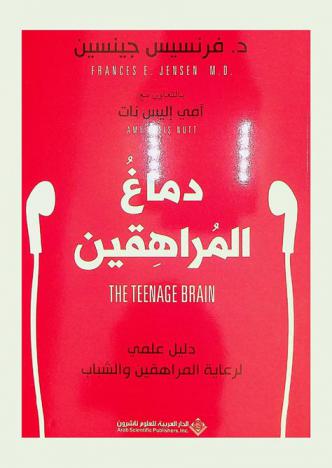
دماغ المراهقين : دليل علمي لرعاية المراهقين والشباب
تقدم طبيبة الأعصاب المشهود لها دوليا د. فرنسيس جينسين أفكارا ثورية حول علم عقل المراهق، عارضة رؤيا متبصرة تترجم إلى نصائح عملية للأهل والمراهقين. عبر جهد دؤوب قادت المؤلفة فرضيات إلى أن الدماغ يصل إلى كامل نموه تقريبا مع وصول الطفل إلى صف الحضانة ؛ رغم أن العلماء اعتقدوا لسنين طويلة أن دماغ المراهق هو دماغ إنسان بالغ ولكن من دون خبرة. وقد توضح للهيئات العلمية خلال العقد الماضي أن سنوات المراهقة تحتضن مراحل هامة وحساسة في تطور الدماغ. مدفوعة بخبرتها الشخصية في تربيتها لمراهقين، جمعت المؤلفة ما تم اكتشافه حول آلية عمل دماغ المراهق وتشعباته واستيعابه، لتبين في هذا الكتاب المبسط كيف يمكن لهذه الاكتشافات التنويرية أن تبدد الاعتقادات السائدة حول سني المراهقة، إلى جانب تقديمها اقتراحات عملية تساعد الأهل والمراهقين في تفهم عالم بيولوجيا أعصاب المراهقين الخفي.
Book

Bumetanide Enhances Phenobarbital Efficacy in a Rat Model of Hypoxic Neonatal Seizures
Neonatal seizures can be refractory to conventional anticonvulsants, and this may in part be due to a developmental increase in expression of the neuronal Na(+)-K(+)-2 Cl(-) cotransporter, NKCC1, and consequent paradoxical excitatory actions of GABAA receptors in the perinatal period. The most common cause of neonatal seizures is hypoxic encephalopathy, and here we show in an established model of neonatal hypoxia-induced seizures that the NKCC1 inhibitor, bumetanide, in combination with phenobarbital is significantly more effective than phenobarbital alone. A sensitive mass spectrometry assay revealed that bumetanide concentrations in serum and brain were dose-dependent, and the expression of NKCC1 protein transiently increased in cortex and hippocampus after hypoxic seizures. Importantly, the low doses of phenobarbital and bumetanide used in the study did not increase constitutive apoptosis, alone or in combination. Perforated patch clamp recordings from ex vivo hippocampal slices removed following seizures revealed that phenobarbital and bumetanide largely reversed seizure-induced changes in EGABA. Taken together, these data provide preclinical support for clinical trials of bumetanide in human neonates at risk for hypoxic encephalopathy and seizures.
Journal Article

Rasmussen's encephalitis: clinical features, pathobiology, and treatment advances
Rasmussen's encephalitis is a rare chronic neurological disorder, characterised by unilateral inflammation of the cerebral cortex, drug-resistant epilepsy, and progressive neurological and cognitive deterioration. Neuropathological and immunological studies support the notion that Rasmussen's encephalitis is probably driven by a T-cell response to one or more antigenic epitopes, with potential additional contribution by autoantibodies. Careful analysis of the association between histopathology and clinical presentation suggests that initial damage to the brain is mediated by T cells and microglia, suggesting a window for treatment if Rasmussen's encephalitis can be diagnosed early. Advances in neuroimaging suggest that progression of the inflammatory process seen with MRI might be a good biomarker in Rasmussen's encephalitis. For many patients, families, and doctors, choosing the right time to move from medical management to surgery is a real therapeutic dilemma. Cerebral hemispherectomy remains the only cure for seizures, but there are inevitable functional compromises. Decisions of whether or when surgery should be undertaken are challenging in the absence of a dense neurological deficit, and vary by institutional experience. Further, the optimum time for surgery, to give the best language and cognitive outcome, is not yet well understood. Immunomodulatory treatments seem to slow rather than halt disease progression in Rasmussen's encephalitis, without changing the eventual outcome.
Journal Article

Opportunities and limitations of genetically modified nonhuman primate models for neuroscience research
The recently developed new genome-editing technologies, such as the CRISPR/Cas system, have opened the door for generating genetically modified nonhuman primate (NHP) models for basic neuroscience and brain disorders research. The complex circuit formation and experience-dependent refinement of the human brain are very difficult to model in vitro, and thus require use of in vivo whole-animal models. For many neurodevelopmental and psychiatric disorders, abnormal circuit formation and refinement might be at the center of their pathophysiology. Importantly, many of the critical circuits and regional cell populations implicated in higher human cognitive function and in many psychiatric disorders are not present in lower mammalian brains, while these analogous areas are replicated in NHP brains. Indeed, neuropsychiatric disorders represent a tremendous health and economic burden globally. The emerging field of genetically modified NHP models has the potential to transform our study of higher brain function and dramatically facilitate the development of effective treatment for human brain disorders. In this paper, we discuss the importance of developing such models, the infrastructure and training needed to maximize the impact of such models, and ethical standards required for using these models.
Journal Article

Bioresorbable silicon electronics for transient spatiotemporal mapping of electrical activity from the cerebral cortex
Bioresorbable silicon electronics technology offers unprecedented opportunities to deploy advanced implantable monitoring systems that eliminate risks, cost and discomfort associated with surgical extraction. Applications include postoperative monitoring and transient physiologic recording after percutaneous or minimally invasive placement of vascular, cardiac, orthopaedic, neural or other devices. We present an embodiment of these materials in both passive and actively addressed arrays of bioresorbable silicon electrodes with multiplexing capabilities, which record
in vivo
electrophysiological signals from the cortical surface and the subgaleal space. The devices detect normal physiologic and epileptiform activity, both in acute and chronic recordings. Comparative studies show sensor performance comparable to standard clinical systems and reduced tissue reactivity relative to conventional clinical electrocorticography (ECoG) electrodes. This technology offers general applicability in neural interfaces, with additional potential utility in treatment of disorders where transient monitoring and modulation of physiologic function, implant integrity and tissue recovery or regeneration are required.
Arrays of bioresorbable, highly doped silicon electrodes with multiplexing capabilities are used as electrocorticography sensors to perform
in vivo
, reliable acute and chronic recordings for up to one month before dissolving in the body.
Journal Article
The Interaction between Early Life Epilepsy and Autistic-Like Behavioral Consequences: A Role for the Mammalian Target of Rapamycin (mTOR) Pathway
Early life seizures can result in chronic epilepsy, cognitive deficits and behavioral changes such as autism, and conversely epilepsy is common in autistic children. We hypothesized that during early brain development, seizures could alter regulators of synaptic development and underlie the interaction between epilepsy and autism. The mammalian Target of Rapamycin (mTOR) modulates protein translation and is dysregulated in Tuberous Sclerosis Complex, a disorder characterized by epilepsy and autism. We used a rodent model of acute hypoxia-induced neonatal seizures that results in long term increases in neuronal excitability, seizure susceptibility, and spontaneous seizures, to determine how seizures alter mTOR Complex 1 (mTORC1) signaling. We hypothesized that seizures occurring at a developmental stage coinciding with a critical period of synaptogenesis will activate mTORC1, contributing to epileptic networks and autistic-like behavior in later life. Here we show that in the rat, baseline mTORC1 activation peaks during the first three postnatal weeks, and induction of seizures at postnatal day 10 results in further transient activation of its downstream targets phospho-4E-BP1 (Thr37/46), phospho-p70S6K (Thr389) and phospho-S6 (Ser235/236), as well as rapid induction of activity-dependent upstream signaling molecules, including BDNF, phospho-Akt (Thr308) and phospho-ERK (Thr202/Tyr204). Furthermore, treatment with the mTORC1 inhibitor rapamycin immediately before and after seizures reversed early increases in glutamatergic neurotransmission and seizure susceptibility and attenuated later life epilepsy and autistic-like behavior. Together, these findings suggest that in the developing brain the mTORC1 signaling pathway is involved in epileptogenesis and altered social behavior, and that it may be a target for development of novel therapies that eliminate the progressive effects of neonatal seizures.
Journal Article

Reversible synaptic adaptations in a subpopulation of murine hippocampal neurons following early-life seizures
Early-life seizures (ELSs) can cause permanent cognitive deficits and network hyperexcitability, but it is unclear whether ELSs induce persistent changes in specific neuronal populations and whether these changes can be targeted to mitigate network dysfunction. We used the targeted recombination of activated populations (TRAP) approach to genetically label neurons activated by kainate-induced ELSs in immature mice. The ELS-TRAPed neurons were mainly found in hippocampal CA1, remained uniquely susceptible to reactivation by later-life seizures, and displayed sustained enhancement in α-amino-3-hydroxy-5-methyl-4-isoxazolepropionic acid (AMPA) receptor-mediated (AMPAR-mediated) excitatory synaptic transmission and inward rectification. ELS-TRAPed neurons, but not non-TRAPed surrounding neurons, exhibited enduring decreases in Gria2 mRNA, responsible for encoding the GluA2 subunit of the AMPARs. This was paralleled by decreased synaptic GluA2 protein expression and heightened phosphorylated GluA2 at Ser880 in dendrites, indicative of GluA2 internalization. Consistent with increased GluA2-lacking AMPARs, ELS-TRAPed neurons showed premature silent synapse depletion, impaired long-term potentiation, and impaired long-term depression. In vivo postseizure treatment with IEM-1460, an inhibitor of GluA2-lacking AMPARs, markedly mitigated ELS-induced changes in TRAPed neurons. These findings show that enduring modifications of AMPARs occur in a subpopulation of ELS-activated neurons, contributing to synaptic dysplasticity and network hyperexcitability, but are reversible with early IEM-1460 intervention.
Journal Article
Suppression of Motor Cortical Excitability in Anesthetized Rats by Low Frequency Repetitive Transcranial Magnetic Stimulation
Repetitive transcranial magnetic stimulation (rTMS) is a widely-used method for modulating cortical excitability in humans, by mechanisms thought to involve use-dependent synaptic plasticity. For example, when low frequency rTMS (LF rTMS) is applied over the motor cortex, in humans, it predictably leads to a suppression of the motor evoked potential (MEP), presumably reflecting long-term depression (LTD) -like mechanisms. Yet how closely such rTMS effects actually match LTD is unknown. We therefore sought to (1) reproduce cortico-spinal depression by LF rTMS in rats, (2) establish a reliable animal model for rTMS effects that may enable mechanistic studies, and (3) test whether LTD-like properties are evident in the rat LF rTMS setup. Lateralized MEPs were obtained from anesthetized Long-Evans rats. To test frequency-dependence of LF rTMS, rats underwent rTMS at one of three frequencies, 0.25, 0.5, or 1 Hz. We next tested the dependence of rTMS effects on N-methyl-D-aspartate glutamate receptor (NMDAR), by application of two NMDAR antagonists. We find that 1 Hz rTMS preferentially depresses unilateral MEP in rats, and that this LTD-like effect is blocked by NMDAR antagonists. These are the first electrophysiological data showing depression of cortical excitability following LF rTMS in rats, and the first to demonstrate dependence of this form of cortical plasticity on the NMDAR. We also note that our report is the first to show that the capacity for LTD-type cortical suppression by rTMS is present under barbiturate anesthesia, suggesting that future neuromodulatory rTMS applications under anesthesia may be considered.
Journal Article

NKCC1 transporter facilitates seizures in the developing brain
During development, activation of Cl
−
-permeable GABA
A
receptors (GABA
A
-R) excites neurons as a result of elevated intracellular Cl
−
levels and a depolarized Cl
−
equilibrium potential (E
Cl
). GABA becomes inhibitory as net outward neuronal transport of Cl
−
develops in a caudal-rostral progression. In line with this caudal-rostral developmental pattern, GABAergic anticonvulsant compounds inhibit motor manifestations of neonatal seizures but not cortical seizure activity. The Na
+
-K
+
-2Cl
−
cotransporter (NKCC1) facilitates the accumulation of Cl
−
in neurons. The NKCC1 blocker bumetanide shifted E
Cl
negative in immature neurons, suppressed epileptiform activity in hippocampal slices
in vitro
and attenuated electrographic seizures in neonatal rats
in vivo
. Bumetanide had no effect in the presence of the GABA
A
-R antagonist bicuculline, nor in brain slices from NKCC1-knockout mice. NKCC1 expression level versus expression of the Cl
−
-extruding transporter (KCC2) in human and rat cortex showed that Cl
−
transport in perinatal human cortex is as immature as in the rat. Our results provide evidence that NKCC1 facilitates seizures in the developing brain and indicate that bumetanide should be useful in the treatment of neonatal seizures.
Journal Article

The challenge and promise of anti-epileptic therapy development in animal models
Translation of successful target and compound validation studies into clinically effective therapies is a major challenge, with potential for costly clinical trial failures. This situation holds true for the epilepsies—complex diseases with different causes and symptoms. Although the availability of predictive animal models has led to the development of effective antiseizure therapies that are routinely used in clinical practice, showing that translation can be successful, several important unmet therapeutic needs still exist. Available treatments do not fully control seizures in a third of patients with epilepsy, and produce substantial side-effects. No treatment can prevent the development of epilepsy in at-risk patients or cure patients with epilepsy. And no specific treatment for epilepsy-associated comorbidities exists. To meet these demands, a redesign of translational approaches is urgently needed.
Journal Article