
Catalogue Search | MBRL


Are you sure you want to remove the book from the shelf?

{{itemTitle}}
57
result(s) for
"Jernigan, Kevin"
Sort by:

Naukan ethnobotany in post-Soviet times: lost edibles and new medicinals
Background
This study focuses on health-related plant use among speakers of the critically endangered Naukan language (Inuit-Yupik-Unangan family) in the Russian Far East. The Naukan people were forced, in 1958, under Soviet consolidation, to move from their original settlement on Cape Dezhnev, leading to significant changes in spiritual worldview, subsistence, social structure, and language proficiency in the years that followed. Here, we focus on changes that elders report in their edible, medicinal, and spiritual uses of local plant species since their childhood.
Methods
The authors worked from 2014 to 2016 in the villages of Lavrentiya, Lorino, and Uelen, in the Chukotskiy district of the Chukotka autonomous region, directly adjacent to the Bering Strait. We conducted structured interviews, using an oral history approach, along with participant observation and collection of voucher specimens from the local arctic tundra. Those with Naukan names and uses represent 42 species in 25 families.
Results
Participants reported a decrease of 13% in the number of edible species that people currently harvest, from what they recall harvesting in their youth. On the other hand, the number of local species considered to be medicinal has actually increased by 225%. Current and past Naukan medicinal practices diverge in some notable ways from those of neighboring societies on the Alaskan side of the Bering Strait. Most of the spiritual significance of local plants species is remembered by only a few elders.
Conclusions
Naukan elders explained the large increase in use of medicinal plants by noting that their original concept of medicine emphasized prevention and that illnesses were often assigned a spiritual rather than physical cause. Increased integration with ethnic Russians after moving from Naukan led to the adoption not only of new plant uses, but also of an entirely different, more naturalistic way of viewing illness and treatment.
Journal Article

Diachronic and Cultural Variations in Chukchi Ethnobotany
Although the ethnoecology of the Chukchi has long been the focus of researchers, a systemic description informing the history of plant use, including local names or modes of harvesting and preparation, suitability for different ages, and different occasions, is largely lacking. C. H. Merck provided the first account of food plants at the end of the 18th century, during the Billings-Sarychev expedition, however, the first information regarding traditionally used medicinal plants was published only recently, after centuries of contact. During our 2014-2015 fieldwork, we interviewed 56 Chukchi people in the Chukotskii and Iultinskii districts of Chukotka to collect material on the most common local plants. We also gathered data on Chukchi ethnobotany from all available published sources. Slight differences were observed between maritime and reindeer Chukchi, with the former relying more on plant resources. Access limitations (e.g., algae) are reduced by exchanges between the two groups. The decline in the consumption of roots gathered from vole nests (peɬqumret) is compensated by an increase in berry harvesting (e.g., cloudberry, crowberry, bog blueberry, and lingonberry). Our results also show that the main medical uses are aimed at disease prevention, though some are borrowed from scientific pan-Russian herbal medicine popularized during the Soviet period.
Journal Article
Dietary restrictions in healing among speakers of Iquito, an endangered language of the Peruvian Amazon
Background
Ethnobotanical research was carried out with speakers of Iquito, a critically endangered Amazonian language of the Zaparoan family. The study focused on the concept of \"dieting\" (
siyan++ni
in Iquito), a practice involving prohibitions considered necessary to the healing process. These restrictions include: 1) foods and activities that can exacerbate illness, 2) environmental influences that conflict with some methods of healing (e.g. steam baths or enemas) and 3) foods and activities forbidden by the spirits of certain powerful medicinal plants. The study tested the following hypotheses: H1 - Each restriction will correlate with specific elements in illness explanatory models and H2 - Illnesses whose explanatory models have personalistic elements will show a greater number and variety of restrictions than those based on naturalistic reasoning.
Methods
The work was carried out in 2009 and 2010 in the Alto Nanay region of Peru. In structured interviews, informants gave explanatory models for illness categories, including etiologies, pathophysiologies, treatments and dietary restrictions necessary for 49 illnesses. Seventeen botanical vouchers for species said to have powerful spirits that require diets were also collected.
Results
All restrictions found correspond to some aspect of illness explanatory models. Thirty-five percent match up with specific illness etiologies, 53% correspond to particular pathophysiologies, 18% correspond with overall seriousness of the illness and 18% are only found with particular forms of treatment. Diets based on personalistic reasoning have a significantly higher average number of restrictions than those based on naturalistic reasoning.
Conclusions
Dieting plays a central role in healing among Iquito speakers. Specific prohibitions can be explained in terms of specific aspects of illness etiologies, pathophysiologies and treatments. Although the Amazonian literature contains few studies focusing on dietary proscriptions over a wide range of illnesses, some specific restrictions reported here do correspond with trends seen in other Amazonian societies, particularly those related to sympathetic reasoning and for magical and spiritual uses of plants.
Journal Article
Barking up the same tree: a comparison of ethnomedicine and canine ethnoveterinary medicine among the Aguaruna
Background
This work focuses on plant-based preparations that the Aguaruna Jivaro of Peru give to hunting dogs. Many plants are considered to improve dogs' sense of smell or stimulate them to hunt better, while others treat common illnesses that prevent dogs from hunting. This work places canine ethnoveterinary medicine within the larger context of Aguaruna ethnomedicine, by testing the following hypotheses: H1 -- Plants that the Aguaruna use to treat dogs will be the same plants that they use to treat people and H2 -- Plants that are used to treat both people and dogs will be used for the same illnesses in both cases.
Methods
Structured interviews with nine key informants were carried out in 2007, in Aguaruna communities in the Peruvian department of Amazonas. Informants provided freelists of plants given to dogs and explained the purpose, preparation and route of administration used. For each plant, informants also described any uses for treating people. Botanical voucher specimens were collected and additional informal observations were made, accompanying people on hunting trips.
Results
Out of 35 plant species given to dogs, 29 (83%) are also given to humans for some medicinal purpose, while five are used only for dogs. However, the same plant is used to treat the same illness in both humans and dogs in only 53% of the cases. Forty-three percent of plants used to treat a particular illness for both dogs and people are administered in the same manner for both.
Conclusion
Results suggest that Aguaruna canine ethnoveterinary medicine is, at least partly, an independent cognitive domain. Some of the difference in plant use between dogs and people can be explained by the fact that certain diseases mentioned only apply to dogs. Although reports of canine ethnoveterinary medicine are very sparse in the literature, Aguaruna practices show some similarities with a few trends reported for other Amazonian societies, particularly, in the prevalence of the nasal route of administration, the use of plant-based psychoactives and in the importance of ants and wasps, in some form, for training dogs.
Journal Article
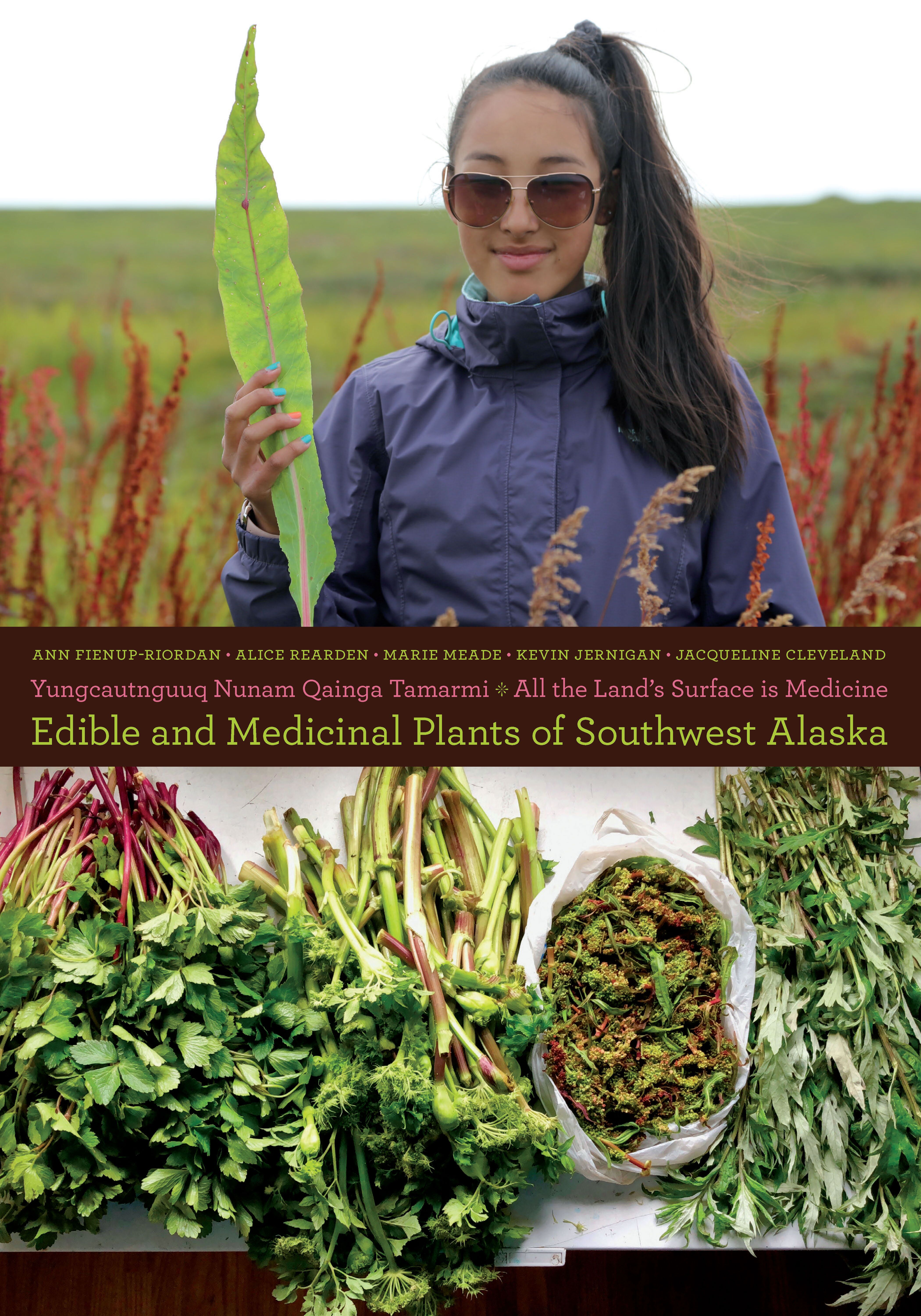
Yungcautnguuq Nunam Qainga Tamarmi/All the Land's Surface Is Medicine
In this book, close to one hundred men and women from all over southwest Alaska share knowledge of their homeland and the plants that grow there.They speak eloquently about time spent gathering and storing plants and plant material during snow-free months, including gathering greens during spring, picking berries each summer, harvesting tubers.
eBook

Plants with Histories: The Changing Ethnobotany of Iquito Speakers of the Peruvian Amazon
This paper describes the first ethnobotanical study carried out with speakers of Iquito, a critically endangered language of northeastern Peru. The work examines significant changes the pharmacopoeia has undergone, developing a new measure, the Index of Plant Novelty (IPN) that combines oral history, linguistic, comparative ethnobotanical, and botanical data. Research was carried out in 2009 and 2010, with structured interviews and collection of 87 botanical voucher specimens in 39 botanical families. The study results suggest that no one single factor can fully explain the patterns of borrowing in the pharmacopoeia of San Antonio, although data show some support for previously proposed hypotheses that such borrowing fills gaps in the pharmacopoeia or that edible and ornamental plants are often adopted for medicinal use. However, this process must also be understood within the context of colonization by mestizo settlers, which has given higher prestige to uses and species from outside. A comparison between oral history data and the linguistic and comparative data suggests that the Iquito informants interviewed have underestimated the extent to which their current pharmacopoeia has been borrowed. Este artículo describe el primer estudio etnobotánico con los hablantes del idioma Iquito, una lengua en bastante peligro de extinción que se habla en el noreste del Perú. El estudio analiza los cambios significativos que han ocurrido en la farmacopea, desarrollando una nueva medida, el índice de la novedad botánica (IPN), que combina la historia oral, la evidencia lingüística y datos comparativos etnobotánicos y botánicos. La investigación se llevó a cabo en los años 2009 y 2010, con entrevistas estructuradas y la recolección de 87 muestras botánicos, de 39 familias. Los resultados del estudio sugieren que no hay un solo factor que puede explicar los préstamos en la farmacopea de San Antonio, aunque los datos muestran cierto apoyo a las hipótesis previamente propuestas que las nuevas usas llenan los vacíos en la farmacopea o que las plantas comestibles u ornamentales se adaptan para uso medicinal. Sin embargo, este proceso también debe ser entendido en el contexto de la colonización de los colonos mestizos que ha dado más prestigio a los usos y las especies de afuera. Una comparación entre los datos de la historia oral y los datos lingüísticos y comparativos sugiere que los informantes Iquitos entrevistados han subestimado la medida en que ellos y sus antepasados han prestado los usos medicinales de las plantas.
Journal Article
Yungcautnguuq nunam qainga tamarmi: edible and medicinal plants of Southwest Alaska = The entire surface of the land is medicine
In this book, close to one hundred men and women from all over southwest Alaska share knowledge of their homeland and the plants that grow there. They speak eloquently about time spent gathering and storing plants and plant material during snow-free months, including gathering greens during spring, picking berries each summer, harvesting tubers from the caches of tundra voles, and gathering a variety of medicinal plants. The book is intended as a guide to the identification and use of edible and medicinal plants in southwest Alaska, but also as an enduring record of what Yup'ik men and women know and value about plants and the roles plants continue to play in Yup'ik lives.
eBook