
Catalogue Search | MBRL


Are you sure you want to remove the book from the shelf?

{{itemTitle}}
83
result(s) for
"Jessie Klein"
Sort by:


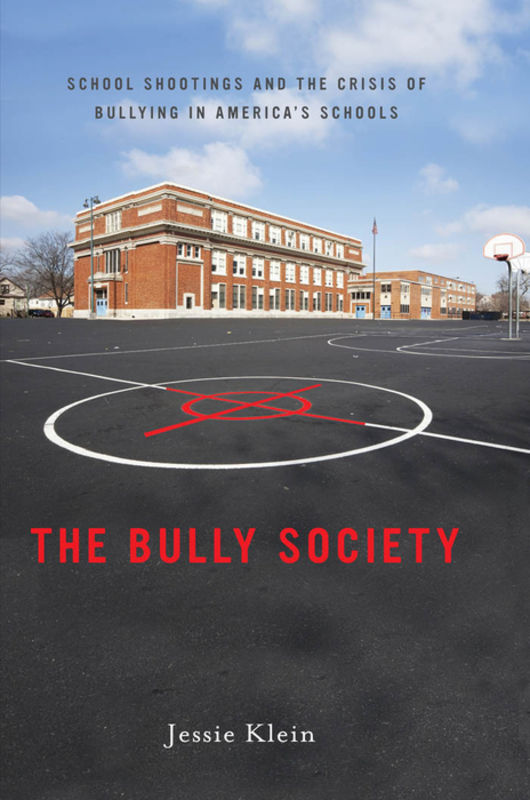
The Bully Society
·\"A coherent, heartbreaking narrative of how bullying works.\" -The Boston Globe
·\"The author writes with clarity and compassion… offers an opportunity for us to examine, discuss, and consider the world.\" -Kirkus Reviews
·\"Resists pop-psychology profiling… a searing indcitment of the cultures of cruelty, entitlement and indifference.\" - Michael Kimmel, author ofGuyland
·\"Exceptionally readable, abundant examples, and full of salient suggestions.\" - James W. Messerschmidt, author ofHegemonic Masculinities and Camouflaged Politics
·\"Riveting and powerful… Amazing and hopeful… Poignant and timely… A must read.\" - Liz Murray, author ofBreaking Night
·\"This powerful, necessary book… Illuminates a very dark problem, and proposes solutions.\" - Andrew Solomon, author ofThe Noonday Demon
·\"A compelling case.\" -Publishers Weekly
·\"An exceedingly thorough analysis.\" -New York Journal of Books
·\"Destined to emerge as an important text.\" -CHOICE
·\"A scholarly, insightful commentary… highly recommended.\" -VOYA
\"A remarkably accessible book and… An important tool.\" -Metapsychology
eBook

Bullying : a reference handbook
\"This volume explains how bullying became a problem in schools and what can be done about it. It also points readers to additional resources among the many that exist on the topic that will help them to fully understand it\"-- Provided by publisher.
Book

Transcriptional changes in the rat brain induced by repetitive transcranial magnetic stimulation
Repetitive transcranial magnetic stimulation (rTMS) has emerged as a promising tool to treat neuropsychiatric conditions, but the molecular changes it causes in brain are largely unknown. In this study, using three experimental models in rats, we report that the effects of rTMS are more complex and dynamic than previously known. Specifically, alterations in gene expression are dependent on brain region, stimulation protocol, age, and interval after treatment. Among the clinically relevant rTMS-induced alterations found here, we highlight expression changes in genes involved in glutamatergic, GABAergic, and inflammatory pathways. Importantly, rTMS affected the expression of genes involved in disorders for which it is being tested clinically, including Alzheimer's and Parkinson's disease. Our findings provide a foundation for future research that aims to tailor rTMS for the treatment of neuropsychiatric conditions.
Journal Article

The “Mask of Masculinity”: Underreported Declines in Male Friendship and Happiness in the United States
Men suffer more as a result of contemporany social trends than is commonly known. A recent focus on women’s greater malaise may unnecessarily and inaccurately pathologize women’s emotional well-being. A widely cited study declares that women are less happy than they were thirty-five years ago and that their unhappiness is increasing at a faster rate than men’s. A closer examination of related research, however, indicates that men are faring at least as badly as women, especially due to trends in decreased social connections. In particular, the dissolution of marriage, one of the few institutions fostering social connections, may be particularly debilitating towards men. New technologies, increased pressures towards self-reliance, and extreme economic pressures are also linked to higher stress among men. This gender comparison, regarding whether men or women are less happy, occurs at a time when depression and anxiety are extremely high among American adults and youth; and happiness, according to several studies, is decreasing. In light of these concerns, future research must address these gaps in order to accurately assess men's well-being and social ties; and social change regarding efforts to increase well-being and community must be sensitive to needs more commonly associated with men (as well as women).
Journal Article

All-American Massacre
What elements of contemporary American life contribute to the United States having the greatest number and highest share of public mass shootings around the globe?The editors and contributors to All-American Massacre seek to answer this question by exploring how masculinity, racism, politics, media, fame, education, gun culture, and mental.
eBook
Social Status Wars
The twenty-three-year-old Virginia Tech gunman Cho Seung-Hui had been relentlessly teased and bullied throughout middle school and high school. He was angry at what he perceived as an unjust school hierarchy that privileged the wealthy. Before he killed thirty-two people and then himself in a 2007 rampage, Cho raged against the rich, declaring his shooting a response to the “brats” and “snobs” at his school who were not satisfied with their “gold necklaces” and “Mercedes.” The South Korean-born Cho, whose parents ran a dry-cleaning business, seemed to believe he had been bullied because of his lower economic status and his
Book Chapter
Masculinity and White Supremacy
On December 1, 1997, in West Paducah, Kentucky, a skinny, short, bespectacled, fourteen-year-old Heath High School freshman named Michael Carneal rode to school with his seventeen-year-old sister, Kelly. Unbeknownst to her, he placed in the trunk of her Mazda two shotguns, two rifles, and a .22 caliber semiautomatic pistol.
When Kelly dropped him off, a large group of students was gathered in the lobby of West Paducah High School to say their prayers and sing hymns, as they did every morning before the bell rang. While they prayed, Michael showed a group of boys a gun. He hoped they would
Book Chapter
Cyber-Bullying
“Bullying for our parents was getting beat up, stuffed in a locker, getting stuff stolen from you,” said Austin Charles, a junior at South Carolina’s Socastee High School. “I don’t know that physical bullying happens very much around here. Cyber-bullying happens a lot.” He continued: “Some people go as far as to creating entire pages devoted to making fun of somebody. I think they call them hate books and hate spaces.”¹ In September 2010, a school resource officer was shot and wounded at Socastee, and several pipe bombs were found planted at the school. The alleged perpetrator, fourteen-year-old Christian Helms,
Book Chapter